
Kidnappers in Haiti released an American nurse and her daughter nearly two weeks after they were abducted at gunpoint in the country’s capital, Port-au-Prince.

Kidnappers in Haiti released an American nurse and her daughter nearly two weeks after they were abducted at gunpoint in the country’s capital, Port-au-Prince.
A nurse from New Hampshire and her child are the latest victims of kidnapping in Haiti, according to reports. Alix Dorsainvil is a nurse for the Christian nonprofit community development group El Roi Haiti, based near the capital, Port-au-Prince.
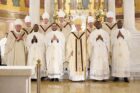
The Co-Cathedral of St. Joseph on Saturday, June 3, was nearly filled to capacity and swelled with joy during the ordinations of Ernesto Alonso, 44; Thimote Cherelus, 37; Nnamdi Eusebius Eze, 39; and Samuel Mwiwawi, 40.
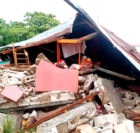
Many churches still struggle to rebuild from the 2021 earthquake in Haiti, but escalating gang violence is turning the situation from “bad to worse,” church leaders say. Nevertheless, they believe hope is alive in Haiti.
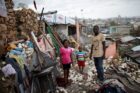
In about two months’ time, the one-year anniversary of a tragic earthquake and presidential assassination in Haiti will have passed, and the state of the Caribbean nation appears to be even worse, or as Archbishop Thomas Wenski of Miami describes: “as bad as it’s ever been.”
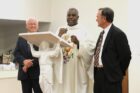
Standing behind the podium as the second ever Haitian American to be appointed a bishop in the United States, Bishop-designate Jacques Fabre highlighted how the mindset of people in his native country differs from that of Americans, and how that relates to his new role.
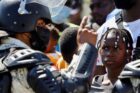
The first in what is envisioned as a series of webinars took place Feb. 16 to discuss how faith-based organizations are working together to assist Haitian families seeking refuge and assistance in the United States.
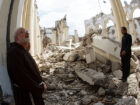
A 7.0 magnitude earthquake strikes 15 miles southwest of the capital of Port-au-Prince, killing over 300,000 people, destroying more than 250,000 homes and 30,000 commercial buildings, and causing over $8 billion in damage.
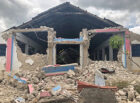
Marcus Garcia was about to record an editorial at his Port-au-Prince radio station on Jan. 12, 2010, when the ground began to shake. It stopped moments later. Having never experienced an earthquake before, he thought that was it.
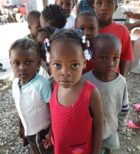
The 30,000 Haitian refugees who surged across the U.S.-Mexico border last summer fled an earthquake back home, but not the one that hit their homeland a few weeks earlier. The plight of these people actually began on Jan. 12, 2010 following an even more devastating quake near Port-au-Prince.