
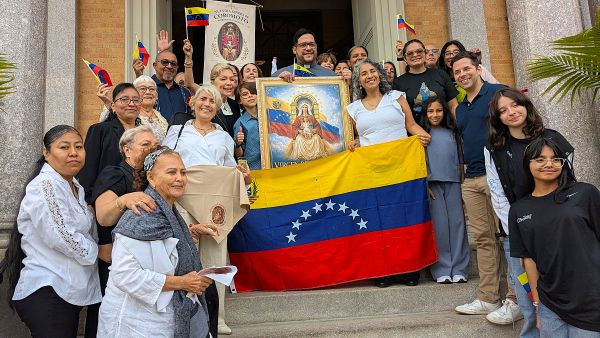
RIDGEWOOD — Catholics of Venezuelan heritage celebrated their patroness with music and Mass on Sept. 19, although their joy was tempered with anxiety for the victims of a recent earthquake in their homeland.
The Diocese of Brooklyn’s Venezuelan Apostolate, now in its second year, sponsored the feast of Our Lady of Coromoto during the Mass at St. Matthias Church in Ridgewood, which was celebrated by Bishop Robert Brennan.
He also gave a special blessing to local volunteers who helped gather food and other relief supplies throughout the summer for people displaced by a pair of earthquakes in June that ravaged the South American nation.
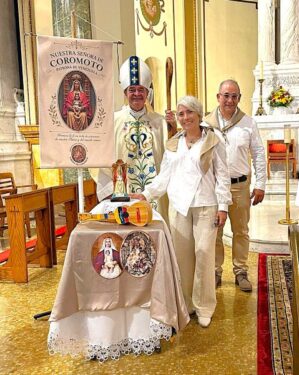
“The people of Brooklyn and Queens put their faith into action to provide relief for the people of Venezuela,” Bishop Brennan said after the Mass. “Despite the distance, our families united in the name of Jesus Christ.”
Bishop Brennan added that it was important for him to bless the volunteers.
“Despite the great heat during the days they spent packing supplies to send to Venezuela, they made it happen for their brothers and sisters in need,” he said. “The community’s response has been an inspiring and powerful witness to the Gospel.”
RELATED: Diocese of Brooklyn Celebrates Special Mass for Victims of Venezuela Earthquakes
Soon after the disasters struck, Bishop Brennan also celebrated a Mass at St. Bartholomew Church in Elmhurst to urge solidarity and prayers for those who were affected.
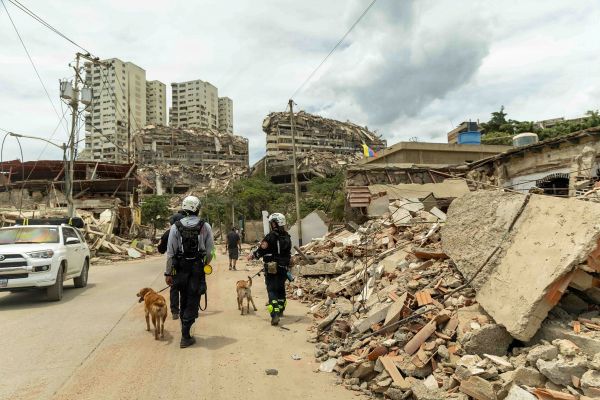
The quakes, which struck on June 24 — about 39 seconds apart — measured 7.2 and 7.5 in magnitude. An estimated 6,500 people died. Nearly 18,000 others were still without homes as of mid-September, according to reports.
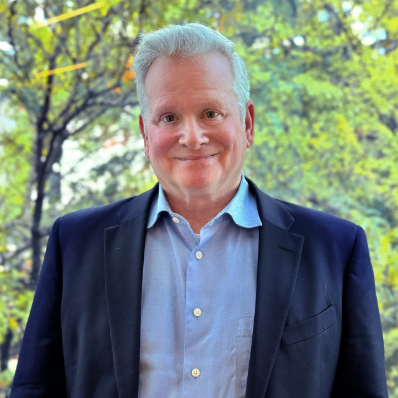
Cesar Lizardo, a parishioner of St. Matthias Church, is a New York representative for the World Apostolate of the Virgin of Coromoto. He said his parents back in Caracas felt the violent tremors but avoided injury. Still, he participated in the local relief efforts for the people suffering in his homeland.
“It is a very hard situation,” Lizardo said before the Mass. “A lot of people lost houses and jobs, and the country doesn’t have the structure to fix the problems.”
Father Ernesto Alonso-Aguila, parochial vicar at St. Matthias, also coordinates the apostolate. He echoed Lizardo’s sentiment that people still need help.
The seismic onslaught toppled urban areas where building codes had been ignored for years, Father Alonso-Aguila said. Entire neighborhoods, with buildings too weak to withstand fierce tremors, collapsed into deadly disarray.
“This is far from over,” Father Alonso-Aguila said of the relief efforts.
Immediately after the calamities struck, the local Venezuelan diaspora mobilized to gather food and supplies.
“We had a lot of points across Brooklyn and Queens where people were sending clothes, other goods, and food,” Father Alonso-Aguila said. “And we had a lot of volunteers, even non-Catholics, who were helping to pack and send these things to Venezuela.”
He said many people with Colombian heritage in Corona and Elmhurst also helped.
“They felt solidarity with Venezuelans,” Father Alonso-Aguila said. “And right after that, it happened in Colombia.”
A similarly sized earthquake on Aug. 10 rattled Colombia, but it caused fewer deaths — about 330.
Our Lady of Coromoto’s feast day is Sept. 11.
Father Alonso-Aguila explained that the local celebration was moved to Sept. 19 to avoid a scheduling conflict with the 25th anniversary of the Sept. 11, 2001, attacks.
Our Lady of Coromoto was proclaimed patroness of Venezuela in 1944 by Pope Pius XII. Coromoto was an indigenous leader of the Cospes tribe in the region near Guanare. The Mother of Christ appeared to him and his wife twice in 1651 and 1652. According to tradition, she spoke to them in their language, urging them to become baptized and to follow her son, Jesus.
During the second apparition, Coromoto tried to grab the Lady’s arm. She disappeared but left a tiny picture of herself holding the child Jesus on her lap. This iconic image inspired holy statues used in Marian processions and paintings.
Lizardo asserted that her appearances to Coromoto constitute the second most important Marian apparition.
The first, he said, was her contact with the indigenous man Juan Diego more than a century earlier in Mexico — Our Lady of Guadalupe — when she left an image of herself on the man’s garment.
The apparitions of Guadalupe and Coromoto, 120 years apart, are the only recorded incidents in which the Blessed Mother physically left behind a relic directly from heaven.
“Our Lady of Coromoto, the patroness of Venezuela, was indeed the first time Mary appeared to a family, and I often say the Church is indeed a family of families,” Bishop Brennan said.
Father Alonso-Aguila said the apostolate will coordinate with local Venezuelan Catholics to obtain a large statue of Our Lady of Coromoto suitable for processions in the community.
Father Alonso-Aguila, ordained in 2023, is from Cuba. He said he became director of the apostolate because the diocese currently has no priests from Venezuela. Communicating with the community, he said, is seamless because they share a common language — Spanish.
Another common thread is their shared devotion to the Blessed Mother, who has routinely appeared to people — frequently children — who are neither wealthy nor rulers of large populations.
“She comes always to simple people with the same message,” Father Alonso-Aguila said, “always to follow Jesus’ words, to do whatever He tells us.”