
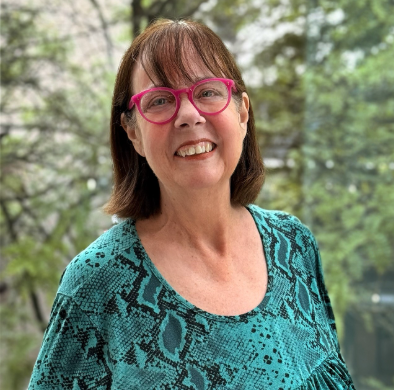

BUSHWICK — When Tara Di Rico was a student at St. Elizabeth Ann Seton School in Bushwick, the life story of the school’s patron saint made a big impression on her. She recalled how the Sisters of St. Joseph, who ran the school, encouraged students to conduct research into the saint’s life.
“I think it helped me realize how close these saints are to who we are as students and teachers. So that carried me quite a bit in my career, knowing that I could look to her,” said Di Rico, the principal of St. Helen Catholic Academy in Howard Beach. “She holds a special place in my heart because of how much I love Catholic education.”
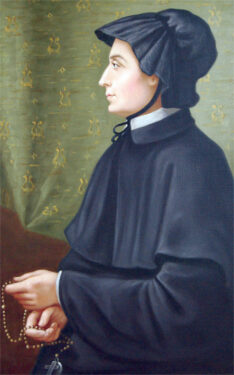
St. Elizabeth Ann Seton (1774-1821), founder of the Sisters of Charity of St. Joseph, established schools and set the tone for Catholic education in the U.S.
RELATED: The Meaning Behind Vestments
She is just one of dozens of saints who were teachers. Others include St. Frances Xavier Cabrini, St. John Neumann, St. John Bosco, St. Thomas Aquinas, St. Katharine Drexel, St. Albertus Magnus, St. Rose Philippine Duchesne, and St. Joseph Calasanz.
It is no accident the Catholic Church has many teachers among its canonized saints, said Deacon Kevin McCormack, school superintendent for the Diocese of Brooklyn.
“The Church has always had a great respect for education and a great respect for teachers,” he said. “St. Paul, when he talks about the hierarchy of the Church, teachers are high up there.”
Their influence is still felt today, according to Deacon McCormack, who said that many of the schools in the diocese were established by religious orders founded by saints. “We stand on the shoulders of religious sisters and brothers whose orders, inspired by saints, did their job and did it well,” he said. “And they’re the ones that the schools we have now are still inspired by.”
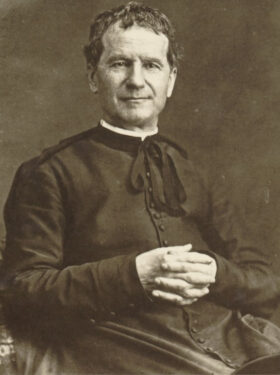
Many current educators look to the teacher-saints for inspiration.
Gina Auricchio, principal of St. Athanasius Catholic Academy in Bensonhurst, pointed to St. John Bosco as a guiding light in her career.
“He’s the one who sticks out in my mind because he was really interested, not just in academics, but about forming the whole child — mind, heart, and spirit,” Auricchio explained, adding that St. John Bosco “believed in meeting students exactly where they were, especially those who might have been overlooked or might have struggled in education.”
His writings inspired how she set up her classrooms when she was a teacher.
“He really inspired me to build a classroom environment that was rooted in respect and trust and where students felt safe to make mistakes,” she noted. “That’s really aligned with our Catholic identity.”
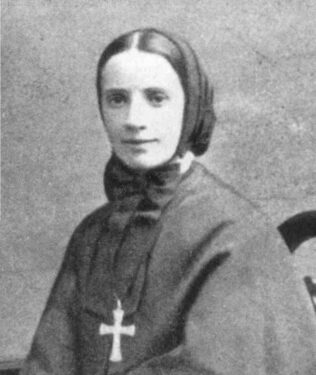
In addition to St. Elizabeth Ann Seton, Di Rico also looks up to St. Frances Cabrini. Known primarily as the patron saint of immigrants, St. Frances Cabrini (1850-1917) established schools and hospitals to serve immigrant families.
RELATED: Booked for Disaster: St. Frances Cabrini’s Chilling Titanic Near-Miss
Prior to becoming a principal, Di Rico participated in the Cabrini Program, which aims to strengthen teachers’ ties to their Catholic faith.
“I didn’t know much about Mother Cabrini before I was asked to be in the program. But I was looking into Mother Cabrini and her being the first saint from the United States and how significant that was,” she explained. “The fact that she was a woman and an educator and started schools and institutions makes her a significant role model for me as a woman and an educator.”
The teacher-saints are good role models not just because of their accomplishments, but because of their daily working lives, Deacon McCormack said.
“They went about their lives teaching people and serving God,” he said. “And that’s what a lot of people in our diocese do today. They’re just regular folks who are doing what God has asked them to do.”
ELIZABETH ANN SETON (1774-1821)
St. Elizabeth Ann Seton is considered the founder of the parochial school system in the United States. In 1810, she founded St. Joseph’s Academy and Free School, the first Catholic girls’ school, in Emmitsburg, Maryland. She was also the founder of the Sisters of Charity, the first religious community for women in America.
FRANCES XAVIER CABRINI (1850-1917)
The first American citizen to be named a saint, St. Frances Xavier Cabrini came to the U.S. from her native Italy in 1887 and established 67 schools, orphanages, and hospitals to serve impoverished immigrants in cities. She became a naturalized citizen in 1909.
JOHN BOSCO (1815-1888)
When he was 9 years old, St. John Bosco had a dream in which he was called to dedicate his life to instructing children. As an adult, he founded the Oratory, an apostolate for young people. He also established the Society of St. Francis de Sales (commonly known as the Salesians) and later, the Salesian Cooperators, to further his goals of educating young people with compassion. In 1988, a century after his death, he was proclaimed by Pope John Paul II to be “Father and Teacher of Youth.”
KATHARINE DREXEL (1858-1955)
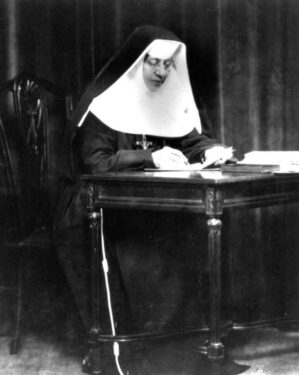
In 1891, St. Katharine Drexel founded the Congregation of the Sisters of the Blessed Sacrament, devoted to serving African and Native Americans in the South and West of the U.S. She moved to New Orleans in 1915, where she established Xavier High School. She would go on to open 60 schools and missions across the country.
THOMAS AQUINAS (1225-1274)
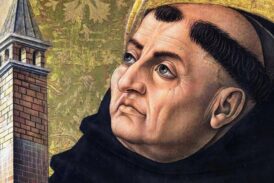
Considered one of the greatest thinkers and philosophers of Catholicism, St. Thomas Aquinas is primarily known for his writings. However, he was also a classroom teacher. He served as an apprentice professor in Cologne, Italy, teaching students the Old Testament, and later taught philosophy at the University of Paris.
ALBERTUS MAGNUS (1200-1280)
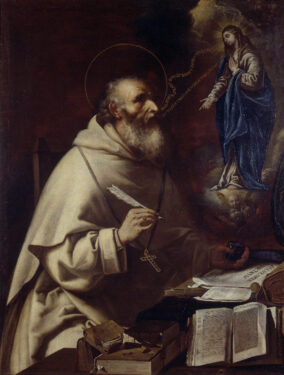
A member of a Dominican order, St. Albertus Magnus was a German bishop and philosopher who studied theology and served for several years as a lecturer in Cologne, Germany, and then in Strasbourg, France. He developed a curriculum for Dominican students that included the study of Aristotle’s writings.
ROSE PHILIPPINE DUCHESNE(1769-1852)
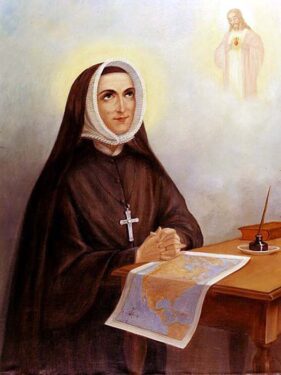
Born in France, St. Rose Philippine Duchesne was a member of the Society of the Sacred Heart and emigrated to the U.S. in 1818 with four other sisters to serve as missionaries. She settled in Missouri and established the first free school west of the Mississippi River. She was primarily known for her work educating and caring for native Americans.
JOSEPH CALASANZ (1557-1648)
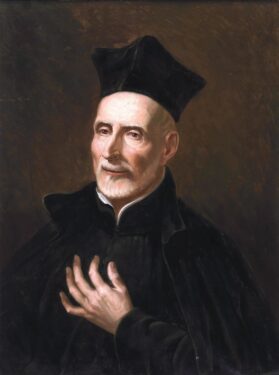
St. Joseph Calasanz was the founder of the Pious Schools, educational institutions for poor young men. He later established the Piarists, a religious order to teach in the schools he had founded. He was known for his efforts to promote free education for all students, regardless of income.
St. John Baptist de la Salle.
Patron Saint of Teachers.????