MIDTOWN MANHATTAN — For a quarter century, Msgr. Kevin Sullivan’s tenure leading Catholic Charities of New York (CCNY) has coincided with some of the most significant events in modern history.
He led the charitable organization through the aftermath of the terrorist attacks on Sept. 11, 2001. Then came Superstorm Sandy in 2012, the COVID-19 pandemic from 2020 to 2023, and the recent influx of immigrants to New York City.
Come September, Msgr. Sullivan will transition into an “emeritus” role at CCNY, while continuing to serve as pastor of The Church of Our Saviour Parish near Grand Central Terminal.
His successor is J. Antonio Fernandez, CEO of Catholic Charities of San Antonio, who previously held a senior position at Catholic Charities of Chicago. Fernandez was unavailable for comment as of this writing.
“I’m just really delighted that he’s going to be taking the helm,” Msgr. Sullivan said. “And, as I said to him — and I’ve said to everybody — I’m here to help in whatever way I can to make the transition as good and as productive as possible.”
Msgr. Sullivan sat down with The Tablet on Aug. 1 in the CCNY offices on Madison Avenue, behind St. Patrick’s Cathedral.
The building is a block away, where, four days earlier, a gunman killed four people and himself in a high-rise at 345 Park Ave., where Blackstone and the National Football League have offices.
Msgr. Sullivan said the mass shooting was a reminder of how much New York City has changed since 9/11.
“Whenever an incident happens, it really does create some fear and anxiety among staff,” he said. “It’s part of the unfortunate reality of the world that we live.”
Still, Msgr. Sullivan said CCNY is ever ready to carry out the mission of the Church — to protect and care for the poor and vulnerable.
“In the case of those impacted by 9/11, our efforts at recovery went on for four years,” Msgr. Sullivan said. “We show up early, but we stay longer.
“When the cameras go away, we’re still there working with families and those who are impacted by disasters.”
The Bigger Gamble
Msgr. Sullivan, ordained in 1976, was born in the Bronx and raised in Yonkers. He attended formation at St. Joseph’s Seminary and College in Dunwoodie, Yonkers.
“I grew up midway between St. Joseph’s seminary and Yonkers Raceway,” he said with a laugh. “I took the bigger gamble by going to the seminary.”
But Msgr. Sullivan said the mid-’70s were a great time for the Roman Catholic Church in New York City. “There was a wonderfully growing population of Hispanics, and it was making our parishes more vibrant,” he said.
A Pastoral Way
Because of that, he spent a summer in Bogota, Colombia, learning “some Spanish.”
As a transitional deacon, he spent half a year at Holy Spirit Parish in the Bronx — a predominantly Spanish congregation.
His command of the language was shaky at first, but parishioners patiently helped him improve. He performed baptisms and spoke homilies in Spanish.
“That was really where I had the opportunity to learn how to use Spanish in a pastoral way,” Msgr. Sullivan said.
That came in handy at his first assignment post-ordination — associate pastor at St. Elizabeth Church in Washington Heights on Manhattan’s far north side — another growing Hispanic neighborhood.
Community Development
Challenges in the community soon revealed themselves, like crime, sanitation, and deteriorating housing stock, Msgr. Sullivan said.
He helped create a community development and preservation group, and marshalled participation from Methodist and Jewish groups, plus the local Hispanic chamber of commerce. Improvements ensued.
Meanwhile, the Archdiocese of New York wanted another priest assigned to CCNY, and Msgr. Sullivan said some of the work he did at St. Elizabeth was “very akin to the work of Catholic Charities.”
“So,” he added, “when it came time for me to be transferred to a new assignment, I was assigned to Catholic Charities in 1983.”
His first title was director of the Department of Social and Community Development, which included programs for immigrants and homeless people.
By the late 1990s, he was serving as CCNY’s chief operating officer.
September 11
Msgr. Sullivan was the agency’s acting CEO when the 9/11 attacks toppled the twin towers of the World Trade Center on Sept. 11, 2001. Three months later, he had the job full-time.
He proudly described how CCNY helped people who lost their jobs, like the workers at the Windows on the World restaurant on the upper floors of the north tower.
CCNY donated funds to create a new restaurant where they could work — “Colors,” which had a decade-long run on Lafayette Street in Lower Manhattan.
Meanwhile, CCNY provided multiple services to people harmed by 9/11, like helping some families pay for the funerals of loved ones lost in the towers.
Superstorm Sandy
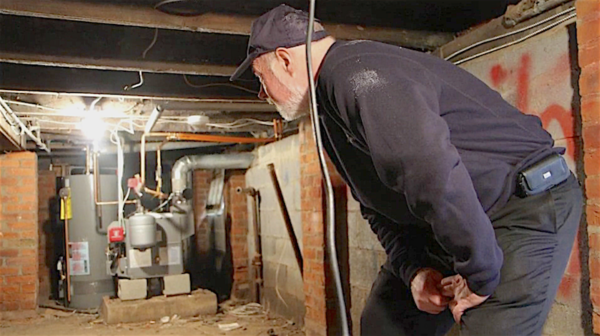
The aftermath of Superstorm Sandy in October 2012 brought a new set of challenges. While nearly 3,000 people died on 9/11, there were fewer deaths from the superstorm.
However, the destruction reached from Staten Island to Manhattan, and the entire length of Long Island, Msgr. Sullivan said.
An example of CCNY’s response, he recalled, was transporting day laborers on weekends from Yonkers to Staten Island, where they helped rid massive amounts of mud that had poured into people’s homes.
Msgr. Sullivan said the workers were mostly immigrants who were “barely making it,” but on Staten Island, they worked for free.
“We hired some vans that took them out to Staten Island, and they volunteered to muck out homes,” he said. “I will tell you, though, a few of them did such a good job that people hired them during the week.”
COVID
Msgr. Sullivan said the pandemic was unprecedented because it was global, but New York City became one of the “epicenters.”
“Manhattan became a ghost town,” he said. “And a lot of people lost their jobs. We realized there were a lot of neighborhoods where people needed food.”
CCNY responded with “pop-up” pantries — trucks loaded with food — that made bi-weekly runs in different parts of the city.
“Oftentimes we did that in front of a parish,” Msgr. Sullivan said. “And we did that for probably well over a year.”
He praised private donors who raised money for financial assistance to help displaced workers who didn’t qualify for other forms of aid.
The Border
As with the other calamities, the immigration crisis spurred more challenges a few years ago when busloads of immigrants poured into the city, Msgr. Sullivan said.
“Some federal immigration office in Texas gave the address of the Catholic Center in Midtown Manhattan as a place where immigrants should go,” he recalled. “Why they did it — who knows?
“But we had, over a two-year period, over 2,000 individuals show up at our Catholic Center.”
CCNY set up a reception center where the newcomers, many of whom were fleeing economic or political persecution in South American countries, were fed and given Metro cards. The work has drawn criticism.
Vice President J.D. Vance, while not naming Catholic Charities specifically, claimed the United States Conference of Catholic Bishops was milking the immigration crisis for financial purposes. an Angels, has repeatedly claimed that Cardinal Timothy Dolan
Meanwhile, human trafficking roiled.
Curtis Sliwa, a Republican candidate for mayor and founder of the Guardi and CCNY have caused untenable strains on the city’s limited resources by aiding the immigrants.
However, Msgr. Sullivan said the Church and CCNY still have their mission to feed and clothe the poor, and to welcome the immigrants, most of whom just want the opportunity and dignity to work. He did add that the USCCB has clearly stated that immigrants who break the law must be held accountable.
“I talk to these families,” he said. “And almost every one of them said, ‘Can you get me a job?’ That’s what they want.”
But he noted, the people added another essential message — that while grateful for the food, they were most thankful that CCNY saw them as worthy of God’s care.
“They said, ‘We feel safe here,’ ” Msgr. Sullivan recalled. “To me, that’s at the essence of what Catholic Charities is about.
“We listen to people, we treat people with respect, and they should feel safe when they come to us.”