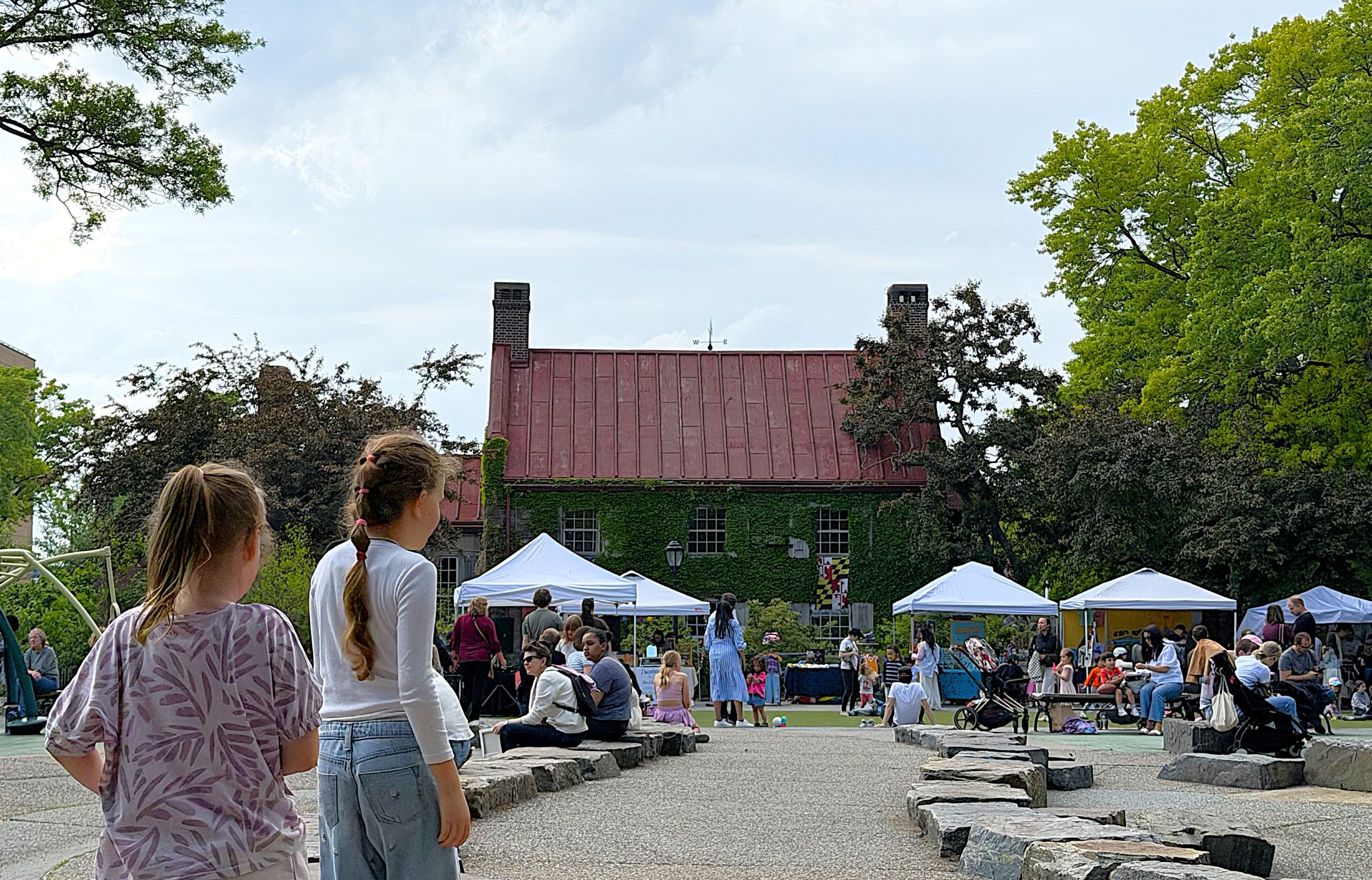


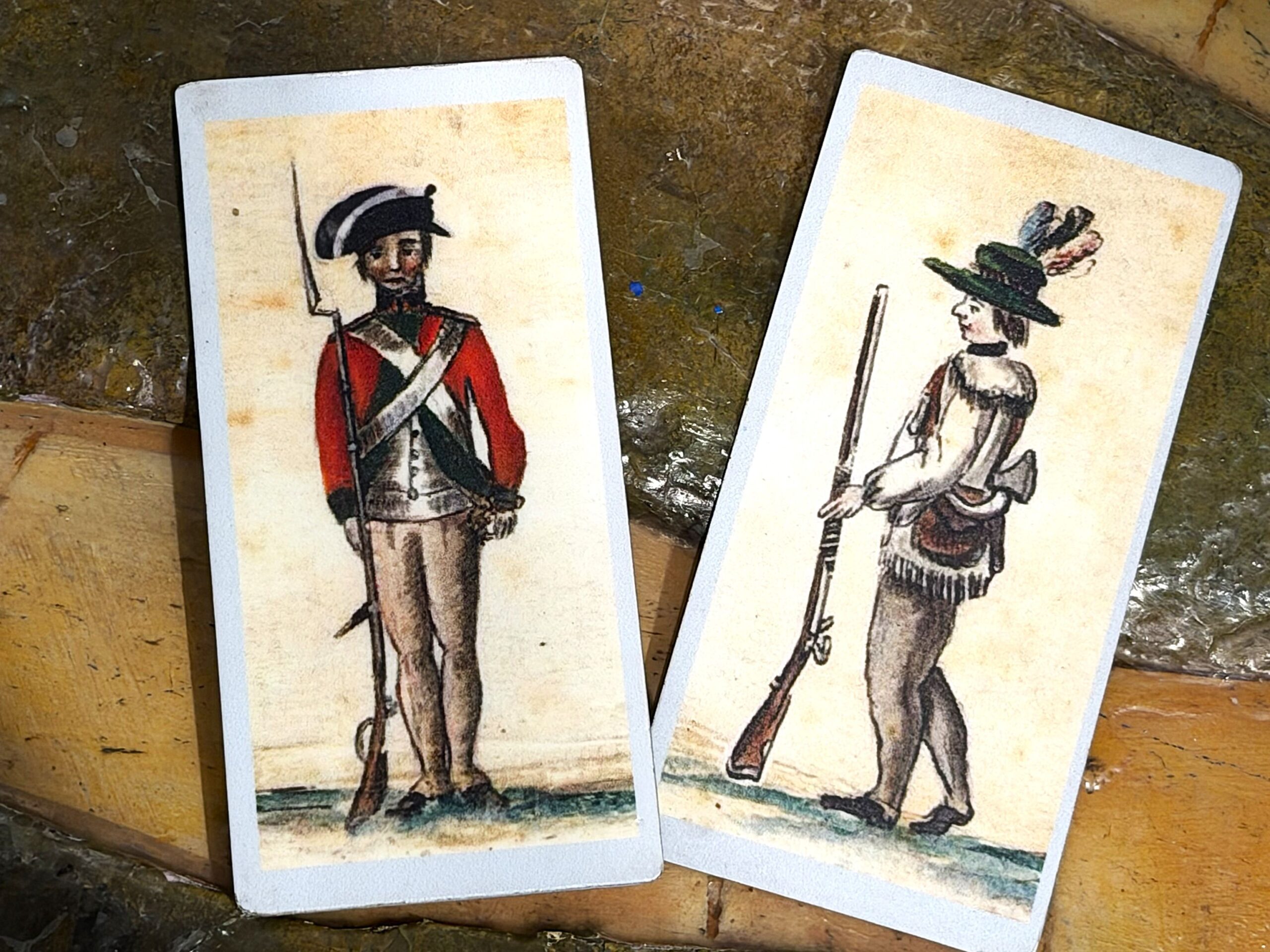
PARK SLOPE — Pvt. Charles Thompson, a farm worker from St. Mary’s County, Maryland, marched with his company on Aug. 27, 1776, toward deafening artillery fire near Gowanus Creek.
Musket balls and shrapnel zinged past; some hit flesh with a loud smack. Men and horses screamed.
Acrid gun and cannon smoke swept the western tip of Long Island on this hot, humid day, during what history now calls the Battle of Brooklyn. By day’s end, the British forces handed the Americans a staggering defeat.
“It is impossible,” wrote Pvt. Michael Graham of Pennsylvania, “for me to describe the confusion and horror of the scene — our men running in almost every direction, and any which way they would, they were almost sure to meet the British or Hessians.”
Thompson’s own recollections of this chaos are not mentioned in his well-documented service record kept by the Maryland State Archives.
RELATED: How One of the Founding Fathers Elevated Catholics in the New Republic
Still, this soldier was unique for a couple of reasons. The archives state that he was 15 when he enlisted a few months before the battle, making him “among the youngest known soldiers in the Maryland Line.”
And as the archives confirm, he was a Catholic.
Anti-Catholicism
Thompson and his family, as members of the Church, endured cultural and religious disadvantages — the result of more than 250 years of anti-Catholic hostility that festered in England and its colonies since the Protestant Reformation in 1517.
 In 1634, Maryland became the only colony where Catholics could settle, but still with scant hope of gaining political influence or representation.
By 1776, Catholics were still a small minority in the American colonies — no more than about 40,000 people, concentrated mostly in Maryland and Pennsylvania, where they faced fewer restrictions.
RELATED: How the Seeds of Religious Freedom Were Planted in the Hard Ground of Colonial America
“British patriotism was very much connected to anti-Catholicism,” said Timothy Milford, a history professor at St. John’s University who specializes in colonial America.
“I think today’s population is something like 20% Catholic,” he noted, “but it was definitely under 2% in the colonial period.”
Historians speculate, however, that the desire among Catholics to break from England fueled their overwhelming support for the war.
Burning with Patriotism
Maura Jane Farrelly, in her book, “Papist Patriots: The Making of an American Catholic Identity” (2021), wrote, “The Catholic population’s commitment to the Patriot cause was there from the very beginning.”
She described muster rolls, veteran pension applications, and supply records from St. Mary’s County that show “support for the Revolutionary War was greater among Catholics than it was among Protestants.”
Farrelly, a journalist, also wrote that Catholic men in St. Mary’s County swore their allegiance to the cause by donating money and serving in the Continental Army or the county’s militia.
RELATED: Thanksgiving & Tolerance | Washington’s Support for Early American Catholics
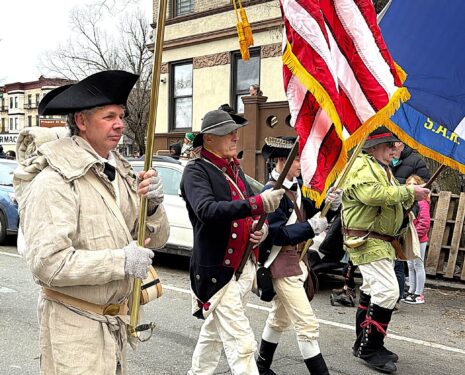
Such was the case with Thompson’s enlistment in the 5th Independent Company, which was added to the 1st Maryland Regiment.
A 19th-century historian, Thomas Field, wrote in “The Battle of Long Island” (1869), that the Marylanders were “burning with patriotism, and the desire of distinction.”
“This body of young men,” he continued, “sons of the best families of Catholic Maryland, had been emulous of the praise of being the best drilled and disciplined of the Revolutionary forces.”
Into Battle
After spending much of 1775 besieged by rebel colonists at Boston, the British withdrew to Canada to retrofit, resupply, and reinforce their army. They intended to open a new front in the Atlantic colonies and crush the rebellion.
“They came roaring back to New York,” Milford said.
The British sailed south on June 9, starting with 400 warships, supply boats, and troop carriers. The craft began filling New York Harbor on June 29. More ships and troops followed until the troop strength reached 32,000 men.
RELATED: How a Group of Catholic Patriots Helped Shape the Birth of the U.S.
By July 2, two days before the signing of the Declaration of Independence in Philadelphia, the British force was completely ashore on Staten Island. From there, the invasion of Long Island started on Aug. 22, with about two-thirds of the total force, but still outnumbering the 10,000 Americans with a two-to-one advantage.
The first shots of the Battle of Brooklyn sounded during a brief skirmish around 10 p.m. on Aug. 26, when Pennsylvania troops opened fire on redcoats stealing from a watermelon patch.
Meanwhile, a chunk of the British force was on a deceptive night march through the Jamaica pass, and around the American troops, Milford explained.
When fighting intensified the next morning, Washington soon realized his force was outnumbered and outmaneuvered by the British troops at his front and left flank. Disaster ensued.
Fought Ferociously
Consequently, Washington ordered his army to fall back, Milford said.
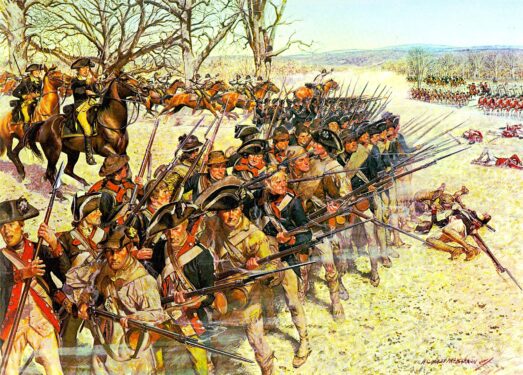
“But the so-called Maryland 400 was asked to remain behind as a rearguard,” he added. “They fought ferociously to let the rest of their fellows escape north towards Brooklyn Heights.”
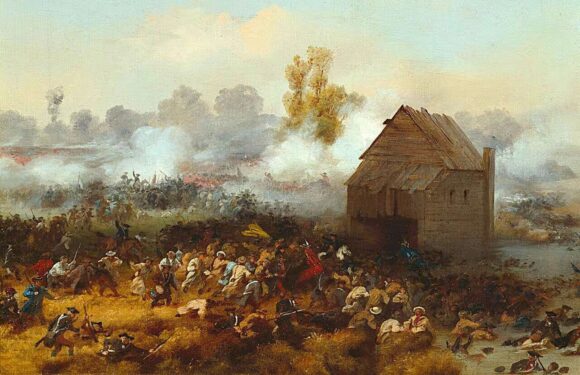
An estimated 256 Marylanders died in the rearguard effort of assaulting the British and their allies — German Hessians and Scottish Highlanders — at the Vechte–Cortelyou House. The building — on present-day 3rd Street between 4th and 5th Avenues — was about 1,300 feet east of the marshy creek, which has since been converted into the Gowanus Canal.
Washington, at Cobble Hill, near present-day Court Street and Atlantic Avenue, used a spyglass to watch Maryland troops assault, die, regroup, and assault again.
The future first president reportedly cried, “Good God, what brave fellows I must this day lose!”
At a Slog
Graham wrote that the creek was “a swamp or marsh through which a great many of our men were retreating.”
“Some of them,” he added, “were mired and crying to the fellows for God’s sake to help them out.”
Thompson and his 5th Independent Company were in Manhattan when fighting intensified on the morning of Aug. 27, but they crossed the East River and arrived at Gowanus Creek around midday, in time to see the chaotic carnage and retreat.
The company helped other troops evacuate, albeit at a slog, through the swampy terrain lining the creek.
Foggy Flight
The rearguard action enabled the survivors to quietly evacuate on the night of Aug. 29 — some say with a “miraculous” fog — across the East River. While the British had a vast Navy, Washington relied on a mini armada of ferry boats to get his army to Manhattan.
“They got kicked out of there, too, but at least they weren’t captured whole,” Milford said. “Eventually, they made their way to Philadelphia, from which they could fight back. And they did so.”
RELATED: Exploring Catholic History In Pennsylvania, N.Y., & N.J.
From Pennsylvania, the Continental Army launched successful attacks into New Jersey, followed by victories in upstate New York and the southern colonies.
But, historians contend, had it not been for Maryland 400s’ sacrifice, and the surviving army’s successful evacuation to Manhattan, the Revolution could have ended right there on Long Island.
Back in the Fight
While Thompson was not among the celebrated “Maryland 400,” he fought in several battles in New York in 1776 before the army moved to Pennsylvania. According to the state’s archives, he saw action at Harlem Heights, White Plains, and Fort Washington.
Thompson’s enlistment ended, and by early 1777, he was back home in St. Mary’s County. But even after all he had seen in New York, the teen farmer returned to service in July of 1777 with the 2nd Maryland Regiment.
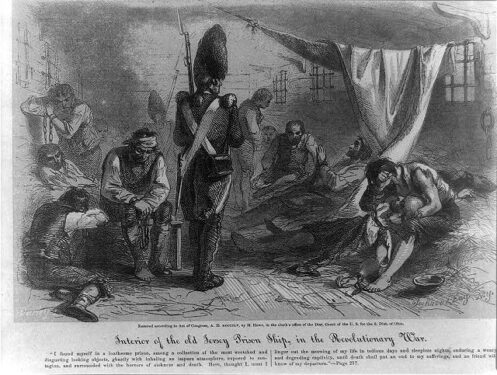
By August, he was fighting the British again, this time on Staten Island. He was taken prisoner and held aboard one of the many prison ships anchored around Long Island, according to the archives.
Prison Hulks
Milford said incarceration on the so-called “prison hulks” could be a death sentence due to the lack of food and water, and diseases.
Officers were routinely released in prisoner exchanges, and enlisted troops could be ransomed if their families had enough money.
Thompson’s solution was to desert the patriots’ cause and agree to fight for the British, but it was a ruse.
RELATED: ‘This is Sacred Ground’: Event Pays Tribute to The First POWs
Once released from the hulk, he simply returned to Maryland, according to the archives. Along the way, he told American officers that he intended to rejoin the cause, and they told him which unit to report to.
However, that group deployed before Thomson could reach it. Now he was accused of desertion by American officials, but his former commanding officer from the 5th Independent Company vouched for him, according to the archives.
Without Hesitation
Capt. John Allen Thomas, a Protestant, testified about Thompson’s exemplary service in 1776, and to his subsequent efforts to return to active duty, and crafty escape from the British.
Thomas said that if any other officer asked for Thompson to join his unit, “he would without hesitation have done it.”
The archives don’t have a record of how the case was adjudicated, but other data show that Thompson did fine.
He became a farmer of his own 150-acre plot and enjoyed decent success over the next few decades, the archives show.