
A federal appeals court in Louisiana is hearing arguments May 17 about the accessibility of the abortion drug mifepristone.

A federal appeals court in Louisiana is hearing arguments May 17 about the accessibility of the abortion drug mifepristone.

Legislation in North Carolina that bans most abortions after 12 weeks of pregnancy, which the state’s bishops say “represents progress toward building a culture of life,” will now become law after the state’s Republican-controlled General Assembly overrode the Democratic governor’s veto.

“There are no unwanted children,” an anonymous inspiring quote declares, “just unfound families.” If that’s so, the almost 400,000 children in the U.S. foster care system — approximately 100,000 of whom are legally adoptable — need only wait. But the reality, especially in post-Roe v. Wade America, presents a more complex and challenging scenario — one in which foster care must, Catholic experts urge, be viewed as a pro-life issue.

An advisory panel of the Food and Drug Administration voted unanimously on May 10 to recommend that a birth control pill be sold in the U.S. without a doctor’s prescription.

When Mattel announced the release of a Barbie doll portrayed with Down syndrome April 25, the global toymaker explained the addition to its product line is intended “to allow even more children to see themselves in Barbie.”

North Carolina legislators appear poised to pass a ban on abortions after 12 weeks despite objections from the state’s governor.
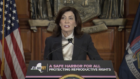
The New York State Catholic Conference called Gov. Kathy Hochul “terribly misguided” in her focus, after the governor signed legislation that makes abortion medication more accessible in New York, including at state universities.

Abortion bans failed in Nebraska and South Carolina, two Republican-led states, in the final week of April following a successful effort in North Dakota.
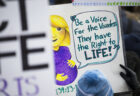
Lawmakers in the Kansas Legislature voted April 26 to override Democratic Gov. Laura Kelly’s veto of a “born-alive infants protection act.”

A six-week abortion ban signed into law April 24 by North Dakota’s Republican governor, Doug Burgum, is being hailed by the state’s Catholic bishops as an “important step toward making the state a sanctuary for life.”