Pope Francis on Wednesday said that Communion is for those who are “in the community” and politicians who support abortion are “outside of the community.”
Pope Francis on Wednesday said that Communion is for those who are “in the community” and politicians who support abortion are “outside of the community.”
Pope Francis’s first European tour in the COVID-19 era ended with a bang, as he celebrated Mass for 60,000 people in the field surrounding the national Basilica of Our Lady of the Seven Sorrows.
In the face of widespread evidence of humanity’s dark side, speakers a prayer service Sept. 13 — on the eve of the opening of the 76th session of the United Nations General Assembly — identified unmistakable signs of hope.

Speaking at the largest Roma impoverished community in Europe, Pope Francis said they are not in the margins of the Catholic Church, but at its center, and that they should be at the center of society too, integrated and not hidden from view.
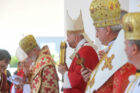
Pope Francis said on Tuesday, Sept. 14, that the cross is not a flag to be waved, nor a political symbol. The pontiff’’s remarks were seen as a rebuke of populist politicians such as Matteo Salvini in Italy and Viktor Orban in Hungary using religious symbols as political tools.
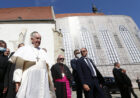
Speaking in the place that was once the beating heart of Slovakia’s Jewish quarter, Pope Francis asked for Jews and Christians to work together so that the past is not forgotten, and religion doesn’t become irrelevant.
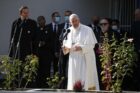
Speaking to civil authorities in Slovakia, a country that for decades was under one-party Communist rule, Pope Francis warned against the “single-thought” system of consumerism and ideological colonization.
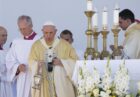
Speaking in Hungary, once the heart of Christian Europe which today is leading the charge against Pope Francis’ call for the welcoming and integration of migrants, Pope Francis said that the Cross is, yes, an invitation to uphold Christian roots, but also a call to be open to everyone.
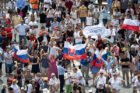
At the crack of dawn on Sunday, Pope Francis will leave for Slovakia — with a planned first stop of seven hours in Budapest, Hungary — for a Sept. 12-15 visit. This will be his first trip since his July colon surgery, and the question in the minds of many is: “Why?”
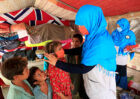
Pope Francis has called on whatever government will emerge in Afghanistan following the American withdrawal to allow children to receive an education, despite the Taliban policy of not allowing women to attend school after the age of 12.