
More than a month before Pope Francis was scheduled to arrive in the United States, his ride landed on U.S. shores.
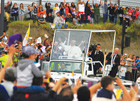
More than a month before Pope Francis was scheduled to arrive in the United States, his ride landed on U.S. shores.

Being called to the principal’s office in the middle of the summer turned out to be a good thing for 24 youngsters from four Catholic elementary schools in Harlem. The students learned they will represent their schools when Pope Francis visits Our Lady Queen of Angels School in East Harlem on Sept. 25.
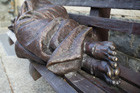
When Pope Francis approaches the Catholic Charities building in downtown Washington during his U.S. visit in September, he will encounter a “homeless person” covered in a blanket laying on a park bench.
Pope Francis knows the family is made up of real people living in the real world, which is why he often gives down-to-earth advice.
Sixth in a series AS I have been reporting in several columns in this series on Pope Francis’ vision for the Church, I have found a marvelous guide in Cardinal Walter Kasper’s “Pope Francis’ Revolution of Tenderness and Love” (New York: Paulist Press, 2015, pp. 117, $16.95). I cannot recall any book the length of […]
Last April 11, at First Vespers of Divine Mercy Sunday (Second Sunday of Easter), Pope Francis presented the Bull of Indiction of the Jubilee of Mercy, entitled “Misericordiae Vultus” or “The Face of Mercy.”
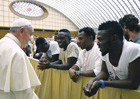
Pope Francis will arrive in the U.S. in September at the close of what could be called the “summer of immigration.”
Representatives of Colombia’s FARC have asked to meet Pope Francis in Cuba in September and have requested the Church name a permanent delegate to their peace negotiations with the government.

WHILE READING a United Nations Development Program report on violence in Latin America, I encountered the term “aspirational crimes,” used to explain the tragic acceleration in crimes on and by young people. The term refers to crimes motivated by money and the irresistible desire for consumption. Partly this is to support one’s family in situations where poverty is intolerable. But a large part is for the “cool” gadgets, shoes, clothes, electronics, etc., that swell a young man’s swagger and elevate his position within a gang, mark his achievement and anesthetize his misery for the moment.
What has made Cardinal Walter Kasper’s “Pope Francis’ Revolution of Tenderness and Love” especially interesting to me is that Cardinal Kasper seems to know the Holy Father’s theology and spiritual approach to problems so well.