
On the centennial of St. Thérèse’s canonization, St. Peter Claver Church will recreate the “Little Flower Novena” that Msgr. Bernard Quinn started there, also 100 years ago.

On the centennial of St. Thérèse’s canonization, St. Peter Claver Church will recreate the “Little Flower Novena” that Msgr. Bernard Quinn started there, also 100 years ago.

I would like to recommend that the Great Irish Fair make Msgr. Bernard J. Quinn, Servant of God, the posthumous honoree next year. “Father Quinn,” as he was fondly known to everyone, wholeheartedly embraced the downtrodden lot of African Americans as an Irish American priest.
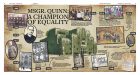
Msgr. Quinn (1888-1940), who was an Irish-American, was known for his fight against racial injustice. He established the first parish for Black Catholics in the diocese, St. Peter Claver Church, Bedford-Stuyvesant, in 1922.
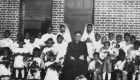
The man who convinced the Diocese of Brooklyn to establish St. Peter Claver Church, the first African-American church in the diocese, was also a man who waged a long battle for civil rights for his parishioners and the larger black community.
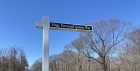
Little Flower Children and Family Services of New York, founded by Msgr. Bernard Quinn more than 90 years ago, is still going strong today. According to Corinne Hammons, president and CEO, the non-profit organization has expanded its services over the decades but has remained true to its original mission.
Msgr. Bernard J. Quinn (d. 1940) certainly knew the value of immigrants and the fact that all human beings are born in God’s image and likeness. The son of poor Irish immigrant parents (his father was a longshoreman), Msgr. Quinn saw the horrors of war up close when he was assigned as a chaplain for the 333rd Machine Gun Infantry Regiment of the U.S. Army in the “War to end all wars,” that is, the First World War.

Msgr. Quinn was a prime example of seeing the goodness in everyone. As a priest, he witnessed many local parishes not ministering to black Catholics, which caused him to have an examination of conscience. This examination of conscience led him to minister to the black Catholic community, ultimately establishing two churches that still stand today.
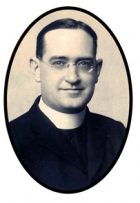
Msgr. Bernard Quinn is a perfect candidate for canonization. That’s what one repeatedly hears when talking to clergy and laypersons in the Diocese of Brooklyn advocating for sainthood for the late, great church pastor.
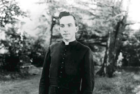
The journey to sainthood in the Catholic Church involves several steps that can take many years.
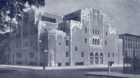
The year was 1917. America had just entered World War I. It was also a somber time in church history — black Catholics were not welcomed to worship within the same space as their white Catholic brothers and sisters.