
The world can no longer ignore the suffering of the people of Haiti, an island that has been exploited and pillaged by wealthier nations for centuries, said Archbishop Vincenzo Paglia, president of the Pontifical Academy for Life.
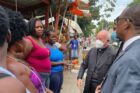
The world can no longer ignore the suffering of the people of Haiti, an island that has been exploited and pillaged by wealthier nations for centuries, said Archbishop Vincenzo Paglia, president of the Pontifical Academy for Life.
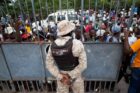
As many as 17 American missionaries were reportedly kidnapped by gang members in Haiti on Saturday, Oct. 16, including 14 adults and three children, according to an Ohio-based humanitarian aid group.
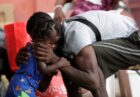
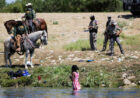
A group of Black Catholic administrators is calling on “Catholic leaders to do something, to say something” about undertones of racism they say is playing out in the treatment of Haitians at the U.S.-Mexico border.
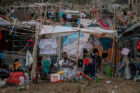
The migrants camped beneath the Del Rio International Bridge in Texas may have been dispersed by Sept. 24, but the impact of the latest chapter in this year’s border crisis will still be experienced nationwide, as thousands of the refugees are relocating across the U.S.
Haitian leaders from the Diocese of Brooklyn traveled to Texas this week with a dual purpose: to aid newly arrived Haitian migrants in the U.S., and to better understand their needs in preparation for their possible arrival up north.
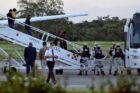
Responding to the border crisis in Del Rio, Texas, and broader immigration issues, more than 150 Catholic organizations last week implored President Joe Biden to end a policy called Title 42 — federal permission for the immediate expulsion of migrants and limitation of their right to seek asylum.
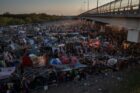
The chairman of the U.S. bishops’ migration committee and the head of Catholic Charities USA issued a joint statement Sept. 22 urging humane treatment of Haitians and other migrants as their numbers grow in southern Texas at the U.S.-Mexico border.
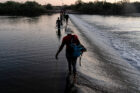
Now that passing immigration reform measures in the budget reconciliation package may be off the table, immigration advocates fear a divided Congress won’t stray from party lines to pass immigration reform through traditional means.
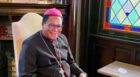
Bishop Pierre André Dumas said rebuilding his post-quake homeland of Haiti depends on repairing places of worship. “We put the focus on the rebuilding of the churches because, we think, that is how we rebuild the human being,” he said. “If you can rebuild the human being, spiritually, you can rebuild the country.”
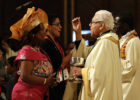
The Diocese of Brooklyn, including clergy across Brooklyn and Queens, is remembering retired Auxiliary Bishop Guy A. Sansaricq upon his passing as “a man of heart, a man of peace.”