
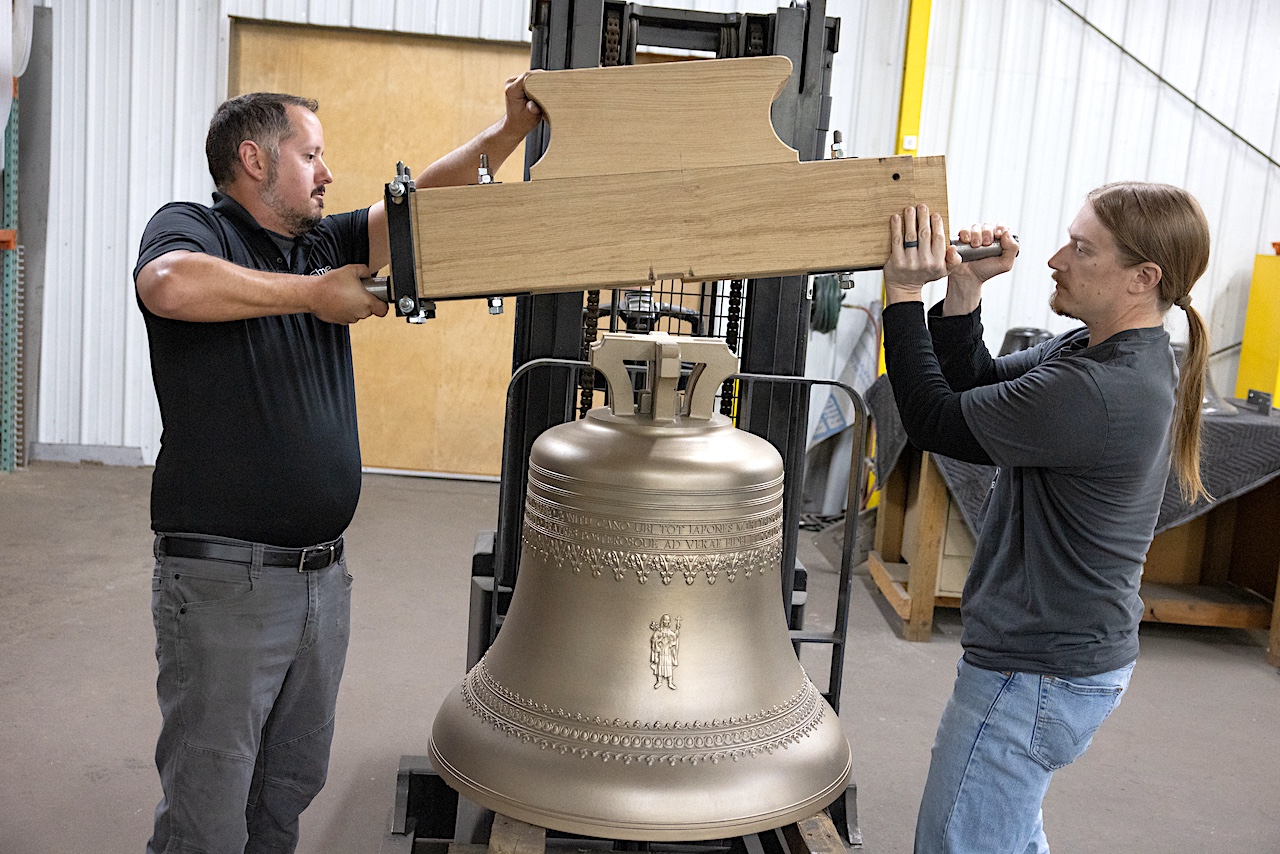
A shiny new cathedral bell, made to replace the one lost in the 1945 atomic blast over Nagasaki, Japan, will ring for the first time Aug. 9 on the 80th anniversary of the attack.
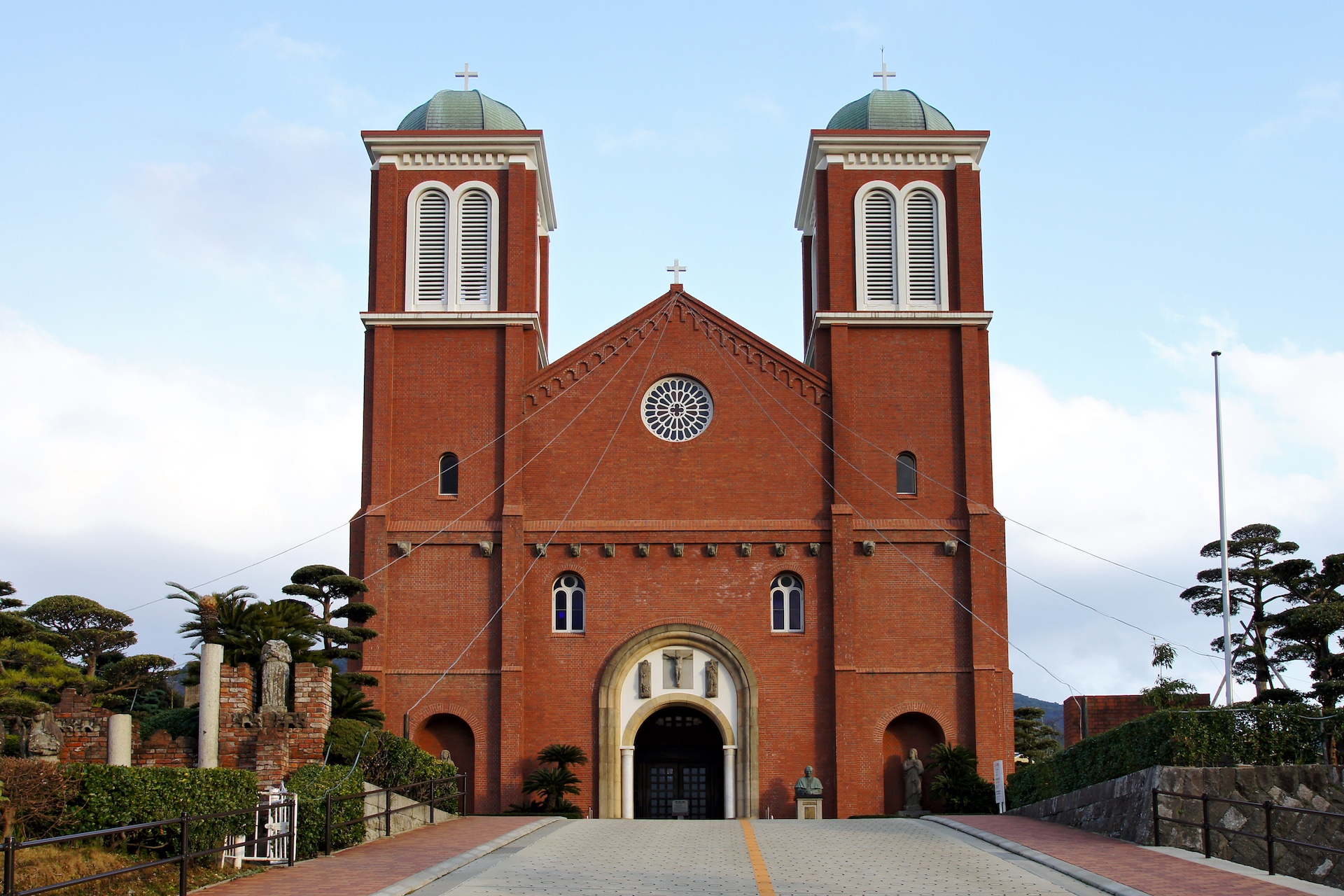
The St. Kateri Institute, a lay apostolate in Williamstown, Massachusetts, raised the $125,000 needed to forge, transport, and install the bell in the left tower of the historic Immaculate Conception Cathedral, also known as the Urakami Cathedral, located in Nagasaki.
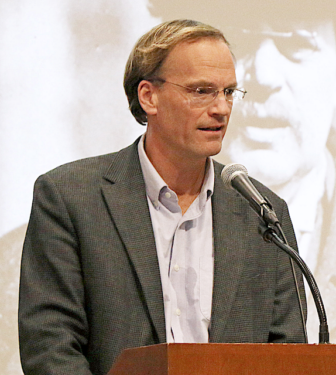
The Nagasaki Bell Project was led by Dr. James Nolan Jr., a sociology professor at Williams College in Williamstown, and president of the St. Kateri Institute board.
RELATED: US Prelates Head to Japan on ‘Pilgrimage of Peace’ Amid Nuclear Fears Old and New
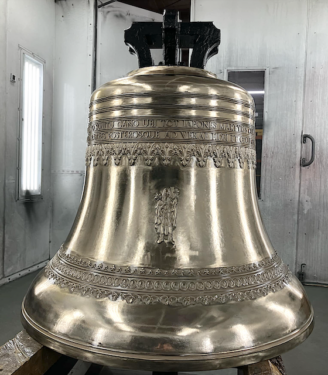
About 100 people attended an installation ceremony for the gleaming bronze bell on July 17. The gift was blessed by Archbishop Peter Michiaki Nakamura of Nagasaki, who referred to it as the “St. Kateri Bell of Hope.”
Nolan, told The Tablet on July 21 from Nagasaki, that “it is wonderful to see the project brought to completion.”
“The people of Nagasaki seem very grateful and joyful to have the bell finally restored to their beautiful cathedral,” he added, noting that 638 people donated to the project.
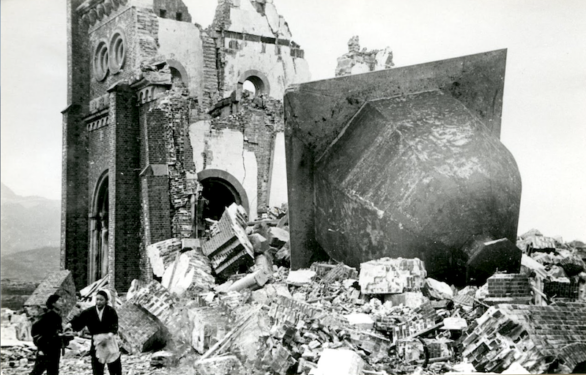
Last year, Nolan described how the bell in the right tower was recovered from the rubble, reinstalled, and has been in use since the cathedral was rebuilt in 1959, following near-total destruction from the atomic blast.
He said on July 21 that the old bell and its new counterpart will ring out for the first time together on Aug. 9, at 11:02 a.m. — “exactly 80 years since the atom bomb was dropped on Nagasaki.”
This event could draw even wider attention than the July 17 ceremony.
“There will be a large group of Americans in attendance,” he said.
Nolan’s fascination with Nagasaki grew upon learning the wartime experiences of his grandfather, the late Dr. James F. Nolan. As a U.S. Army Medical Corps captain, he was the chief medical officer for the Manhattan Project, which developed the atomic weapons used on Hiroshima and Nagasaki.
Nolan wrote about his grandfather’s stories in “Atomic Doctors: Conscience and Complicity at the Dawn of the Nuclear Age,” published in 2020.
Nolan credited Archbishop Joseph Mitsuaki Takami, predecessor of Archbishop Nakamura, for providing the details needed to recreate the lost bell. The broken remains of the lost bell can be seen in a small museum next to the Urakami Cathedral, he noted.
McShane Bell Company of St. Louis cast the new bell. Nolan said that it is the same size and dimensions as the bell it replaced, and even includes some of the Latin inscription on the original.
The inscription’s English translation is, “I sing to God with a constant ringing in the place where so many Japanese martyrs with honor have worshipped and have, by their example, called their brothers and sisters and their descendants to the fellowship of the true faith and of heaven.”
The Jesuit missionary, St. Francis Xavier of Spain, brought the faith to Japan in the mid-16th century. In an interview with The Tablet last year, Nolan explained how Nagasaki subsequently emerged as a cradle of Christianity in Japan.
This continued despite religious persecutions in the 1600s that created the “Hidden Christians,” who worshiped underground for 250 years until religious freedom returned in the mid-1800s.
But persecution, albeit subtle, reemerged during World War II because Christianity was a religion of the Allied nations battling Japan, Nolan said. Thus, he added, dropping a bomb on Nagasaki, the center of Catholicism in Japan, became a cruel irony for Japanese Catholics.
RELATED: U.S., Japanese Bishops Pledge to Concretely Work Toward ‘A World Without Nuclear Weapons’
Nolan recalled how a descendant of the Hidden Christians commented to him, “Wouldn’t it be great if some American Catholics gave us that other bell?”
The Nagasaki Bell Project formed as a result, Nolan said. He noted that he will remain in Nagasaki through the Aug. 9 anniversary. In the meantime, he is conducting research for a new book about Nagasaki.
I am only sorry so many lives were lost and pray that the ball signals peace throughout the world.