

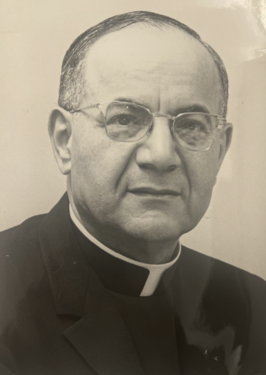
PROSPECT HEIGHTS — On Nov. 3, 1999, U.S. Sen. Daniel Patrick Moynihan eulogized “a son of New York and internationally known humanitarian” — Brooklyn priest, Msgr. Andrew Landi.
“I rise to pay tribute,” said the eloquent Moynihan about the priest, “who was taken from us last September. He was 92.”
Moynihan, a senator of New York, praised Msgr. Landi for his work as the assistant executive director of Catholic Relief Services from 1966 to 1979, plus his earlier resume.
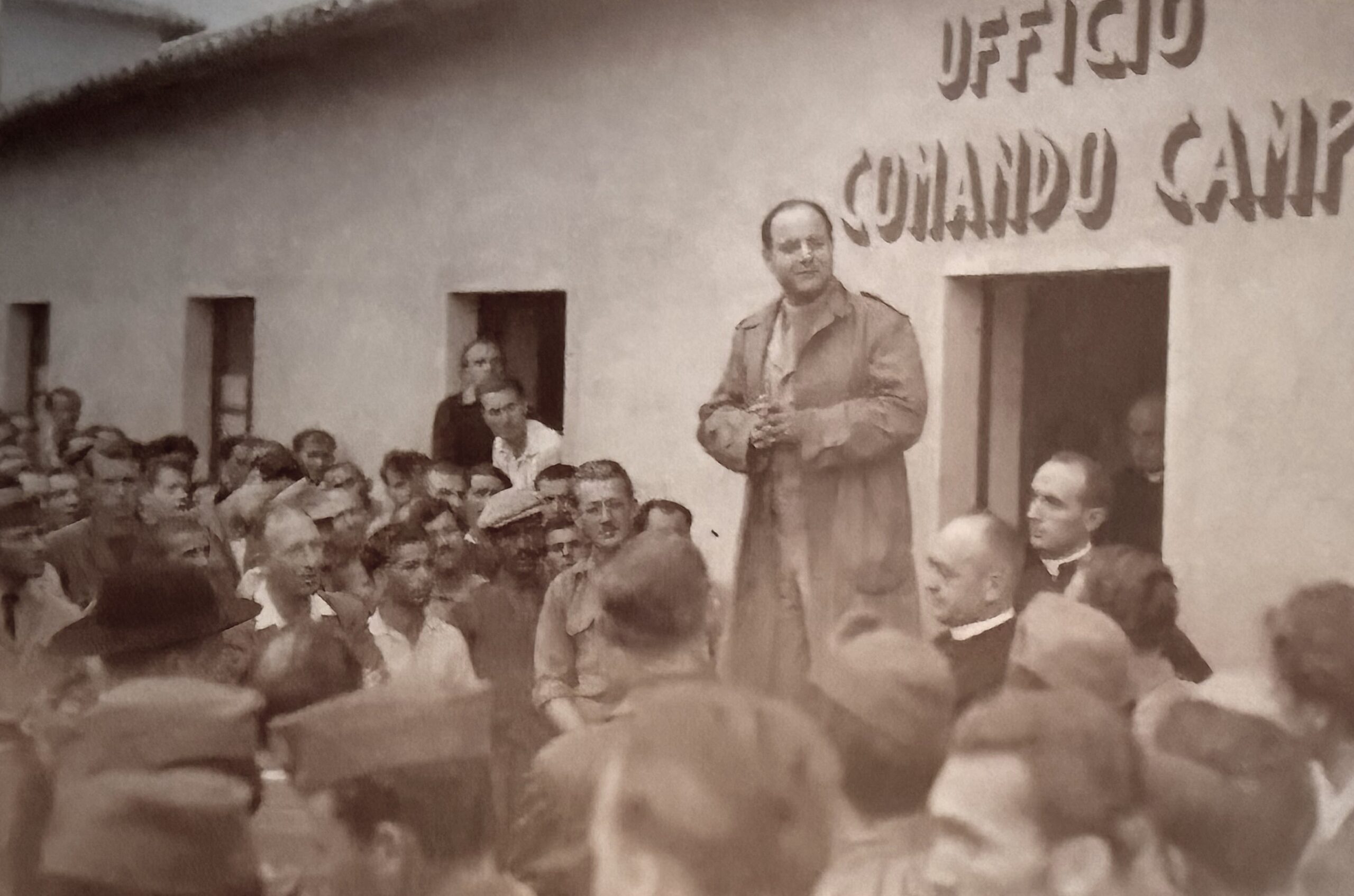
“This champion of the downtrodden was sent to Rome in 1944 to minister to the victims of World War II,” Moynihan continued. “He spent the next two decades providing haven to refugees of civil strife and natural disasters. He met with nearly every pope since Pope Pius XII and counted Mother Teresa among his friends.”
RELATED: Lost WWII Purple Heart Medal Returns to NJ Family After 31 Years
Still, 26 years later, Msgr. Landi’s legacy is juxtaposed with his participation in a controversial post-World War II program meant initially to bring Italian war orphans to the United States for adoption.
But according to a book published last year, the program quickly morphed into an adoption service that placed illegitimate Italian children, not orphans, with families in the U.S.
In “The Price of Children: Stolen Lives in a Land Without Choice,” author Maria Laurino asserts that the program caused immense harm by separating nearly 4,000 Italian children from their unwed mothers.
Laurino told The Tablet that this history makes Msgr. Landi’s legacy more “nuanced,” especially in view of his being an orphan himself.
“I found it profoundly sad when I learned that both his parents died and he spent years in an orphanage,” she said. “How horrible an experience that is — this loss of losing both.”
Meanwhile, Laurino added, adoptees from Italy “had no clue who their mothers were.”
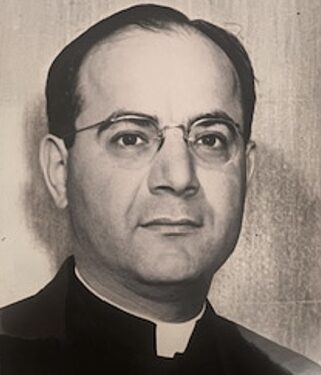
Andrew Landi was born in 1906 and baptized at Our Lady of Peace Parish in Park Slope, according to biographical information kept by the Diocese of Brooklyn.
He was 4 when, having lost both parents, he went to live at St. John’s Home, an orphanage at St. Marks and Albany Avenues. He graduated from St. Francis College in 1930 and continued to the new Seminary of the Immaculate Conception at Huntington, where his graduating class, in 1934, was the first to be ordained there.
As a young priest, Msgr. Landi was assigned to the predominantly Italian parish, St. Finbar, in Bath Beach, but he couldn’t speak his flock’s native language. So, he traveled to Italy to learn Italian, a move that would play a key role in his future.
In 1939, Msgr. Landi became the assistant director of what is now known as Catholic Charities Brooklyn and Queens.
Meanwhile, in 1943, Catholic Relief Services was formed to help thousands of people displaced by the carnage of World War II. CRS needed relief workers who spoke Italian, and Msgr. Landi joined the staff a year later.
According to the diocese, he directed what was then the largest wartime relief project in history. For this work, Pope Pius XII promoted him to “monsignor” — a high honor for a 39-year-old priest from Brooklyn.
Msgr. Landi stayed with CRS after the war, directing resettlement efforts for refugees, especially in Italy. A May 1, 1945, article in The Tablet conveyed his struggles, including a growing pool of adolescents and teenagers displaced by the war.
RELATED: The Life, Death, and Life Again of Father Edward Wallace in WWI
“These wayward child-derelicts have swept along in the tide of armies and evacuations,” he said in the article. “They live fitfully from whatever they can find or steal.”
In response, CRS and Msgr. Landi accumulated $6 million worth of welfare and relief supplies for Italy, including shoes, clothing, canned food, powdered milk, vitamins, and “physician, surgical and clinical instruments (including insulin).”
Msgr. Landi was often “up at daybreak and usually busy until midnight, shuttling about by Army jeep, supply truck or plane,” according to the article.
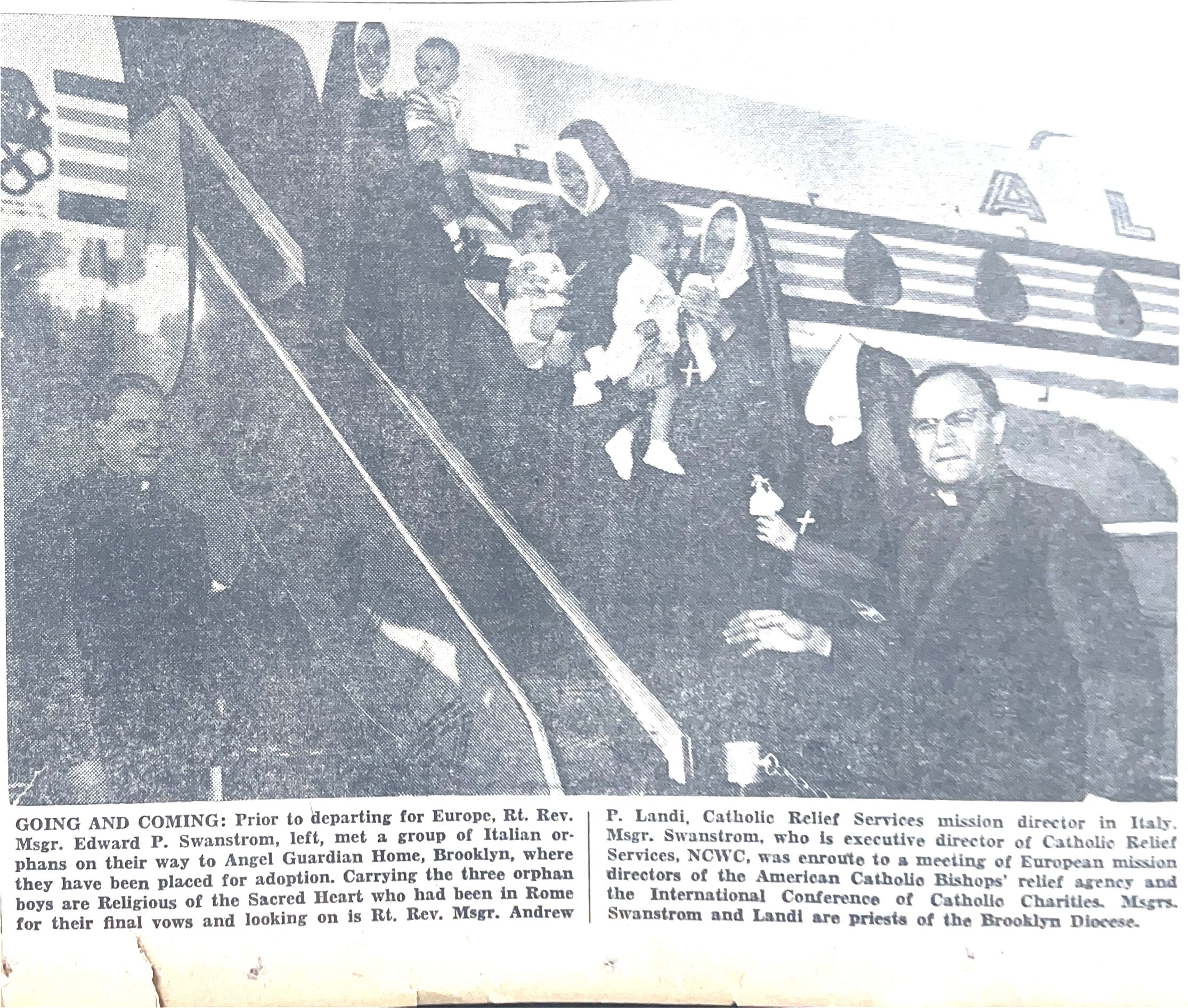
Part of the work involved finding homes in the U.S. for war orphans. But by 1951, the scope of the adoption program changed, without changing its name, to bring children of unwed mothers to the U.S., where couples yearned for babies of their own.
In “The Price of Children,” Laurino describes how unwed women and teenage girls were stigmatized by society through a religious belief dating back to the 13th century that children born out of wedlock were victims of their mothers’ sins.
These mothers were guilted into giving up their children, Laurino added. They often signed release forms that they didn’t understand, wrongly thinking they’d eventually be reunited, she said.
Although these children had mothers, they were brought to the U.S. on “orphan visas.” This false labeling, coupled with the sealing of adoption records for 100 years, kept the adopted children from learning their origins — as if their birth mothers never existed.
“There was always the belief that it was better to be raised under the protection of God, in a convent, or in an orphanage, than to be with a sinful mother,” Laurino said.
However, by 1970, the Italian program was defunct, as societal attitudes gave way to a new approach — homes for unwed mothers who wanted to keep their babies, Laurino said.
An estimated 3,700 adoptees came to the U.S. through the Italian program, and many have reached retirement age.
Msgr. Landi always defended the program and even said in a documentary that the children were “offered to us,” according to Laurino.
“What fascinated me was that the people running this program believed they were right,” she said. “When you are trained and educated in a moral framework, you just see this is right. I think [Msgr.] Landi was a believer that this was a good thing for these children, that they’re going to be in good Catholic homes.”
RELATED: Veteran is Grateful for God’s Guiding Presence in a Life of Faith and Service
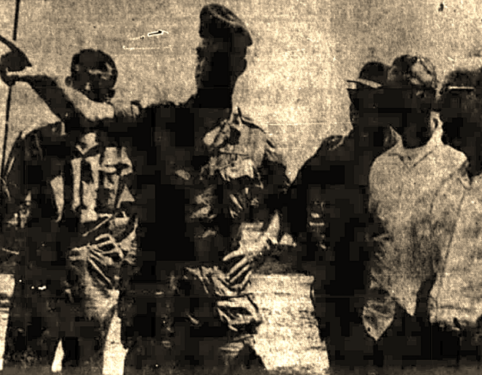
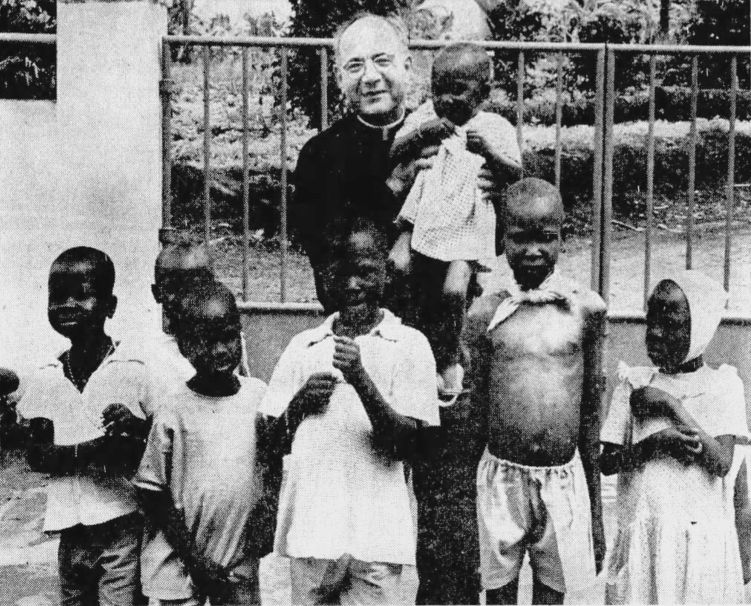
In 1962, Msgr. Landi became the regional director of CRS for Europe, the Middle East, and North Africa. By 1967, he was bringing aid to refugees on both sides of the Nigerian Civil War.
The Italian government honored Msgr. Landi, with its Star of Solidarity and the Order of Merit awards, according to the diocese. CCBQ’s Msgr. Landi Early Childhood Development Center in Long Island City is named for him.
Moynihan left Congress in 2001 and died two years later. His tribute to Msgr. Landi noted that the priest was the assistant treasurer for CRS until his death.
“In closing,” he said, “I would like to express my deep gratitude to Msgr. Landi for his lifelong commitment to ending social injustice, especially toward children living in poverty. “His distinguished devotion to God and his fellow man is a model to us all.”
As one of the over 3700 “war orphans” of the Italian diaspora who arrived in the USA on April 1965, I must admit that every time I hear the name Andrew Landi I get goose bumps… together with Edward Swanstrom and Virginia Formichi I will never forget when I started my search for my Italian birth origins and had just their names to begin my search in earnest. My past was concealled by the Catholic Church and to this day thousands like me still struggle to find the truth on their true identities! Even though we left a long paper trail in our wakes, it seems like we are condemed to oblivion unless each of us has the courage to speak up and demand justice and transparency from the institutions which tried to cover up our past… Thanks Bill for shedding some light on this dark page of Italian American history.
Come uno degli oltre 3700 “orfani di guerra” della diaspora italiana arrivati negli Stati Uniti nell’aprile del 1965, devo ammettere che ogni volta che sento il nome Andrew Landi mi vengono i brividi… insieme a Edward Swanstrom e Virginia Formichi non dimenticherò mai quando ho iniziato la mia ricerca delle mie origini italiane ed avevo solo i loro nomi per iniziare la mia ricerca sul serio. Il mio passato è stato nascosto dalla Chiesa cattolica ed ancora oggi migliaia di persone come me lottano per scoprire la verità sulla loro vera identità! Anche se abbiamo lasciato una lunga scia documentale, sembra che siamo condannati all’oblio se ognuno di noi non ha il coraggio di parlare e chiedere giustizia e trasparenza alle istituzioni che hanno cercato di nascondere il nostro passato… Grazie Bill per aver fatto luce su questa pagina oscura della storia italoamericana.