
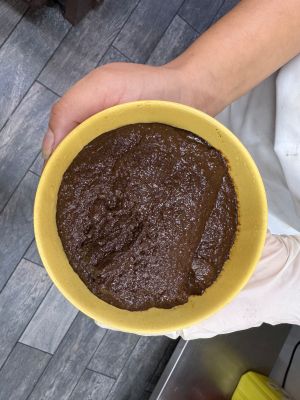
PROSPECT HEIGHTS — One of Mexico’s most iconic culinary creations, mole poblano, is more than just a rich, complex sauce — it’s a dish with a legend rooted in faith.
According to historical accounts, mole poblano was created by Dominican Sister Andrea of the Assumption at the Santa Rosa convent in Puebla, Mexico, in honor of an unexpected visit by a Spanish bishop or viceroy of New Spain in the 17th century.
As the story is told, the nuns were poor, and panic ensued.
They had no elaborate feast prepared, and very few ingredients on hand, but they decided to make the best of what little they had. The nuns gathered an assortment of ingredients: dried chillis, old bread, spices, nuts, seeds, and a small amount of dark chocolate, as well as roughly 20 other ingredients.
They ground, stirred, and simmered the mixture for hours until it had turned into a rich, aromatic sauce, which darkened to a deep red-brown when it was completed. The nuns then killed an old turkey, which was the only meat they had, and poured the sauce over it.
When the bishop asked what the dish was called, one of the religious sisters is said to have replied, “Es un mole,” an old Spanish term meaning “a mix” or sauce.”
While this culinary tale is the most famous origin story of mole poblano, it is not the only one. Father Alvaro Morales Sanchez, pastor at Presentation of the Blessed Virgin Mary Parish in Jamaica, Queens, said the dish doesn’t have a single inventor, and in fact, is the result of the fusion of pre-Hispanic and colonial traditions.
“Its origin goes back to the Aztecs, who prepared a sauce called ‘mulli,’ a Nahuatl word which means sauce or mixture. Over time, the word ‘mulli’ evolved into the Spanish word ‘mole,’ ” Father Sanchez said. “With the arrival of the Spaniards, new ingredients such as spices, nuts, and chocolate were added to this preparation.
“The most famous legend says that Sor Andrea de la Asuncion created mole poblano in the convent of Santa Rosa in Puebla around 1685 to honor the viceroy.”
That legacy continues today in kitchens across Mexico and beyond. Miguel Lopez, owner of the Mexican bakery Don Paco Lopez Panadería in Brooklyn, keeps the tradition alive with his own version of chicken mole poblano.
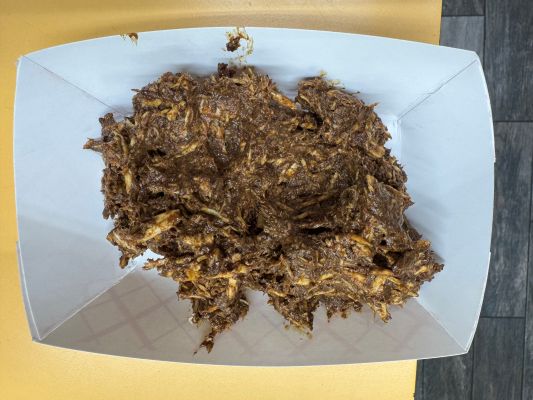
“The dish mole is important because it is a part of our lives,” he said. “We come from Puebla, and this is one of the best dishes from Puebla, so I’m very proud to be Mexican, and make this mole poblano for our community and customers.”
Lopez creates the dish with the same basic ingredients the nuns used and said the seven-hour process includes three different types of chilis: mulato, ancho, and pasilla.
Before combining those three through grinding, Lopez said they must be sun-dried. Once this base is complete, in a separate container, he adds ripened plantain, raisins, almonds, onion, garlic, and the ingredient that ties it all together — Mexican dark chocolate.
“You fry everything separate, and then you have to mix everything together,” Lopez explained. “This process will give us 10-20 pounds of mole and will take you at least seven hours, and we do this the old-fashioned way. My mother has the recipe for this.”
The process also takes three people to make, and one batch can last them two to two and a half weeks.
While the name mole poblano, along with many of its ingredients, has indigenous roots in Mexico, the flavors we know today emerged from the colonial-era fusion of Mexican and Spanish influences.
“In Mexico, they have the cocoa, but a lot of the products, like plantain, come from Spain,” Lopez said.
Even beyond the kitchen, mole poblano has been enshrined in Mexican cultural heritage. Lopez said the dish has been memorialized in the Kitchen of the Convent of Santa Rosa in Puebla, Mexico, the convent that housed the Dominican religious sisters believed to have invented the dish centuries ago.
Today, mole poblano is one of Mexico’s most treasured national dishes, often served during holidays, weddings, and religious festivals.