
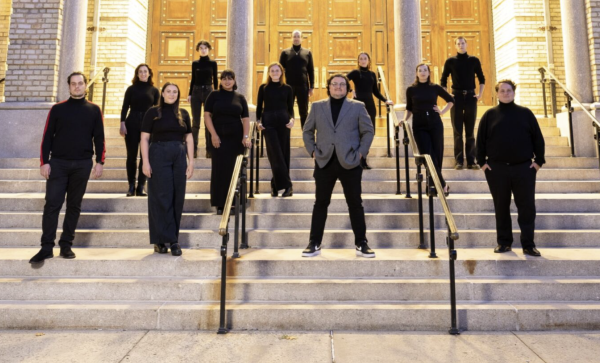
PROSPECT HEIGHTS – Music traditions honoring Hispanic heritage are an integral part of the Catholic faith, especially in the Diocese of Brooklyn, where you can find Latino musical influences ranging from mariachi to folklórico performed in Spanish-speaking parishes.
Many of these programs are spearheaded by Alejandro Zuleta, the music director at the Co-Cathedral of St. Joseph. Two years ago, Zuleta’s ministry, Music at Co-Cath, presented “El Oratorio Panhispanico” — a piece composed entirely in Spanish through the poetic form of “decimas,” utilizing a mix of contemporary classical sound and Latin American musical genres from Argentina, Mexico, Colombia, Peru, Chile, Cuba, and Venezuela, among others. The fully staged production included 12 singers and an 11-piece band that combined classical and traditional Latin American instruments.
Catholicism has a rich history of Hispanic music, dating back to Vatican II, when the Church first allowed Mass to be celebrated in local languages.
“Prior to Vatican II, there was a tradition of Hispanic music and other music, but they were not included in Mass,” explained Zuleta. “But when it was allowed to become part of the liturgy, that changed everything because worship incorporated not only the language but also traditional rhythms and instruments of every culture.”
Therefore, following Vatican II, local regional music in Hispanic and Catholic countries, including mariachi and folklórico, emerged as a significant part of Mass.
RELATED: Junior Mariachi Band Hits High Notes at Our Lady of Guadalupe Church in Brooklyn
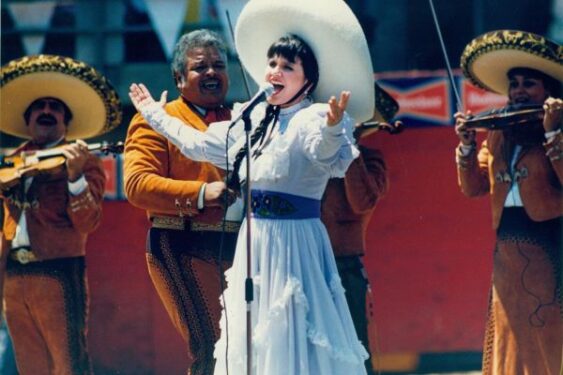
Mariachi, a Mexican-style folk music commonly performed by a small group of strolling street musicians dressed in native costumes, is a popular form of music that offers a spiritual flavor as it connects with listeners and is performed at life events, including funerals, weddings, and family celebrations.
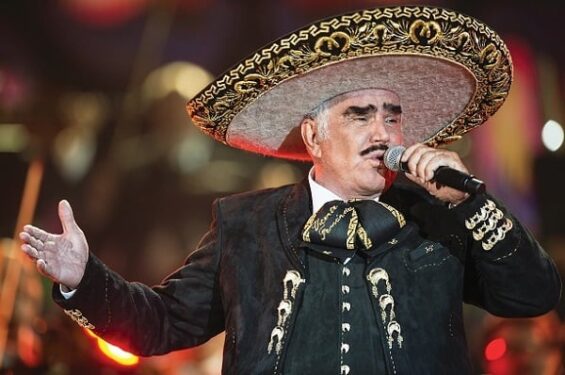
Among the many acclaimed mariachi artists is the late Mexican singer Vincente Fernandez, known as the “King of Ranchero Music.” In America, mariachi was brought to the forefront by pop singer Linda Ronstadt, who recorded two Grammy Award-winning Spanish-language albums — “Canciones de Mi Padre” in 1987, highlighting songs she learned from her father, and its follow- up, “Mas Canciones,” in 1991.
Folklórico is also an essential incorporates local cultural expression into the liturgy, allowing parishioners to embrace sacred music that reflects their cultural heritage through songs about faith and love.
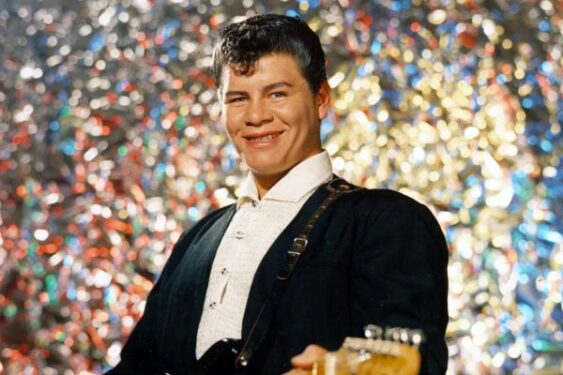
Popular examples of folklórico would be the Veracruz folk song “La Bamba,” made famous by Ritchie Valens in 1958 and still played today. Another is the more playful Spanish folk song “La Cucaracha,” which translates to “the cockroach,” that dates back to the Mexican Revolution.
“Traditional music, the music of the people, is where every other type of music comes from,” Zuleta said. “You can compare it to cuisine. For example, every high-end French cuisine comes from grandmother’s traditional recipes. They have been passed down for centuries. The deepest knowledge of music as an art in itself and is already present in traditional music. If you sever the connection between the tradition and the high-end, you will lose all the flavor.”
Zuleta is preparing for his upcoming production of “From Death to Eternal Light,” a performance of Renaissanceera sacred music by Spanish composer Tomas Luis de Victoria, including his “Requiem,” at the Co-Cathedral of St. Joseph on Oct. 17-18.
Zuleta summed up the importance of Hispanic music in the Catholic Mass, explaining that “once the Church allowed the music to be used, people started translating the music they did for festivities, for parties, for entertainment, for community, and ultimately for their lives into the Church.
“And that happened all over.”