
Already a servant of God, Dorothy Day has long been revered by Catholics for her social activism. Now, with the announcement that a new Staten Island ferry will bear her name, thousands of ferry patrons will also recognize her name on a daily basis.
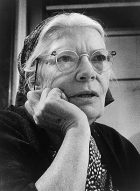
Already a servant of God, Dorothy Day has long been revered by Catholics for her social activism. Now, with the announcement that a new Staten Island ferry will bear her name, thousands of ferry patrons will also recognize her name on a daily basis.

Bishop Oscar Solis of Salt Lake City gets the sense that people want to “shortcut” the result of eliminating and eradicating racism, and don’t put in the effort necessary to create change.

Gov. Ralph Northam of Virginia signed a bill on Wednesday that officially ended the death penalty in Virginia. Twenty-two states have banned the death penalty before, but Virginia becomes the first one in the South to abolish capital punishment.

Archbishop Samuel Aquila of Denver, Colorado, said “senseless acts of violence” have become far too common in the country and his state.
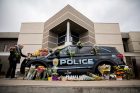
Officer Eric Talley, an 11-year veteran of the Boulder Police Department, was the first to arrive at the scene of a mass shooting at a King Soopers grocery store the afternoon of March 22 and the first of 10 to be killed at the store.

In the days following the March 16 shootings in Atlanta that left eight people dead, including six Asian American women, protests and vigils took place around the country remembering the victims and calling for an end to a growing wave of anti-Asian racism and violence.

Rachel and Mara Snyder, and Madeline “Maddie” Mullin are part of history, becoming part of the inaugural group of young women to become Eagle Scouts in the Boy Scouts of America.
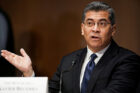
Once he is sworn in, Xavier Becerra, California’s former attorney general and a former member of Congress, becomes the first Latino to be secretary of the U.S. Department of health and Human Services.

In attempting to solve any problem, one might face two very different challenges. The first is when almost no one else even recognizes there is a problem, and, when they’re told, they remain skeptical. The other is when people know there’s a problem, but don’t quite understand its scope and details.

For the first time in at least 30 years, on March 16 interfaith leaders — including two Catholic bishops — got a seat at the table to discuss global issues with the head of the U.S. Department of the Treasury.