
When Pope Francis landed in Skopje, North Macedonia Tuesday, he offered a different tone than his visit to neighboring Bulgaria, praising the nation for their welcome of migrants and refugees.
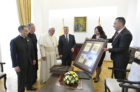
When Pope Francis landed in Skopje, North Macedonia Tuesday, he offered a different tone than his visit to neighboring Bulgaria, praising the nation for their welcome of migrants and refugees.
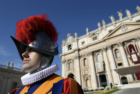
For at least the past six centuries, there’s always been a spirit of “We Few, We Proud,” about the Swiss Guards, the small but elite military force, with their signature multi-colored uniforms and timeless halberds, responsible for the personal security of the pope.
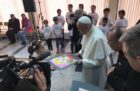
On his second day in Bulgaria, Pope Francis made an early morning visit to a refugee center, thanking children and families for their joy despite the pain of leaving their homes and the difficulties of integrating into another culture.

An El Salvadoran countryside, a Canadian mosque, a carpenter’s workshop on the small Italian island of Lampedusa and a family home in Minnesota serve as the setting of Salt and Light Catholic Media Foundation’s latest documentary, The Francis Impact.
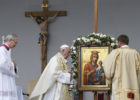
In his opening act Sunday on a two-day visit to Bulgaria, Pope Francis praised the nation as a bridge not only among the various religious communities present within its territory, but also on the European continent.
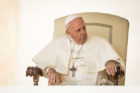
Despite stating at the outset that he didn’t like travel and didn’t plan to do much of it, during the first six years of his pontificate Pope Francis made close to 30 international trips, including visiting virtually every country of Latin America.
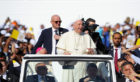
When Pope Francis sets off for Macedonia and Bulgaria this weekend, it could well be a classic case of big things coming in small packages.
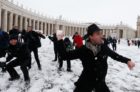
A genuine crisis – not a self-invented melodrama, but an honest-to-God existential threat – is a funny thing, in that often it produces wildly contrasting effects in people. Among some it can generate burning anger and resentment, in others confusion and despair, and in still others only shrugs and ennui.
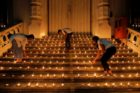
After attacks that took the lives of more than 250 people on Easter Sunday, the Catholic Church in Sri Lanka is working on becoming a beacon of hope. Yet according to the local cardinal, if civil authorities don’t find the perpetrators and put them on trial, they risk the community taking justice into its own hands.
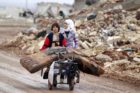
According to the international papal charity Aid to the Church in Need, 2019 is already one of the bloodiest for Christians in modern history, with violent attacks in the Central African Republic (CAR), southern Philippines, Nigeria, India and Sri Lanka.