As the number of African Catholics continues to soar, one Kenyan nun is warning that they must first “clean house” when it comes to the issue of clergy abuse before exhibiting greater leadership in the global Church.
A little more than four years after Pope Francis published one of his most provocative documents, not to mention perhaps his most political, in the form of his eco-encyclical Laudato Si’, the pontiff appears increasingly disappointed in the way the environmental manifesto been received.
A much-anticipated Pan-African Congress opened Dec. 5 with a plea for justice, both for the continent and its people.
The pontiff walked his own talk by having his “charitable right arm,” Polish Cardinal Konrad Krajewski, bring 33 migrants from Afghanistan, Cameroon and Togo who had been stranded on the Greek island of Lesbos, back to Rome under Vatican patronage.
Late last month, an Egyptian higher court granted a Coptic Christian woman equal inheritance with her brothers, overturning the rulings of two lower court judges.
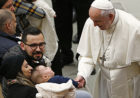
They’re often the first people he greets when holding an audience, so it came as no surprise Dec. 3 when Pope Francis released a message for the World Day of Persons with Disabilities, calling for them to be fully integrated in society, not only through legislation but a much-needed change in mentality.
Throughout his papacy, during which he clocked some 40 trips to Africa, St. Pope John Paul II would frequently refer to the continent as both a “missionary church and a mission church.”
Despite rising extremism, two missionary priests in Southeast Asia believe that anti-Christian persecution has “strengthened the prophetic role of church.”
In a document signed in the city where the Nativity crèche was born, Pope Francis on the first Sunday of Advent urged Christians to keep the “beautiful family tradition” of preparing these scenes in the days before Christmas, but also to keep the custom of setting them up in the workplace, in schools, hospitals, prisons and town squares.
Two bishops, one Catholic, the other Orthodox, have remarkably different takes on how Christians are being treated in what is considered to be one of the hotbeds of Christian persecution in Egypt.