
Pope Leo XIV urged Catholics in secular Uruguay to find strength in their small numbers, live their faith publicly and become witnesses who draw others toward Christ.
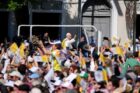
Pope Leo XIV urged Catholics in secular Uruguay to find strength in their small numbers, live their faith publicly and become witnesses who draw others toward Christ.
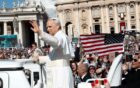
Ahead of the Nov. 3 midterm elections, a bipartisan group of more than 90 U.S. lawmakers urged House Speaker Mike Johnson to invite Pope Leo XIV to address Congress, saying the U.S.-born pope’s “unique perspective” and “ties to our country” would be “a unifying force” for officials.
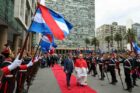
Pope Leo XIV landed Nov. 6 in Uruguay, Latin America’s most secular country, and used his first address to challenge the nation’s political leadership on abortion, euthanasia and a suicide rate that remains among the highest in the Americas.
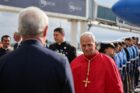
Pope Leo XIV arrived in Uruguay on the afternoon of Nov. 6, telling journalists aboard his 13-hour transatlantic flight from Rome that he was “convinced that this trip had to go forward” following lung cancer surgery a little more than three weeks earlier.
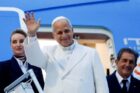
Pope Leo XIV departed Rome for Uruguay on the morning of Nov. 6 at the start of a 12-day trip to South America, the longest international journey of his pontificate, a little over three weeks after undergoing surgery for lung cancer.

Zaña is the third and last shrine on Pope Leo’s first apostolic journey to Latin America, after the national Marian shrines of Uruguay and Argentina.
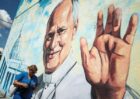
When Pope Leo XIV arrives in Argentina Nov. 8, he will become the first pope to set foot in the country in nearly four decades.
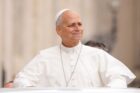
Flying to South America a little over three weeks after surgery for lung cancer, Pope Leo XIV is ready for this trip, the Vatican confirmed.

In a world full of possibilities, yet still marked by injustice and fear, Pope Leo XIV said young Christians are called to transform the world with love.
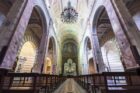
When Pope Leo XIV visits Latin America, his journey will bring him before a small Marian image that Uruguay’s determined secularization could never entirely separate from the country’s national identity.