

LOWER MANHATTAN — Before the American Revolution (1765-1783), there was a different revolution nearly 100 years earlier in England.
The so-called “Glorious Revolution” of 1688–1689 was an overthrow of King James II, a convert to Catholicism. This led to a swift crackdown on Catholics in New York, where in 1700, the colonial government passed an “Act Against Jesuits and Popish Priests.”
This law ordered the removal of Catholic priests from the colony or face life imprisonment. Anyone who harbored a priest faced heavy fines.
RELATED: How the Seeds of Religious Freedom Were Planted in the Hard Ground of Colonial America
But priests risked even greater danger if caught re-entering New York, said Father Anthony Andreassi of Brooklyn, a historian of the Church in the Americas.
“If one came back a second time, he would have been executed,” Father Andreassi said.
So, Jesuit missionaries rode horseback deep into the colonial frontier to celebrate Mass with isolated pockets of Catholics. They just had to be secret about it.
These “circuit riders” dropped the title “father” and took fake last names. Non-clerical attire formed their disguises.
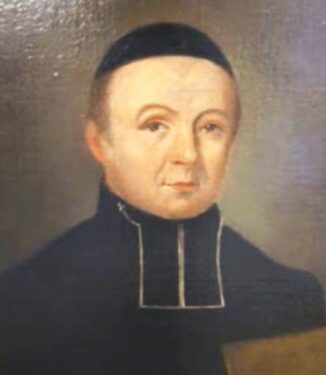
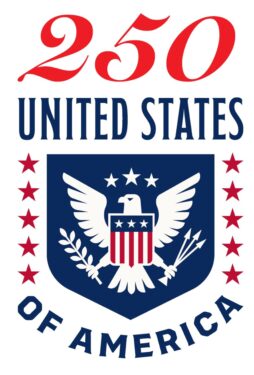 Such was the ministry of the German Jesuit, Father Ferdinand Steinmeyer, alias Ferdinand Farmer.
His biography is found in the Catholic Encyclopedia, the digital library collections of the University of Pennsylvania, and the Jesuit Studies Digital Collection.
Steinmeyer was born in 1720 in Swabia, Germany. As a young man, he was educated in mathematics and astronomy, but he later discerned that he would become a priest.
He entered the Society of Jesus (the Jesuits) in 1743 at Landsberg with hopes of becoming a missionary in China, according to the biographical accounts.
The Jesuits, however, sent him to America instead.
Some accounts say he first arrived in Maryland in 1751, where Catholics, and the Jesuits in particular were allowed to exist. But soon after that, he went to Pennsylvania and ministered in and around Lancaster.
By 1758, he was stationed at St. Joseph’s Church in Philadelphia, one of the few cities where Catholics were allowed to settle outside Maryland. From there, he launched his circuit-riding forays into the backcountry of eastern Pennsylvania and north-central New Jersey.
Since his journeys were covert, there are very few written accounts of his adventures.
RELATED: ‘Burning With Patriotism, Catholics Helped Save the Revolution at Battle of Brooklyn
Clearly, however, he must have understood the risk, considering New York’s outlawing of priests had been in effect at that point for nearly 60 years.
Also, the frontier presented its own dangers from thieving “highwaymen” and wild animals.
A century earlier, eight Jesuit missionaries were tortured and killed, not by a colonial government, but by members of the Iroquois tribe in upstate New York and Ontario, Canada.
Today, they are known as the “North American Martyrs.”
Ultimately, there is no official account of a priest being executed for unlawfully entering New York, Father Andreassi said.
Still, the missionaries took the threat seriously because anti-
Catholic sentiments had strengthened since 1517, when the Protestant Reformation began spreading across Europe.
“In the history of religious hatred, to kill a priest, a minister, a rabbi — you’re killing an official representative of the religion,” Father Andreassi said. “You’re trying to send a real statement there.”
So, Father Farmer, wearing his disguise, saddled up and ventured forth, even to New York City.
RELATED: How a Group of Catholic Patriots Helped Shape the Birth of the U.S.
In 1781 and 1782, at the height of the Revolutionary War, he regularly celebrated Mass for growing groups of immigrants in a loft on Water Street and a house on Wall Street.
The missionary is believed to have been the first priest to celebrate Mass in the city, according to biographical accounts. He also traveled into the Hudson River Valley, where he shared the Eucharist and baptized children.
After the war, when the British evacuated New York City, Father Farmer celebrated Mass openly there.
However, his wartime steadfastness in sharing the faith and the sacraments sustained the city’s growing Catholic population.
These actions, according to the accounts, paved the way for the establishment of St. Peter’s Parish on Barclay Street — the “cradle of Catholicism” in New York for being the first Catholic church in the state of New York.
RELATED: How One of the Founding Fathers Elevated Catholics in the New Republic
Catholics in Brooklyn regularly crossed the East River to attend Mass there until the building of their first house of worship on Long Island, St. James Church, in 1822. Today it is the Cathedral Basilica of St. James in Downtown Brooklyn.
Father Farmer became one of the first trustees of the University of Pennsylvania. He died in Philadelphia in 1786 and is interred at the Old St. Joseph’s Church.