
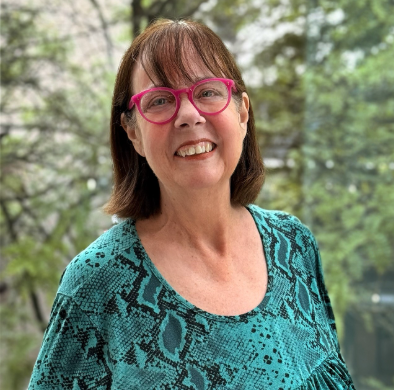

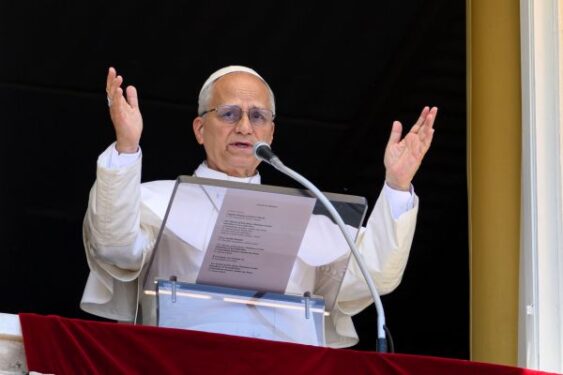
BEDFORD-STUYVESANT — When Darcel Whitten-Wilamowski, director of the Sister Thea Bowman Mass Choir, learned that in his first encyclical Pope Leo XIV issued a formal apology for the Catholic Church’s role in slavery, she was overjoyed.
“As a black Catholic, I feel seen,” she said. “It’s like a light bulb moment, like when an actor on the stage has the spotlight on them. What it says to me is that the pope is saying to us, ‘I see you, and I want you to be hopeful.’
“He knows we’re here, and I take great comfort in that. It solidifies my faith.”
African Americans in the Diocese of Brooklyn who spoke to The Tablet praised the Holy Father’s message in which he acknowledged that the church was late in condemning slavery — a condemnation that didn’t come until 1888, two decades after the 13th Amendment outlawed slavery in the U.S.
In “Magnifica Humanitas,” his first encyclical as leader of the world’s 1.4 billion Catholics, Pope Leo XIV focused on the dangers that artificial intelligence poses. But he also wrote about the evils of slavery and asked for forgiveness for the church’s slow response.
RELATED: 13 Things To Know About Pope Leo XIV’s Encyclical on AI
“It is impossible not to feel deep sorry when contemplating the immense suffering and humiliation endured by so many in stark contrast to their immeasurable dignity as persons infinitely loved by the Lord,” the Holy Father wrote.
“For this, in the name of the church, I sincerely ask for pardon,” he added.
In “Magnifica Humanitas,” which Pope Leo XIV released on May 25, the Pontiff warned that AI could lead to exploitation — child labor and human trafficking — in which the humanity of victims is ignored, similar to how the humanity of slaves was brushed aside.
Father Alonzo Cox, vicar for the Vicariate Office of Black Catholic Concerns, said it is notable that the request for forgiveness comes from the Catholic Church’s first American pope.
“I think that as an American, he understands completely the sins of segregation here and racism here. And he is aware of the hurt that many people of color went through,” Father Cox said. “I would even say that he understands that black Catholics were hurt but remained in the church, primarily because of what the church means to them.”
For Joseph Murray, the vicariate’s administrative assistant, the fact that the pope’s apology was not off-the-cuff but rather part of an official church document is striking.
“For this to be publicly acknowledged in an official Vatican document is very meaningful,” he said. “Up until this year, we had not had an official condemnation of the practice of slavery. What makes this so striking is that it’s a full condemnation couched in the language of a personal apology from the pope.”
The encyclical was praised by the National Black Catholic Congress, whose president, Bishop Roy E. Campbell Jr., described it as “proper and just,” and by the Knights of St. Peter Claver, the black Catholic fraternal organization, which issued a statement offering its “full support” of the Pontiff’s words.
Shaniqua Wilson, a grand lady of the Knights of St. Peter Claver Ladies Auxiliary, said she gasped when she read the encyclical.
RELATED: How Our Lady of Victory Church’s Pipe Organ Bridges Faith, Black History
“On the one hand, I am grateful for the apology,” she said. “Truth matters. Accountability matters.
However, Wilson added that she does have mixed feelings.
“As the descendants of enslaved Africans,” she said, “we have loved a Church that has not always loved us back.”
Murray wonders what’s next.
“What does the church do as an institution to engage in a level of restorative justice for the people who are the generational descendants of this inhumane practice?” he asked.
Meanwhile, Whitten-Wilamowski remains hopeful.
“Now that this pope sees us, I hope we’re able to bring ourselves back to the table,” she said. “We just want to be at the table.”
Father Cox predicts that black Catholics will be willing to grant the pope’s request for forgiveness.
“The Holy Father was able to acknowledge that the church made some pretty big mistakes in the past,” he said. “With that acknowledgment, we can continue to build a future that is rooted in peace and harmony.”