

In the Catholic Church, a person doesn’t have to be an MD or a Ph.D. to be considered a doctor.
There are 38 saints who have the distinction of being doctors of the Church — a title bestowed by popes over the centuries to individuals whose writings and teachings have made profound contributions to Church doctrine.
These individuals are considered authorities on Catholic teaching, and their writings are often cited as authoritative sources.
“It recognizes that a saint has made eminent, universal, and enduring contributions to Church doctrine,” explained Father John Cush, professor of theology at St. Joseph’s Seminary and College in Dunwoodie.
Doctors of the Church include St. Thomas Aquinas, St. Anthony of Padua, St. Francis de Sales, St. Gregory the Great, St. Bonaventure, St. Robert Bellarmine, and St. Bernard of Clairvaux.
It’s a rare feat, especially considering that the church has tens of thousands of saints and only 38 doctors. And of the 38, only four are women: St. Teresa of Ávila, St. Catherine of Siena, St. Thérèse of Lisieux, and St. Hildegard of Bingen.
RELATED: Female Doctors of the Church Have Rx for Spiritual Ailments
The first saints to be declared doctors were St. Ambrose, St. Jerome, St. Augustine, and Pope Gregory the Great, who were designated together by Pope Boniface VIII in 1298.
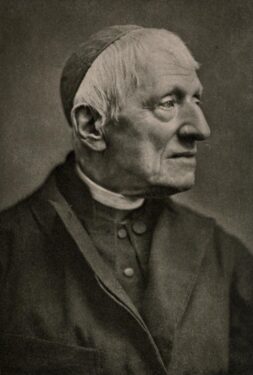
The latest to earn the title is St. John Henry Newman, who was designated by Pope Leo XIV on Nov. 1 (All Saints Day), which fell during the Jubilee of the World of Education.
Not only did the Holy Father grant him the title of Doctor of the Church, but he also named him co-patron of Catholic Education, a title he shares with St. Thomas Aquinas.
Pope Leo cited St. John Henry Newman’s “impressive spiritual and cultural stature,” which, he added, “will surely serve as an inspiration to new generations.”
On Feb. 2, the Vatican released a decree inscribing Oct. 9 as the date for the optional memorial for St. John Henry Newman. This move means the date will be inserted into all calendars and liturgical books for the celebration of Mass. His feast day is also Oct. 9 — the day he converted to Catholicism in 1845.
The elevation of St. John Henry Newman has raised questions about how one becomes a doctor of the church.
“There’s no formal, canonical equivalent to canonization or beatification in which miracles are required,” Father Cush said, noting that it simply comes down to a pope deciding to name someone a doctor. This usually happens after a pontiff has consulted the Dicastery for the Causes of Saints.
While there is no formal process, there are criteria a potential doctor must meet.
For example, a person must have already been declared a saint, and their writings must be found to have “exceptional theological depth,” Father Cush said.
A pope must also issue a formal proclamation.
RELATED: Pope Names St. Newman Patron of His Alma Mater in Rome
Christopher Denny, a theology and religious studies professor at St. John’s University, said it’s important to remember that doctors were not necessarily intellectual giants. “Most of the doctors of the Church were not part of formal educational structures as we understand them today,” he said. “We’re talking about people who are teachers of wisdom.”
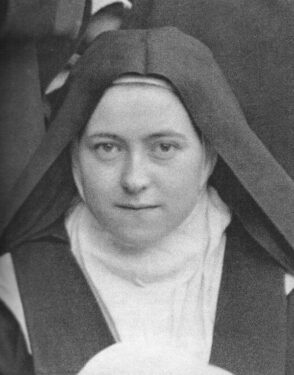
Take St. Thérèse of Lisieux, for example. She had little in the way of formal education and died of tuberculosis at the age of 24. Yet, her writings, in which she encourages the faithful to adhere to the “Little Way,” by performing small acts of kindness with great love, have had a profound influence, Father Cush said.
“What makes her a doctor? Her living out her ‘Little Way’ by doing little things with great love,” he said.
The doctors are helpful to today’s Catholics, according to Denny, who recommended reading their writings for knowledge and inspiration.
“I would also recommend people to start to bring these saints, these holy men and women, into their daily lives of prayer,” Denny said. “Ask for their intersession. Ask for their aid in helping Catholics grow in wisdom.”