
CORONA — For the first time in three decades, Eduvigis Loayza said she hopes to go home to Venezuela and see her family.
“I told my sister, ‘I think we’re going to finally hug each other this year,’ ” she said.
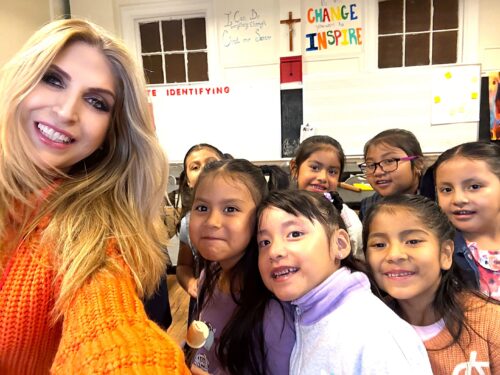
Loayza, a pianist, left her hometown, Caracas, the nation’s capital, after Hugo Chávez seized control of the country in 1992. She immigrated to New York City, became a U.S. citizen, and now teaches music for Catholic schools in Queens.
Chávez’s regime, and that of his successor Nicolás Maduro — who took over in 2014 — caused three decades of socialism in Venezuela, wrought with government corruption and extreme poverty. Since 2014, an estimated 8 million people, about 23% of Venezuela’s population, left the country, according to the United Nations.
Loayza has not visited Venezuela since she left, out of fear of government retribution. Consequently, she missed her parents’ funerals. She fervently prayed for an end to Maduro’s regime. That came Jan. 3 when U.S. forces snatched him in a daring nighttime raid on Caracas.
Maduro and his wife were arraigned in a New York federal court on Jan. 5. Maduro faces a narco-terrorism charge, and he and his wife were both charged with cocaine importation conspiracy. They both plead not guilty.
“We knew this was going to happen one day,” Loayza told The Tablet on Jan. 5. “We just didn’t know when. But we are very Catholic — a country that always has so much faith.
“God listened to us.”
RELATED: Pope Leo, Bishops React to US Capture of Maduro With Concern for Venezuela
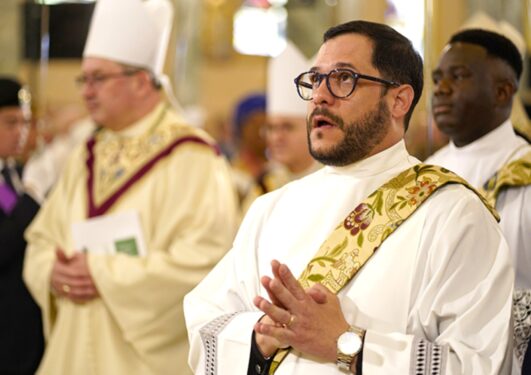
The joy is widespread, but with a dose of anxiety, said Father Ernesto Alonso, parochial vicar for St. Leo Parish in Corona. He is also the coordinator of the Ministry to the Venezuelan Immigrants for the Diocese of Brooklyn.
“After the arrest, people feel release,” he said. “But they are worried with the uncertainty of what is going to happen in the government.”
Since Jan. 3, the Trump administration has said the U.S. will run the country while working to create conditions for fair, independent elections. Few details were available as of Jan. 6.
Still, Father Alonso confirmed, “The majority don’t want to go back to the day before January the 3rd.”
In 2021, Venezuela’s diaspora in New York City included about 15,200 people, according to Social Explorer, a data research group. Within a year, however, Venezuelans accounted for a significant share of the 136,000 immigrants bused into New York during the border crisis, according to city data.
Many of the newcomers had recently completed the 5,000-mile journey spanning nine countries to reach the U.S., including the dangerous, crime-ridden jungle treks through Panama’s Darien Gap and Mexico’s Sonoran Desert.
RELATED: Migrants Survived a Dangerous Panamanian Jungle, Face an Uncertain Future Here
Now, Venezuelans are the city’s fastest-growing immigrant group, according to Social Reporter, which noted that 30% of people of Venezuelan heritage (about 5,390 people) have settled in Queens.
Father Alonso became coordinator of the Venezuelan immigrant ministry last March. He said the exact count of Venezuelans in the diocese is currently unknown. The number is fluid, he explained, because many of the Venezuelans who came to the diocese since 2022 “have been deported.”
Loayza teaches music for St. Leo and Our Lady of Sorrows Catholic Academies, both in Corona. She regularly phones her sister, Carolina, in Caracas, who updates her on conditions back home. The teacher said that anyone not belonging to the United Socialist Party of Venezuela, founded by Chávez in 2007, is denied government services, education, jobs, and health care.
Protesters risk arrest or worse, Loayza said.
“They would just go into your house, grab whoever they feel like, and take them to jail,” she said. “A lot of people disappeared.”
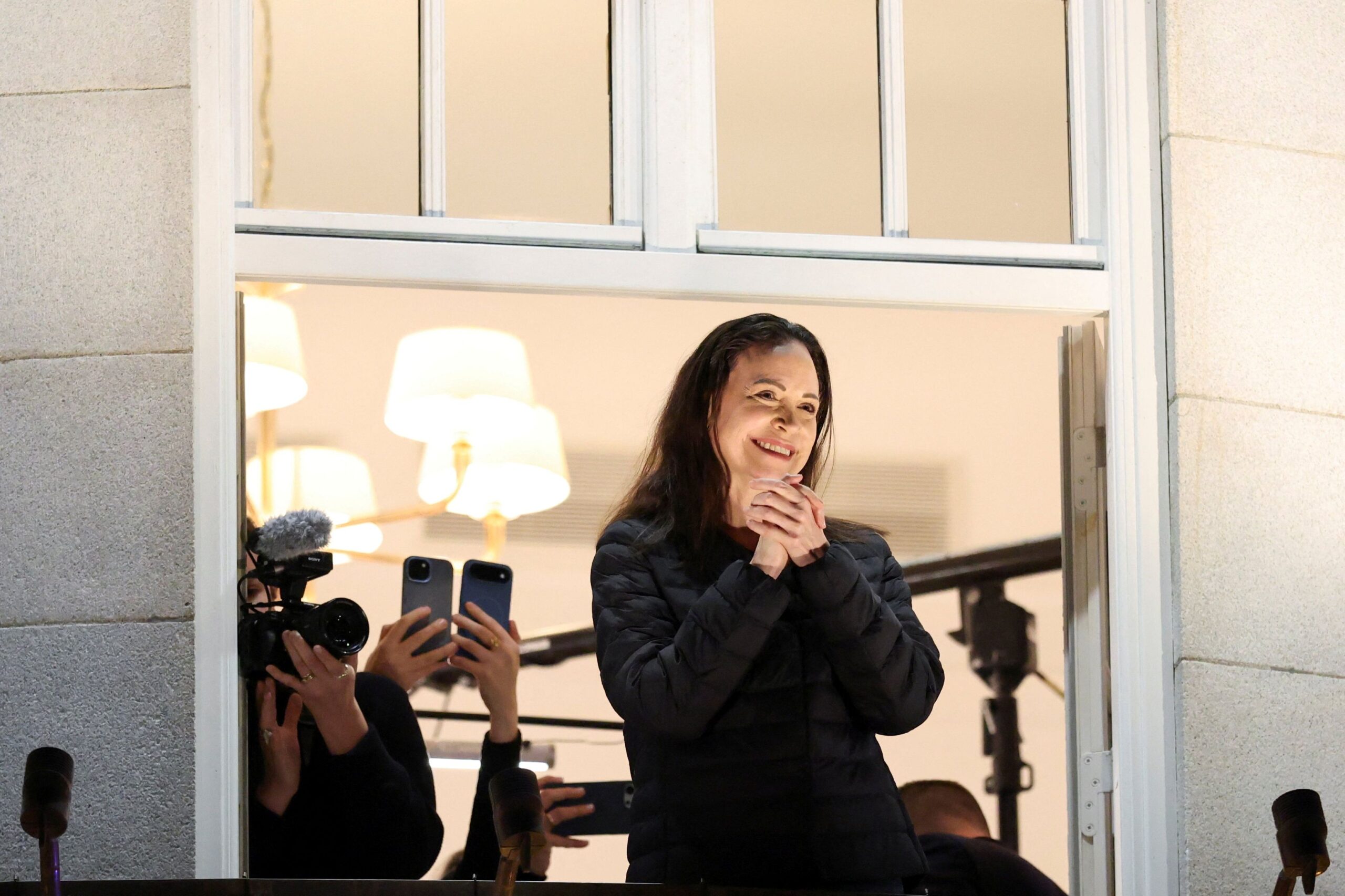
Among the regime’s longtime critics are the nation’s Catholic bishops, who routinely blamed the government for chaos and corruption.
RELATED: Venezuela Bishops Call for Change in Political Leadership
In 2021, they issued a statement decrying the conditions that caused the mass exodus.
“When the children of a nation decide to leave their country,” they wrote, “it is because, besieged by precariousness, they have reached an extreme situation in which they have no other way than to assume the challenge and the risk of facing the unknown.”
Some of the prelates expressed similar concerns after Maduro’s arrest.
For example, Bishop Juan Carlos Bravo Salazar of Petare, a diocese east of Caracas, said Venezuelans “are living through moments of confusion, uncertainty, and pain, in which we do not see clearly what is happening.”
While the Trump Administration has acknowledged that much work remains to be done before an election can be held, Loayza hopes that popular opposition leader and Nobel Peace Prize laureate, María Corina Machado, will win future elections and lead the nation to prosperity.