
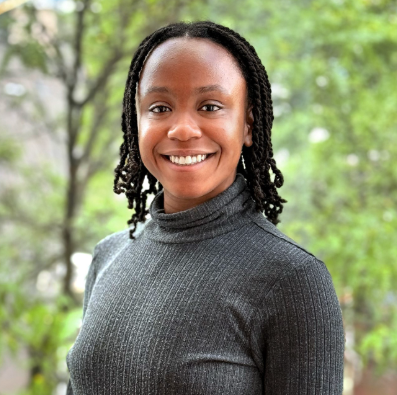


JAMAICA — For the last 36 years, Christine Goodwin, an assistant provost for Institutional Research in St. John’s University’s Office of Institutional Research, has lived thanks to a kidney donated by her father.
“A parent would do anything to help their child, so he was happy that he was able to donate and give me this kidney and give me this life that has been an amazing journey,” said Goodwin, who received the kidney from her father when she was 15.
On March 23, 1989, Goodwin and her family were shocked to learn she would require immediate dialysis after her kidneys had shut down. She was placed on dialysis until November 1989, when she underwent a kidney transplant.
However, over the past 36 years, Goodwin has noticed a gradual decline in her blood levels. Then, two years ago, doctors told her that her kidney was failing, and time was of the essence.
“You’re upset. Everyone’s upset, but we have to count our blessings, and God has been good,” Goodwin said. “It’s been 36 years, and 36 years is an amazing time to have a transplant. Most living transplants last about 20 years.”
“It’s been a blessing, so we have to look at it that way.”
Now 51, she credits her kidney transplant for giving her a life she once thought she’d never have — graduating from high school on time, and earning a bachelor’s degree from St. John’s in 1996, among them. It’s also allowed her to visit half of Major League Baseball’s stadiums, with the goal of visiting all 30.
“I am at about 15, so that is my quest,” she said, “and I want to keep going.”
RELATED: Catholic Queens Man’s Prayers Answered, Lifesaving Kidney Donor Found
American Society of Nephrology’s Kidney Week 2025, where experts in the field gathered from Nov. 5-9 in Houston. This year, the week takes on even deeper meaning for Goodwin, who is searching for a living donor.
“Kidney week is an opportunity to bring awareness to the thousands of individuals suffering from kidney disease and to learn about the research that is being done to help support them,” Goodwin said. “We will use Kidney Week to highlight the need for living donors and to continue outreach to find a donor for me.”
Brian Browne, the associate vice president of university communications and public affairs at St. John’s, who has also been friends with Goodwin since their undergraduate days, said, “No one deserves a chance like this more than her.”
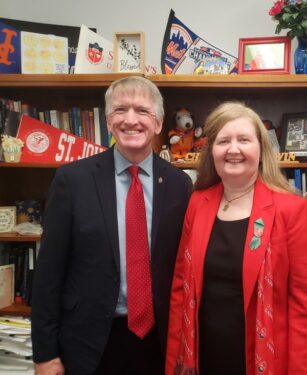
Browne said Goodwin is “goodness personified.”
“I am hopeful, I am rooting for her, everyone has been rooting for her,” Browne said.
Lucy Pesce, a longtime friend of Goodwin’s and the executive director for mission initiatives at St. John’s, who is helping with the donor search, said several people have already responded positively. Pesce is also exploring how she can become a living donor.
“For me, my faith is really important. If God’s putting me in a place where I could do this, I think that’s a hard thing to say no to,” Pesce said. “I hope I am able to say yes.”
Goodwin said the support from the St. John’s community has been incredible.
“I came to St. John’s because of the people … and how supportive they were, and they still are,” Goodwin said. “Everyone with their prayer, they’re sharing it with other people, they’re trying to ask, ‘How else can we help and find a way to get you a kidney?’ So, it’s amazing to be in that kind of environment.”
As of today, Goodwin is approved to be a recipient and doesn’t need to be on dialysis yet, which she said is ideal to ensure the transplant occurs while her body is still healthy. She said that if she continues to follow her doctor’s orders, she can continue “to live a normal life.”
RELATED: Retired Teacher’s Search for New Kidney Comes to a Happy Ending
Her journey has also deepened her faith, particularly her devotion to St. Thérèse of Lisieux, a patron saint of missionaries, florists, and the sick.
“She was there during the actual transplant in November of 1989, and I know people prayed [for her intercession], and so she’s someone I’m very faithful to,” Goodwin said.
Goodwin said she wants people to learn from her experience that donor surgery is safe and effective, that one can live well with a single kidney, and that someone’s willingness to give makes a real difference. She noted that her father has long recovered from the transplant and has since been living a normal life with just one kidney.
“Hopefully, I can help other people as well,” Goodwin said. “[I want] other people to understand how important it is to be able to donate their kidney, because we do have two, but you really technically only need one, so you have a spare to give out to someone else in need and help your dear neighbor.”