
For many U.S. bishops, the virtual nature of this year’s annual fall meeting actually made it more efficient and productive than a typical year.
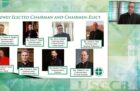
For many U.S. bishops, the virtual nature of this year’s annual fall meeting actually made it more efficient and productive than a typical year.
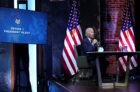
Archbishop Allen H. Vigneron of Detroit will head up a special working group of the U.S. bishops to address issues surrounding the election of a Catholic president and policies that may come about that would be in conflict with Catholic teaching and the bishops’ priorities.
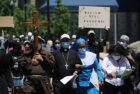
When the U.S. bishops decided to continue with their annual fall meeting despite a pandemic, they took it online, shortened its length but also its scope, leaving only the most essential matters on the to-do list.And at the U.S. Conference of Catholic Bishops 2020 fall meeting, racism was part of that essential business.
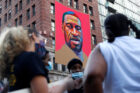
The U.S. bishops are considering renewing the mandate of their Ad Hoc Committee Against Racism for a second three-year term.
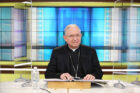
A new virtual format left little room for dialogue at day one of the U.S. Bishops annual fall meeting, but for one 45-minute stretch more than a dozen bishops gave their takes on laicized ex-cardinal Theodore McCarrick.
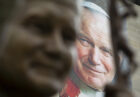
Following the Nov. 10 release of the Vatican’s 460-page report on former cardinal Theodore E. McCarrick, some of the speculation in the media has centered on the role of St. John Paul II in McCarrick’s rise through church ranks.
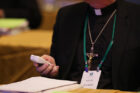
U.S. Catholic bishops will gather Nov. 16 and 17 for their annual meeting, but this time in an online format because of the coronavirus pandemic.
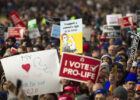
Louisiana and Colorado voted opposite ways on different abortion measures that appeared on each state’s ballot Nov. 3.

Bishops in the United States and around the world expressed condolences after three people were murdered before Mass Oct. 29 in the basilica in Nice, France.

The chairmen of two U.S. bishops’ committees said Oct. 27 that companion bills in the House and Senate are needed measures to protect athletic programs designated for women and girls at educational institutions that receive Title IX funds for these programs.