As the Diocese of Brooklyn sees an increase in people converting to the Catholic faith year over year, Father Joseph Gibino said the fruit of the Synod on Synodality is essential to maintaining the momentum.
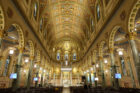
As the Diocese of Brooklyn sees an increase in people converting to the Catholic faith year over year, Father Joseph Gibino said the fruit of the Synod on Synodality is essential to maintaining the momentum.
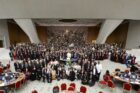
Pope Francis’ Synod on Sydonality was a four-year undertaking that included dialogue and listening sessions between Catholic bishops, religious, and laity at the local, national, and international levels.
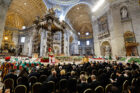
Organizers of Pope Francis’ ongoing Synod of Bishops on Synodality announced March 14 that 10 different working groups had been formed in the Roman Curia to address specific topics that came out of last year’s session.
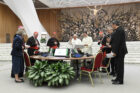
While some of the issues discussed at the synod on synodality were judged to require further study, members came up with a list of things that can or should happen immediately and others that should be considered.
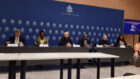
Participants in Pope Francis’ Synod of Bishops on Synodality have reiterated that there are no hostile divisions in the process despite differences of opinion, while also calling for a greater participation of women in leadership and for stronger ecumenical efforts to be made.
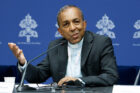
The synodal way is not an invention of Pope Francis, but it is based on Jesus’ way of inclusivity and listening, and on divine revelation itself, said Redemptorist Father Vimal Tirimanna, a leading moral theologian from Sri Lanka.
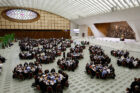
The global Synod on Synodality has been two years in the making, but even as the synod’s universal stage in Rome is underway, the synod’s public discussions are revealing how this process is starting to free the church to realize the vision of a missionary church Pope Francis advanced at the very beginning of his pontificate with the publication of “Evangelii Gaudium.”
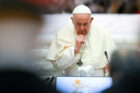
Pope Francis opened his Synod on Synodality Oct. 4 by urging members to abstain from speaking to journalists in order to maintain what he said was the “priority of listening,” and lamented the influence of public opinion on past synod gatherings.
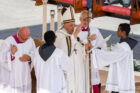
In his opening Mass for the keenly anticipated Synod of Bishops on Synodality, Pope Francis said modern global challenges require the Church to be a warm and welcoming presence, free of the politicking, ideology, and “rigidity” that he said have divided much of the world.
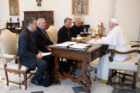
Meetings today are common occurrences at work, in neighborhoods, schools, and churches, but an almost monthlong meeting — coming on the heels of a two-year consultation process at the parish, national, and continental levels, and then followed by another gathering a year later before submitting a final report, to the pope no less, is hardly an average meeting.