
The Supreme Court, which begins its new term Oct. 5, will be hearing oral arguments by teleconference, just as it did at the end of the last term, due to the coronavirus pandemic.
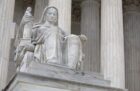
The Supreme Court, which begins its new term Oct. 5, will be hearing oral arguments by teleconference, just as it did at the end of the last term, due to the coronavirus pandemic.
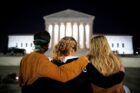
Supreme Court Justice Ruth Bader Ginsburg, who died Sept. 18 at age 87, has been described in countless tributes as a cultural icon and a giant despite her small size.
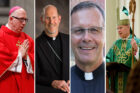
Prior to the July 17 execution of Dustin Honken, a 52-year-old man from Iowa, Catholic leaders, including the bishops of Iowa, Cardinal Joseph W. Tobin of Newark, New Jersey, and the Benedictine priest who had been Honken’s spiritual adviser for 10 years, pleaded for a lesser sentence or at least a delay.
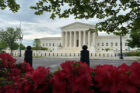
In oral arguments May 11, the Supreme Court examined, and seemed divided about, laws governing church and state in its look at two California Catholic schoolteacher firings where the teachers claimed they had been victims of job discrimination.
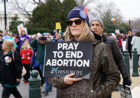
Optimism among pro-lifers ran high March 3 for a successful outcome to the first abortion case heard by the Supreme Court in four years.
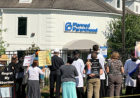
The 9th U.S. Circuit Court of Appeals Feb. 24 upheld the Trump administration’s “Protect Life Rule” that enforces the Title X rule banning taxpayer funds from being used to promote or provide abortion as family planning.
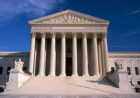
When the Supreme Court’s new term begins in October, it will review Espinoza v. Montana Department of Revenue, a 2018 case in which the state’s highest court ruled that a tax-credit program for donations to fund scholarships to private schools isn’t constitutional because it supports religious schools.
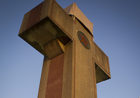
For nearly a century, the 40-foot cross “has expressed the community’s grief at the loss of the young men who perished, its thanks for their sacrifice, and its dedication to the ideals for which they fought. It has become a prominent community landmark.”

Despite the fact that a new member of the Supreme Court could shape judicial precedent for decades to come, a number of Catholic legal experts say that with Monday’s pick of Circuit Court Judge Brett Kavanaugh, expectations of sweeping and immediate legal change on neuralgic issues such as abortion and gay marriage are premature.
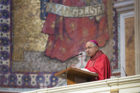
At the annual Red Mass for government and legal professionals, Archbishop Jose Gomez made a strong case for America’s tradition of welcoming immigrants and promoting religious freedom. The mass was attended by five justices of the United States Supreme Court.