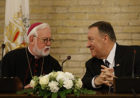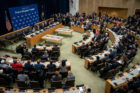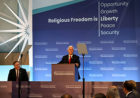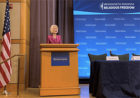
Vice President Mike Pence singled out leaders in Venezuela and Nicaragua for their persecution of Catholic clergy during the closing day of a high stakes summit on religious freedom at the U.S. State Department on July 18.
Democratic Speaker of the House Nancy Pelosi described repression of religious minorities in China as a “challenge to the conscience of the world” Tuesday during the opening day of a high-level U.S. summit on religious freedom.
U.S. Ambassador to the Holy See Callista Gingrich announced on July 17 that the United States and the Vatican will co-host a summit on religious freedom in October of 2019.
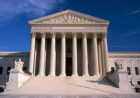
When the Supreme Court’s new term begins in October, it will review Espinoza v. Montana Department of Revenue, a 2018 case in which the state’s highest court ruled that a tax-credit program for donations to fund scholarships to private schools isn’t constitutional because it supports religious schools.
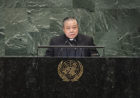
Many terrorist attacks and other violence against houses of worship, religious sites and faith communities around the world “are finally receiving the attention, condemnation and committed response they deserve,” Archbishop Bernardito Auza said June 24 at the United Nations.
Yesterday officially kicked off the U.S. bishops’ annual “Religious Freedom Week,” which is a bit of an exercise in rebranding.
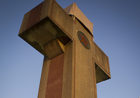
For nearly a century, the 40-foot cross “has expressed the community’s grief at the loss of the young men who perished, its thanks for their sacrifice, and its dedication to the ideals for which they fought. It has become a prominent community landmark.”
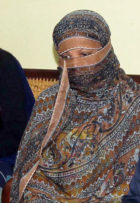
Observers who’ve watched the dramatic case of Asia Bibi unfold over the past eight years said that despite some immediate backlash, the Pakistani Supreme Court’s decision Wednesday, Oct. 31 to acquit the Catholic mother of five of blasphemy charges marks a major step toward making the country a more modern, tolerant nation.
As a case over whether the state of Texas can require fetal remains to be buried is argued in Federal Court this week, the Fifth Circuit Court of Appeals handed the Texas Conference of Catholic Bishops a major victory just hours before opening arguments began, saying they did not have to comply with a third party subpoena that would have required the bishops to release decades of internal correspondence over the issue of abortion.
Reflecting their concern that religious liberty at home and abroad remains a top priority, the U.S. bishops during their spring general assembly in Indianapolis, Ind., voted to make permanent their Ad Hoc Committee for Religious Liberty.