
A judge blocked Wyoming’s ban on abortion pills days before it was set to take effect July 1.

A judge blocked Wyoming’s ban on abortion pills days before it was set to take effect July 1.
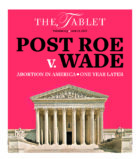
It’s been one year since the U.S. Supreme Court struck down Roe v. Wade — the 1973 landmark decision that established the right to an abortion nationwide. The case, Dobbs v. Jackson Women’s Health Organization, largely placed the question in the hands of individual states.

Lawmakers in New York approved legislation June 20 granting legal protection to in-state doctors who prescribe and send abortion pills to patients in states that have restricted abortion.

On Jan. 22, 2021, days after President Joe Biden took office, he issued a statement for the 48th anniversary of Roe v. Wade on the importance of pro-abortion policies, committing himself to enshrine the right to abortion in the Constitution and expand access to the procedure for women across the country.

Police are searching for a man who attacked two men who were praying outside a Planned Parenthood clinic on May 26 in Baltimore.

Chemical abortion in the form of the “abortion pill” now accounts for 54% of U.S. abortions in 2022, up from 39% in 2017, according to the Guttmacher Institute, a research organization with historical ties to Planned Parenthood, the nation’s largest abortion provider.

The South Carolina House of Representatives approved on May 17 a ban on most abortions after six weeks of pregnancy, paving the way for a significant change to the legality of abortion in one of the few Southern states that has not yet added restrictions to the procedure after the U.S. Supreme Court overturned Roe v. Wade last summer.

In a two-hour hearing on May 17 looking at the U.S. Food and Drug Administration’s decades-old approval of an abortion pill, federal judges seemed to have a harsher line of questioning for attorneys for the federal government and the drug maker, indicating they might be sympathetic to those challenging the drug’s availability.

A federal appeals court in Louisiana is hearing arguments May 17 about the accessibility of the abortion drug mifepristone.

Legislation in North Carolina that bans most abortions after 12 weeks of pregnancy, which the state’s bishops say “represents progress toward building a culture of life,” will now become law after the state’s Republican-controlled General Assembly overrode the Democratic governor’s veto.