
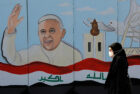
Pope Francis’ historic visit to the Middle East’s most conflict-riven nation gives hope and comfort to Iraqis of all faiths, and some would even say to Arabs beyond Iraq’s borders.
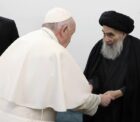
Pope Francis’ historic visit to the Middle East’s most conflict-riven nation gives hope and comfort to Iraqis of all faiths, and some would even say to Arabs beyond Iraq’s borders.
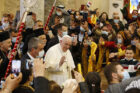
Although the impact of papal trips is often hard to assess in the immediate aftermath, such cautions mean little to the leader of Iraq’s local Catholic church, who quickly proclaimed Pope Francis’s March 5-8 visit to his nation a “miracle” on Sunday.
Father Naim Shoshandy has plenty of reasons to be angry: On March 23, 2014, the terrorist organization known as Islamic State murdered his 27-year-old brother, for no other reason other than the fact that he was a Christian.
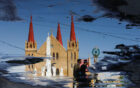
Anti-Christian persecution is on the rise, despite the COVID-19 pandemic, according to a new report.
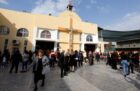
Ever since the rise of the Islamic State (ISIS), there’s been rising alarm regarding the future for Christians in the Middle East. A Catholic priest who recently returned to his village in northern Iraq after six years in Rome described what he found as “shocking,” but doubled down on the need for Christians to survive.
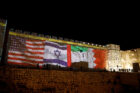
From the “dog that didn’t bark” files, it seems highly curious at first blush that a major peace accord for the Middle East was signed at the White House – with an explicitly religious reference in the title, no less – and, so far, the Vatican has had absolutely nothing to say about it.
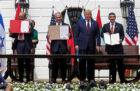
On Sept. 15 at the White House, Israel signed diplomatic pacts to normalize relations with the United Arab Emirates and Bahrain. While specific details of the pacts are not yet public, the three countries will open embassies and establish economic ties including tourism, technology, and energy.
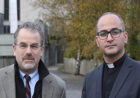
Advocates for Christians in the Middle East are calling for an overhaul of the way humanitarian aid is distributed by western governments and international agencies to those on the frontlines of persecution.
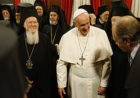
During the Roman Empire, the entire Mediterranean region was known as Mare Nostrum,“Our Sea.” It was an imperial assertion of dominance, of course, but it also reflected the idea that the peoples of the Mediterranean are linked by geography and destiny, sharing a common fate.
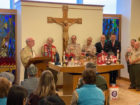
Called the Peace Light, the candle traveled thousands of miles from Bethlehem via Austria for an arrival ceremony at Our Lady of the Skies Chapel in Terminal 4.