
Catholic Charities of Brooklyn and Queens has formed Laudato Si Corporation, a green-energy initiative to generate renewable energy with arrays of solar photovoltaic panels mounted on the rooftops of residential buildings throughout the diocese.
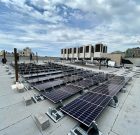
Catholic Charities of Brooklyn and Queens has formed Laudato Si Corporation, a green-energy initiative to generate renewable energy with arrays of solar photovoltaic panels mounted on the rooftops of residential buildings throughout the diocese.
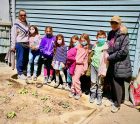
The “cry of the earth and the cry of the poor” are heeded by members of the Care for Creation Ministry of St. Andrew the Apostle Parish in Bay Ridge. It is one of 737 similar groups throughout the world responding to Pope Francis’s 2015 encyclical letter on the environment, “Laudato Si’.”
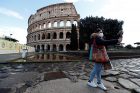
When Pope Francis’ eco-encyclical was published in 2015, one aspect of the document that didn’t make waves but was key to implementing his overall vision for environmental reform was his appeal to cleanup cities, making them more organized and sustainable. Now, six years later, this is being implemented in his own backyard.
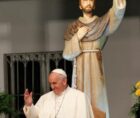
For history’s first pope named for Francis of Assisi, the saint’s Oct. 4 feast is bound to be a big deal, and this year is no exception, as several major Vatican events are already on the calendar.

Five years ago the Olancho Aid Foundation (OAF) planted a community garden in response to Pope Francis’ encyclical Laudato si’. Today, what was intended as a gesture to amplify the pontiff’s message has become a lifeline to a region crippled by food insecurity due to the COVID-19 pandemic.
This week Pope Francis inaugurated “Laudato Si’ Week” at the Vatican commemorating the five-year anniversary of the publication of his eco-encyclical with the same title, opening a wider year-long commemoration of the document aimed at spurring global citizens to adopt more sustainable practices.
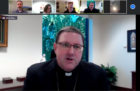
Catholics and Protestants marked the fifth anniversary of Pope Francis’s environmental encyclical, Laudato si’, with a message that although coronavirus is not directly linked to climate change, for people of faith, the key to overcoming both challenges lies in prioritizing the common good.
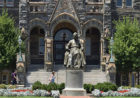
Over the next 10 years, Georgetown University will divest from fossil fuels – a move heralded by Catholic environmental activists as putting Pope Francis’s ecological vision into action.
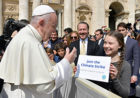
On Dec. 11 top Vatican officials hailed Swedish teen Greta Thunberg, recently named TIME Magazine’s “Person of the Year” for her environmental advocacy, as a “great witness” of Church teaching on care for creation and the human person.
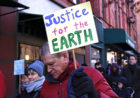
A little more than four years after Pope Francis published one of his most provocative documents, not to mention perhaps his most political, in the form of his eco-encyclical Laudato Si’, the pontiff appears increasingly disappointed in the way the environmental manifesto been received.