
With Arizona set to carry out its first capital executions in almost eight years, the state’s Catholic bishops fear that once the practice resumes it will be hard to stop.
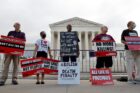
With Arizona set to carry out its first capital executions in almost eight years, the state’s Catholic bishops fear that once the practice resumes it will be hard to stop.

On April 21, Texas executed a 78-year-old inmate, Carl Buntion, by lethal injection shortly after the governor of Tennessee temporarily blocked the execution of a 72-year-old prisoner, Oscar Smith, citing issues with preparations of the lethal drugs to be used.
South Carolina’s Supreme Court has issued a temporary stay blocking the state from executing death-row inmate Richard Moore by firing squad.
The Supreme Court’s consideration of spiritual advisers praying aloud with death-row inmates or placing hands on them in prayer during executions faced an uphill battle Nov. 9 as some of the justices questioned if this would open up other requests or could impose a safety risk.
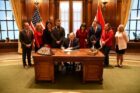
Archbishop Christophe Pierre, nuncio to the United States, has urged Missouri Republican Gov. Mike Parson to respect “the humanity” of death-row inmate Ernest Lee Johnson and “the sacredness of all human life” and stop his Oct. 5 execution.
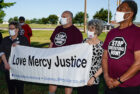
In a conversation with The Tablet, Bishop Mark Spalding of Nashville took aim at the federal government as well as states that endorse capital punishment as a means of justice.

Archbishop Gustavo García-Siller of San Antonio is the latest bishop calling for the Trump Administration to stop carrying out federal executions before the presidential term ends.

In response to the upcoming federal execution of Orlando Hall Nov. 19, and two more federal executions scheduled to take place in December, two U.S. bishops’ committee chairmen called on the government to end this practice.