
Three years after the Supreme Court overturned Roe v. Wade, the country is a patchwork quilt of laws that differ from state to state on abortion availability.

Three years after the Supreme Court overturned Roe v. Wade, the country is a patchwork quilt of laws that differ from state to state on abortion availability.
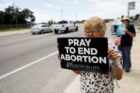
Three years after a landmark decision by the U.S. Supreme Court to overturn its prior abortion precedent, states have enacted or considered differing legislation surrounding the issue of abortion.

Nearly two years after the Supreme Court overturned its 1973 Roe v. Wade decision making abortion a constitutional right, a majority of Americans said they support legal abortion in all or most cases, according to a new study from the Pew Research Center.

A recent study from the Guttmacher Institute, an organization that supports abortion access, found that the number of abortions in 2023 has increased to the highest number and rate in the United States in over a decade.

In this year’s November elections, Ohio voters will decide if a right to an abortion should be added to the state constitution.

Chemical abortion in the form of the “abortion pill” now accounts for 54% of U.S. abortions in 2022, up from 39% in 2017, according to the Guttmacher Institute, a research organization with historical ties to Planned Parenthood, the nation’s largest abortion provider.

A six-week abortion ban signed into law April 24 by North Dakota’s Republican governor, Doug Burgum, is being hailed by the state’s Catholic bishops as an “important step toward making the state a sanctuary for life.”

Now that the Value Them Both constitutional amendment has been defeated, a big question looms: What’s next?

Several hundred pro-life advocates were gathered for a pro-life rally in Las Cruces the evening of July 19 when Mark Cavaliere, executive director of the Southwest Coalition for Life, made a surprise announcement.

For the first time in some 50 years, states have an unprecedented opportunity to explore anew ways to regulate abortion services and at a time when some employer health insurance plans have already entered the fray.