
As Europe rolls out its vaccination campaign for young children this week, a top Vatican official has endorsed the move, saying children have been uniquely impacted by the pandemic and must be protected and cared for.
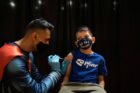
As Europe rolls out its vaccination campaign for young children this week, a top Vatican official has endorsed the move, saying children have been uniquely impacted by the pandemic and must be protected and cared for.
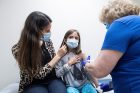
After a year of painful pandemic milestones, the United States has reached a hopeful statistic. As of May 2, more than 101 million Americans have been fully vaccinated against COVID-19, according to the Centers for Disease Control and Prevention.

It’s been said before, in different ways, in different contexts: “the beginning of the end,” “light at the end of the tunnel,” “our long national nightmare is over,” and so on.

As American Catholics continue to wrangle over the morality of COVID-19 vaccines using stem cell lines remotely derived from aborted fetuses, one Filipino Dominican priest, who’s both a moral theologian and an MIT-trained molecular biologist, is pleading with them to consider the potentially dangerous global consequences of their rhetoric.

Ashley Lantz was one of the first local Catholic school teachers to receive the first vaccine shot when appointments opened in early January. As luck would have it — or rather, it being “a part of God’s plan,” as Lantz says — she found an afternoon appointment on Jan. 11, the first day of eligibility for teachers in New York City.

Several Catholic ethicists are urging people to steer clear of the Janssen/Johnson & Johnson COVID-19 vaccine if possible, but at the same time affirm it is morally acceptable to receive it if the alternatives are not an option.
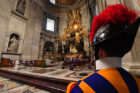
As a last resort, the Vatican may sanction employees who refuse to get a COVID-19 vaccine for non-medical reasons, according to a new Vatican decree.
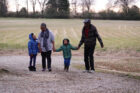
Having the ability to educate and advocate for her family inspired Joyce Christian of Somerville, Tennessee, to become a nurse.

Inequities in U.S. health care have long existed, but the coronavirus pandemic has exposed them to wider scrutiny, according to Kathy, Curran, senior director of public policy for the Catholic Health Association.

As COVID-19 vaccinations roll out slowly through the country, some groups are getting the vaccine even more slowly than others.