
AI Christian music artist Solomon Ray has over 300,000 monthly listeners on Spotify and has also scored a chart-topping Christian album.

AI Christian music artist Solomon Ray has over 300,000 monthly listeners on Spotify and has also scored a chart-topping Christian album.
Pope Leo XIV has been named to Time magazine’s “Time 100 AI” list for 2025, recognized as one of the world’s top “thinkers” shaping how humanity confronts artificial intelligence.
Colleges and universities — including those affiliated with the Catholic Church — are working to navigate on the ever-expanding landscape of artificial intelligence.
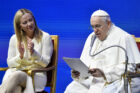
Italian Prime Minister Giorgia Meloni announced that Pope Francis would participate in a G7 “outreach” discussion on artificial intelligence when the leaders of the world’s leading industrialized nations countries meet in southern Italy in mid-June.

or 17 years, the media ethics conference at the Pontifical University of John Paul II in Krakow has gathered media researchers from all over the country. This year it attracted a record number of academics. The reason? The main topic was the ethics of using AI in the media space.
Famed 20th-century author G.K. Chesterton once invoked the task of “writing one’s own love letters or blowing one’s own nose” to say that there are certain things man should do for himself. According to Father David Mowry, that remains true for homily writing, as well.
The following is a homily generated by ChatGPT in response to The Tablet’s request to “Write me a Catholic homily on this week’s Gospel, Mt 4:1-11” for Feb. 26.