



PROSPECT HEIGHTS — The state of New York has opened a two-month public comment period for the physician-assisted suicide law signed by Gov. Kathy Hochul four months ago, but the New York State Catholic Conference continues its opposition.
The conference speaks for the bishops of New York on governmental issues. Executive Director Dennis Poust told The Tablet on June 8 that facets of the law intended to prevent abuse don’t soften the tragedy of assisted suicide.
“The bottom line is physician-assisted suicide devalues human life and perpetuates the throwaway culture Pope Francis warned about,” Poust said. “No bureaucratic guidance can change that.”
The public comment period was opened by the New York State Department of Health on June 3 and continues through Aug. 3. The law will go into effect on Aug. 5.
According to the Health Department, “There are significant protections built into the law to ensure it is not misused or inappropriately applied.”
They include:
- A video or audio recording of the patient’s oral request for physician-assisted suicide.
- The patient’s request, also in writing, but with two witnesses.
- A mandatory mental health evaluation of the patient by a psychologist or psychiatrist to determine that person’s ability to make decisions.
- A determination by an attending physician and a consulting physician that the patient has a terminal illness or condition and can make decisions.
But pro-life advocates and Catholic leaders continue to assail the bill, including Bishop Robert Brennan, who has called it a “slippery slope” and an unacceptable option for poor and vulnerable people.
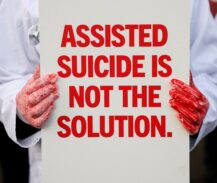
Poust said the proposed regulations don’t address an important legal inconsistency.
“Notably, but not surprisingly, because it is written into the law, the draft regulations require doctors to lie when reporting the cause of death,” Poust contends.
The rules only require listing the patient’s underlying illness and not the suicide drugs, he explained.
“In any other case,” Poust said, “falsifying medical records would be a felony.”
Poust added that draft regulations lack protocols and guidance regarding “the exact cocktail of drugs physicians should use to poison their patients who seek assisted suicide.”
“While advocates for assisted suicide present these deaths as peaceful and painless, as we’ve seen from capital punishment cases gone wrong, killing someone with lethal drugs isn’t always neat and tidy,” Poust said.
Archbishop Ronald Hicks of New York was installed on Feb. 6, the same day Gov. Hochul signed the assisted suicide law. He commented on the law in a June 2 article titled “The Throwaway Culture Advances,” which he wrote for First Things, the publication of The Institute on Religion and Public Life.
“When this law becomes effective,” Archbishop Hicks wrote, “a new and frightening era begins in New York.
“How long before this so-called ‘compassion’ for the terminally ill evolves from a ‘choice’ into an expectation to kill oneself for all sorts of vulnerable individuals, including those with disabilities, the elderly, and those in impoverished and medically underserved communities?”