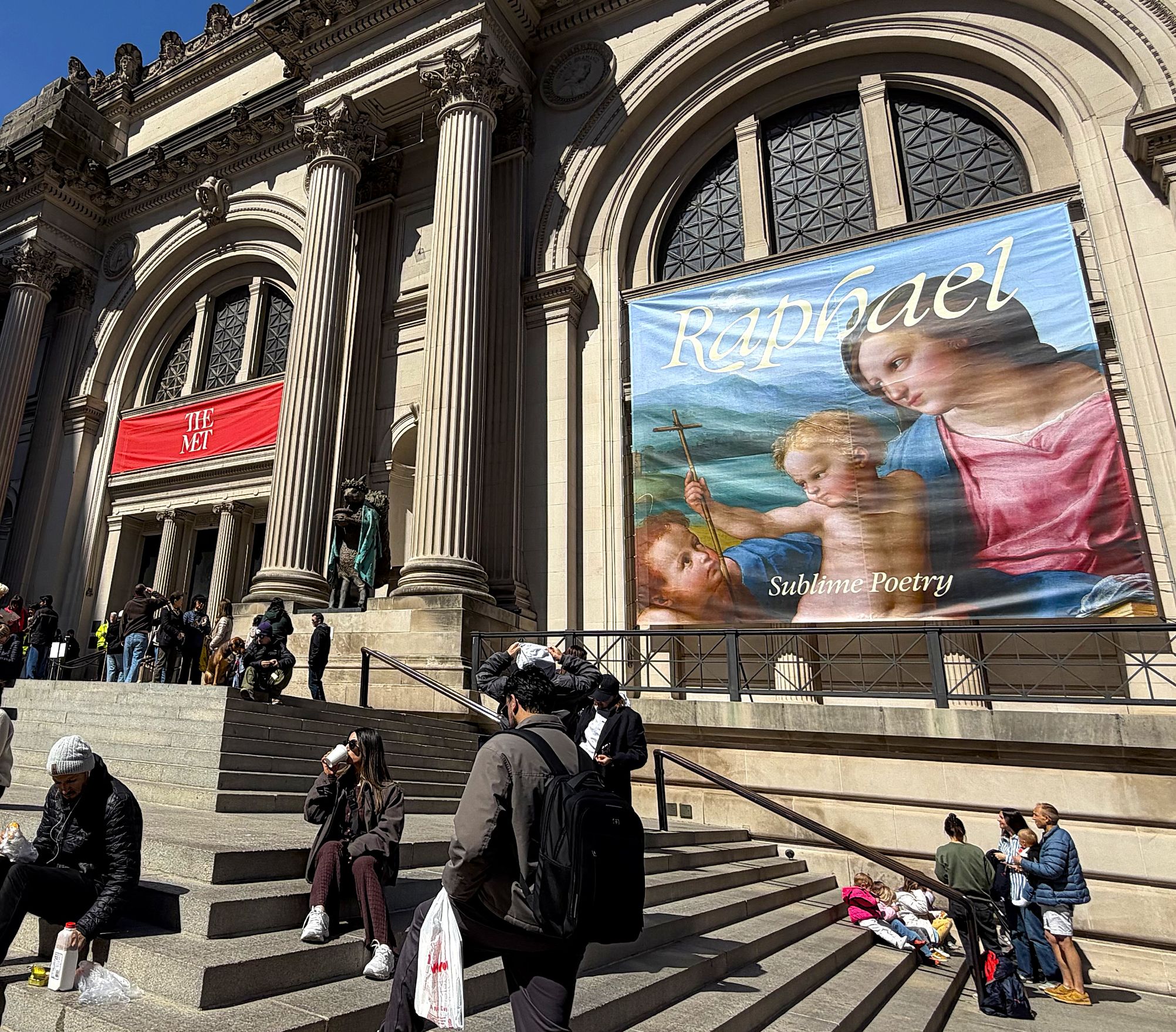
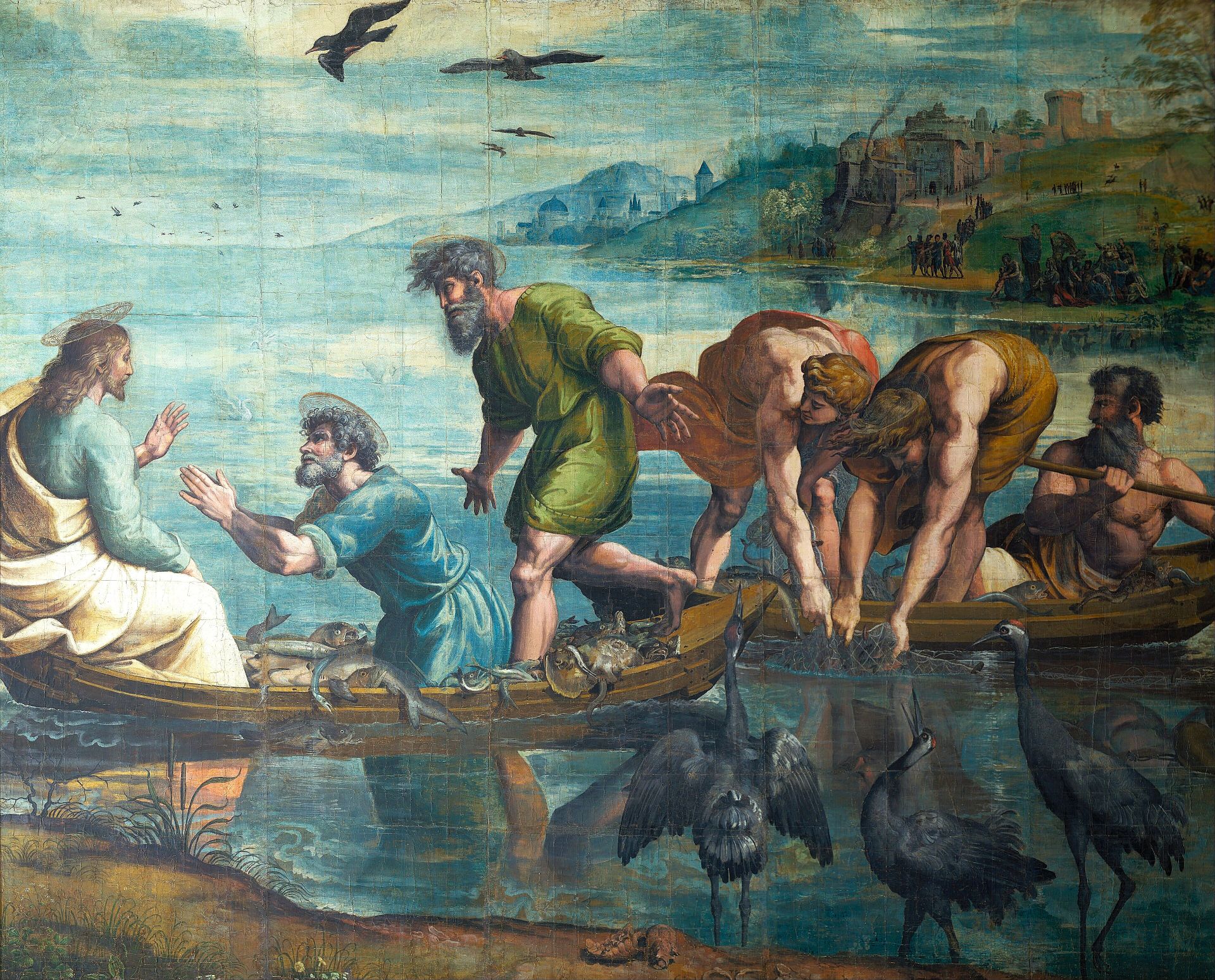
UPPER EAST SIDE — Visitors to a new exhibition at the Metropolitan Museum of Art are greeted by the depiction of a boy with a serious but expressive gaze and long hair falling from beneath his hat.
Art historians believe this image, created around 1500 with dark chalk, is a self-portrait. Its celebrated command of detail and technique foretold the future greatness of the artist, Raffaello di Giovanni Santi, then 17, of Urbino, Italy.
Raphael, as he is commonly known, became a master painter of the High Renaissance (1490-1520) in Italy. He was a contemporary of Michelangelo and Leonardo da Vinci.
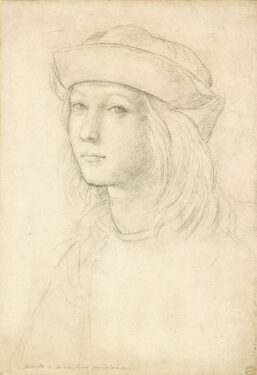
Before his death at 37 in 1520, he achieved acclaim for scores of commissioned works — some for the Vatican — including masterpiece drawings, portraits, frescos, tapestries, and architecture.
“Raphael: Sublime Poetry,” the museum’s new exhibition, is curated by Carmen Bambach. It opened on March 29 and continues through June 28.
It is, according to the museum, “the first comprehensive, international loan exhibition in the United States on Raphael, considered one of the greatest artists of all time.”
Max Hollein, The Met’s director and CEO, called the more than 200 pieces, “some of the artist’s most iconic and seldom loaned works from around the globe — many never before shown together.”
Included is “The Virgin and Child with Infant Saint John the Baptist in a Landscape” — also called “The Alba Madonna” — from the National Gallery of Art in Washington, D.C.
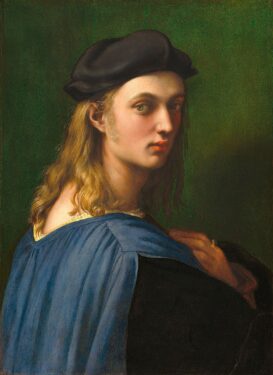
Another highlight is the famous “Portrait of Baldassarre Castiglione,” from the Louvre in Paris.
Diana Gisolfi, professor of art history at Pratt Institute, praised Bambach’s career as curator for The Met’s Department of Drawings and Prints. Bambach has developed similar exhibitions at The Met for da Vinci’s works (2003 and 2019) and Michelangelo (2017).
“I’ve known her since 1990,” Gisolfi said. “Her work is always very precise, very careful, and very enthusiastic.”
Gisolfi said Raphael, son of an artist in Urbina, made his own mark as a young man in Florence. At that time, the city was the cradle of the Renaissance, with an influx of banking and wealthy families who funded artistic patronage.
RELATED: Strokes of Faith — Brooklyn Museum Preserves James Tissot’s ‘The Life of Christ’ Collection
“Leonardo and Michelangelo were both there,” Gisolfi said, “and Raphael understood what they were up to very quickly. He created a very harmonious version of the High Renaissance style, building from what he saw.”
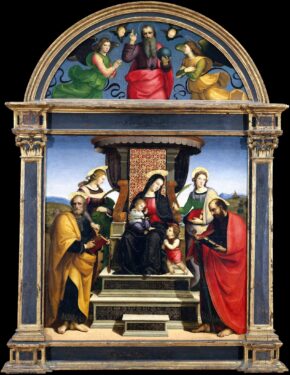
The Met contributed its own Raphael masterpiece to the exhibition — the multipart “Madonna and Child Enthroned with Saints,” also called the “Colonna Altarpiece.”
Raphael created it for a convent of religious sisters in Perugia, but it was dismantled in 1663 and sold.
RELATED: Vatican to Restore ‘Awe and Wonder’ of Michelangelo’s ‘The Last Judgment’
J.P. Morgan bought the main piece in 1901, but his family bequeathed it to The Met in 1916. The museum calls it “one of the great treasures of the collection.”
But “Raphael: Sublime Poetry” has reunited the main part of the altarpiece with its smaller panels that were sold.
“That’s cool for the show,” Gisolfi said. “The artist had in mind a specific iconography and a specific vision for how this altarpiece would function. When some of the pieces of it are missing, that is a disservice to the artist, the patrons, and the faithful who liked worshiping at that altar.
“So, yeah, it’s very important to reconstruct.”
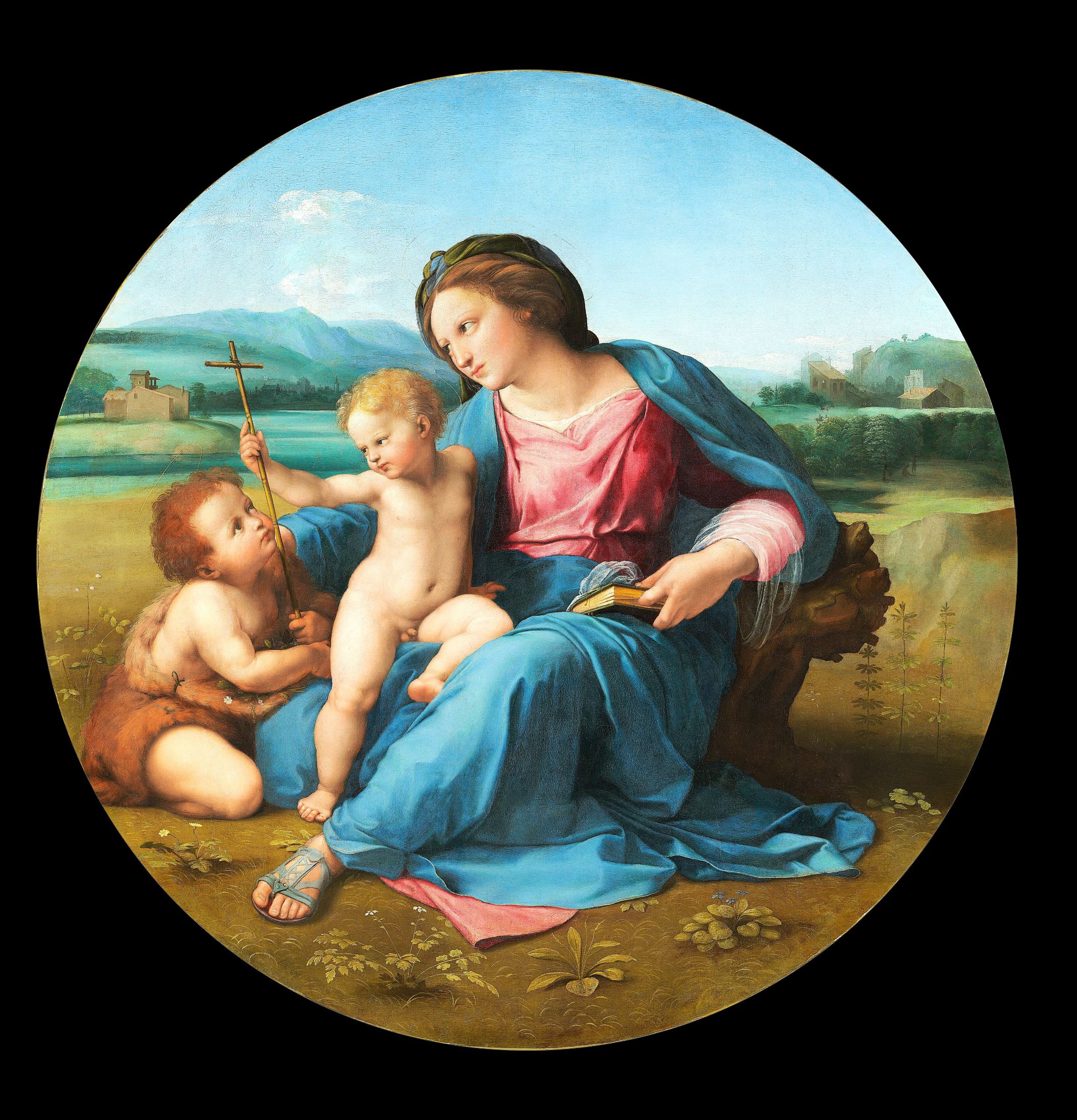
Gisolfi said Raphael painted at least three versions of the “Madonna” in Florence.
“That’s his early style,” she added, “and they’re beautiful. They’ve been reproduced a million times, and justly so.”
RELATED: ‘Meeting With God’ at Local Parish, Canadian Artist Joséphine Dubern Illustrates Her Faith
“The Alba Madonna,” however, was painted after Raphael relocated to Rome. It depicts Mary enjoying a sunny day with the infant, Jesus.
Joining them is the messiah’s cousin, the future John the Baptist, who is already decked out in a camel skin he would wear as an adult.
“This painting is gorgeous,” Gisolfi said. “I’ve contemplated it many times.”
Raphael was summoned to Rome in the autumn of 1508 by Pope Julius II, who tasked him with decorating the papal apartments in the Vatican, the “Raphael Rooms.”
RELATED: Sainthood Looms for ‘God’s Architect’ as Masterpiece Basilica Nears Completion
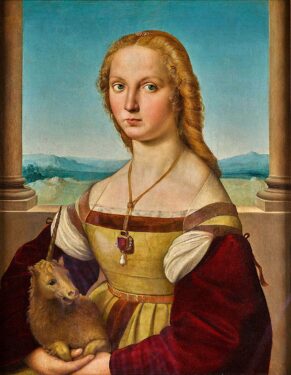
The Met’s exhibition includes massive tapestries that Raphael created for the Sistine Chapel. Also included are some of Raphael’s famous paintings, such as “Portrait of a Young Woman with Unicorn” and “Portrait of Bindo Altoviti.”
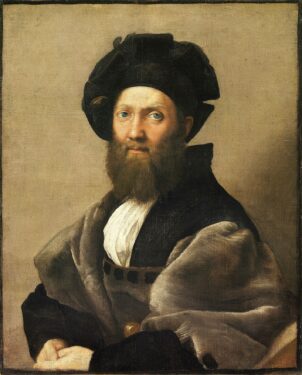
The “Portrait of Baldassarre Castiglione” has been called one of the greatest portraits of the High Renaissance.
Castiglione, Gisolfi said, was an important author who wrote about how men and women should live proper courtly lives.
“It’s a beautiful portrait,” she said. “It is in every survey book.”
WANT TO GO? For more information on the “Raphael: Sublime Poetry” exhibit, visit:
metmuseum.org
Excitement over the exhibition is percolating among Raphael’s local fans, including Gisolfi’s longtime friend, Father Michael Perry, pastor emeritus for Our Lady of Refuge in Flatbush.
“In my repertoire of what I have seen, he is missing,” Father Perry said about Raphael. “I’m hoping, at the exhibit, to see why he is such a pivotal point in Western art. I need to see it, and I need to understand it.”