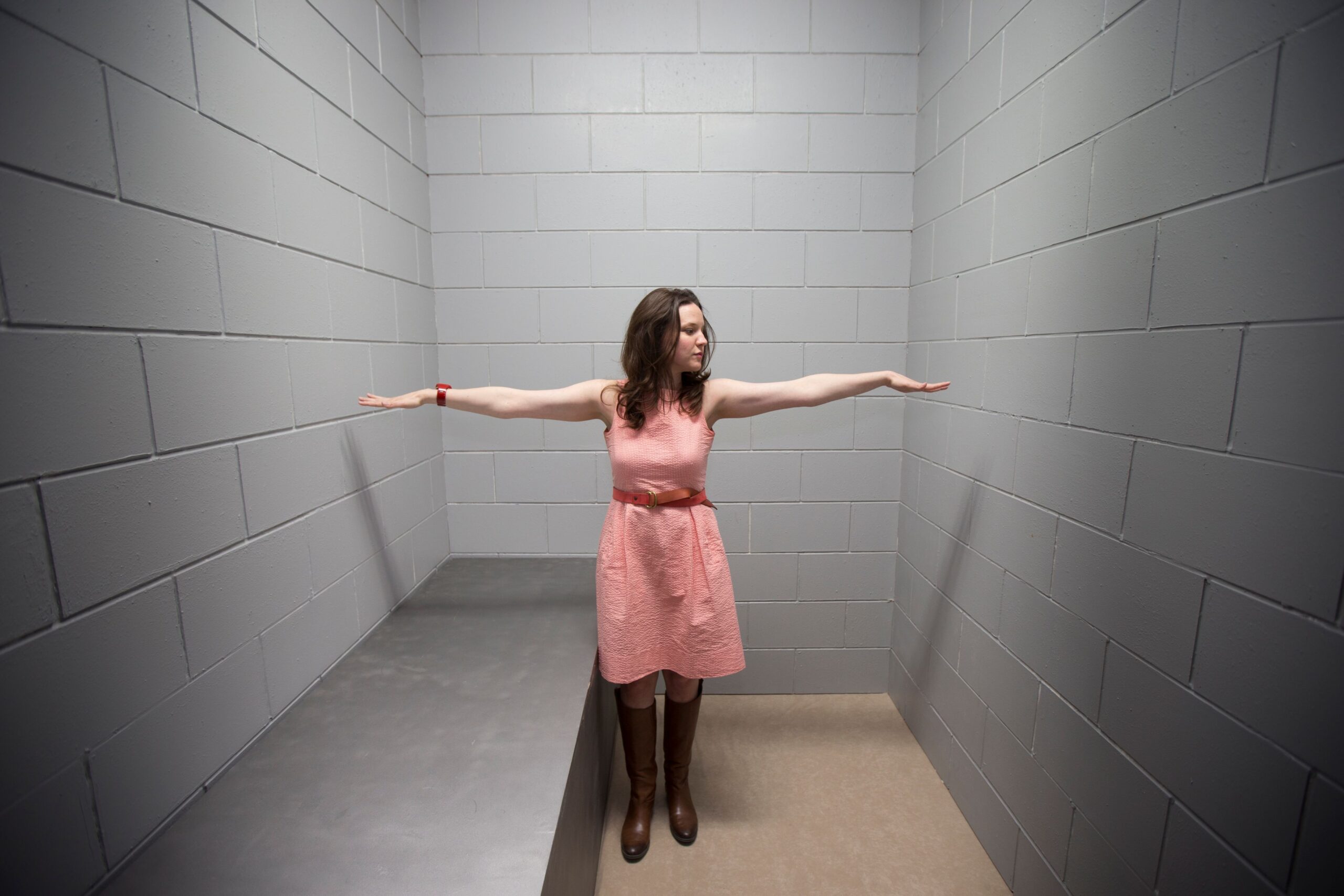
ASTORIA — Jerome Wright, who spent 10 years in solitary confinement while serving time for murder, has difficulties describing life in “the box.”
“If you haven’t lived this, you cannot understand, and I’m glad you can’t,” said Wright, who was released from a New York prison 17 years ago. “I wish this on nobody, not even my worst enemy.
“Because of the type of torture that solitary does, I’m still suffering from it right now.”
Wright, originally from the Bronx, went to prison in 1979 “for a murder I did commit,” he said. He now lives in Buffalo, where he is co-director of the HALT Solitary Campaign, which works to end solitary confinement in jails and prisons.
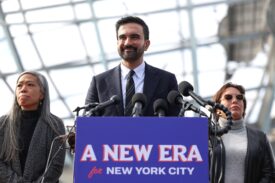
He applauded New York City Mayor Zohran Mamdani, who has given his agencies 45 days to form a plan to rid Rikers Island of solitary confinement.
The first-term mayor signed his first emergency executive order on Jan. 5, which aims to bring New York City into compliance with the City Council’s Local Law 42, a 2024 law to end prolonged solitary confinement in city jails, limiting it to four hours.
Mamdani’s predecessor, former Mayor Eric Adams, repeatedly blocked the law with temporary executive orders. Adams believed that isolating violent offenders was essential to protect other inmates and correction officers.
Mamdani’s executive order instructs the Department of Correction and the Law Department to develop the plan by Feb. 19. He has been on record against solitary confinement since March 2021, when he served in the New York State Assembly.
He renewed his opposition in a Jan. 6 press release announcing the executive order.
“I was elected because of my values, and my promise to always be honest with New Yorkers — and now is a moment for blunt truths,” he said. “The previous administration’s refusal to meet their legal obligations on Rikers has left us with troubling conditions that will take time to resolve.
“We will work closely with the federal monitor and the parties to put the city back on track to end solitary confinement as soon as possible.”
Critics of solitary confinement say it causes permanent psychological damage and, therefore, is a form of torture. Adding voice to the criticism was Pope Francis in an October 2014 Vatican address to the International Association of Penal Law.
“One form of torture,” he said, “is none other than external isolation.”
RELATED: Pope Francis Praises Artists, Encourages Prisoners to Never Lose Hope
Pope Francis said studies conducted by human rights groups show that “the lack of sensory stimuli, the total impossibility of communication, and the lack of contact with other human beings induce mental and physical suffering such as paranoia, anxiety, depression, weight loss, and significantly increase the suicidal tendency.”
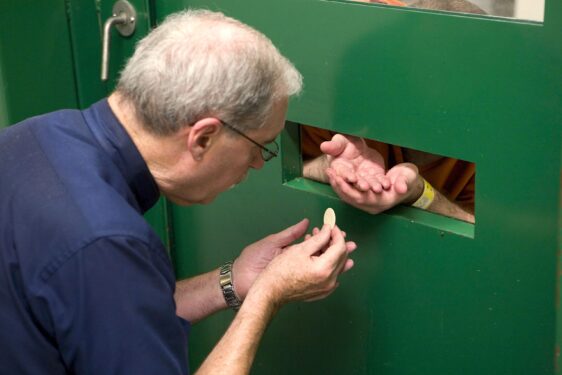
Wright confirmed he has witnessed all of those symptoms and experienced some of them himself.
The Catholic bishops of New York State agree with Pope Francis’ stance, said Dennis Poust, executive director of the New York State Catholic Conference. He said their position was demonstrated five years ago when they supported the Humane Alternatives to Long-Term Solitary Confinement Act. The bill, signed by then-Gov. Andrew Cuomo in 2021, mandates reduced stays in solitary confinement for people incarcerated in the state’s prison system.
“Correction officers have a very difficult job,” Poust said. “And this is one of the tools that has been at their disposal. It could be an appropriate tool for short periods of time. But what has happened, at least in the state system, is it was being overused for very long periods of time against people with mental health struggles.
“We saw higher suicide rates and all sorts of problems, which led to the HALT Act.”
While Wright initially said he couldn’t fully describe solitary confinement, he agreed to give it a try during an interview with The Tablet on Jan. 9.

“Listen, man, encoded in our DNA as human beings is not the desire, but the need to have interaction with others on a level that’s also building each other up,” he said. “Solitary eviscerates that from the beginning.”
It’s a noisy environment, Wright said, because although inmates are separated, they’re free to call out or scream in despair. He described a recording of a solitary confinement unit that he shares at presentations. He asks the audience to identify the sounds.
“They say, ‘Oh, that’s a hyena’ or, ‘Oh, that’s a dolphin,’ ” Wright said. “Why? Because those are human beings, but they’re in the animalistic phase; they’re treated like an animal and, so, the sounds that come out of them sound guttural and animalistic.”
Conversely, many corrections guards agree with Adams that isolating violent offenders enhances jailhouse safety. Mamdani’s order drew criticism from Benny Boscio, president of the New York City Correction Officers’ Benevolent Association.
In a statement on the COBA website, Boscio said, “Solitary confinement hasn’t existed in our jails in decades. No inmate is locked in a cell for 24 hours straight,” as all inmates receive an hour of outdoor recreation.
Instead, Boscio said “punitive segregation” should be exclusively for “those inmates who have assaulted correction officers and non-violent inmates.”
He said last year inmates attacked correction officers nearly 700 times, including 26 sexual assaults, and invited Mamdani to tour the jail with him “to see firsthand the dangers my members face every day.”
One former correction officer, Ralph Ortiz, who is Catholic, struggles to reconcile both sides of the argument.
“It’s conflicting because my heart tells me one thing, but my eyes tell me something else,” said Ortiz, who worked at Riker’s from 2012-2017 and experienced the violence that happens in jails. “You can have your beliefs and your convictions, but you must realize where you are.”
Ortiz said some inmates are accused of serious crimes like murder, and many of them feel they have nothing to lose while awaiting trial. Consequently, Ortiz said, these people were placed in solitary confinement. Still, he believes the practice could be misused.
“Your case can take years to be resolved, and you’re in Rikers the entire time,” he said. “But if they hit you with four or five years in the box, which I’ve seen, in my mind, that’s excessive. That’s like doing time within time.
“There has to be a happy medium.”
Still, Wright asserted that solitary confinement has no place in correctional facilities.
“If they think it’s useful,” he said, “useful to what end? You already know unequivocally what solitary confinement does to people. Why would you do that to them and then expect them to come out and act like John Q. Citizens?”