


It might be hard to imagine how a little metal ball could change the course of a battle, an entire war, and even the trajectory of history.
Take, for example, the shots fired in April 1775 by Colonial rebels at British troops near Lexington and Concord, Massachusetts. Those opening rounds of the American Revolution were, as the saying goes, “Heard Round the World” for how they inspired liberty-seekers across the globe.
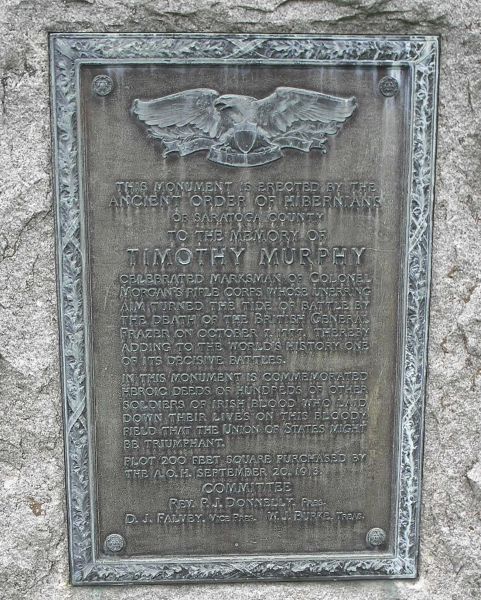
But they could’ve been for naught without Sgt. Timothy Murphy’s trigger skills two years later when British Gen. Simon Fraser tried rallying troops near Saratoga on Oct. 7, 1777.
“That man on the grey horse is a host unto himself, and must be disposed of,” said the American commander, Maj. Gen. Benedict Arnold.
Murphy, an Irish backwoodsman from Pennsylvania, had orders to shoot Fraser out of the saddle. His second shot was true; redcoats scattered, and the Americans won their first major battle against a similarly sized British force.
The victory inspired France to support the Colonials, which helped them win the war.
RELATED: The History of Catholic’s Pursuit of Religious Liberty in the US
Surely a Catholic
Not much more is known about Murphy’s background, although records kept by the New York State Military Museum (dmna.ny.gov) show he was born in 1751 to Irish parents who settled on the frontier near present-day Sunbury, Pennsylvania.
But according to the Ancient Order of Hibernians, he was surely a Catholic.
It’s a bold point, considering that practicing the faith was done covertly, and that no one kept baptismal records or other proof they belonged to the faith.
Still, other clues exist, said Mike McCormack of Port Jefferson, national historian emeritus for the Hibernians.
He told The Tablet that Murphy’s parents immigrated to America from County Donegal in northwest Ireland, where nearly everyone is and was Catholic.
Once they reached America, many Irish immigrants journeyed farther west, deep into the Pennsylvania frontier to
establish farms.
They also sought to avoid the enforcers of British rule, which had oppressed Catholicism since England embraced Protestantism in the mid 1500s. So, they pushed westward.
“That,” he said, “was another clue to Murphy’s Catholicity.”
‘Twistorians’
The Ancient Order of Hibernians formed in 1836 in New York City to protect local Irish churches from anti-Catholic mobs, but then pivoted to protect the legacies of patriots, including Murphy.
McCormack said historians soon after the battle suggested that Murphy was Scotch-Irish, who were overwhelmingly Protestant.
But that ignores the Donegal connection, he said.
“It kills me when they do that,” McCormack said. “Therefore, I call them ‘twistorians’ because they twist history.”
Hunt or Starve
Frontier Catholics were largely unchurched. That is, except when circuit-riding missionaries disguised in non-clerical attire, like the Jesuit, Father Frederick Farmer, came visiting to celebrate Mass.
The backcountry was also far removed from normal supply chains. So, when not tending crops, the settlers hunted deer, turkey, and bears.
Most boys, and many girls, grew into adulthood by perfecting their rifle skills, or risk starvation. And since their presence was considered trespassing by indigenous warriors, they also learned hand-to-hand combat.
As British oppression and taxation grew, the settlers were more than ready to “put a bullet into a British uniform,” McCormack said.
“England’s prejudice against Catholics was really a test of loyalty,” he said. “If you were not a member of the Church of England, you are not loyal to the crown, so the Catholics were automatically considered not loyal.”
The Irish Catholics on the frontier, he added, were among the first to enlist in the rebellion.
‘Long Rifle’
Riflemen served with little pay and no official uniforms, so they just wore their hunting attire: fringed linen shirts and pants, light in color, but sometimes dyed green. Most wore moccasins, prone to wear out, so they carried several pairs.
What distinguished them most was their marksmanship.
John Plaster, a retired major in the U.S. Army Special Forces, has taught tactical marksmanship and written extensively about it in his many books. In “The History of Sniping and Sharpshooting,” Plaster describes the early snipers, including Murphy.
Plaster has said that infantry tactics back then involved mass volleys from smooth bore muskets with effective ranges of about 50 yards.
Conversely, rebels could hit targets at 200 yards and beyond because of the grooves in their gun barrels, crafted by Swiss and German gunsmiths who were perfectors of the frontier “long rifle.”
Elite Unit
Murphy, upon enlisting, was first deployed with the Northumberland County Riflemen, who marched to Massachusetts, where they joined the siege of British-held Boston. The British later evacuated Boston by sea, regrouped in Canada, and in 1776 sailed south to invade New York City from Long Island.
Murphy redeployed there in August. But the British overwhelmed the Americans at Brooklyn, so he retreated with the rest of the army. According to the military museum, Murphy also fought at Trenton and Princeton.
In early 1777, Col. Daniel Morgan, a famed rifleman from Virginia, was tasked with recruiting an elite unit that could seize battlefield advantage with long rifles.
Murphy easily qualified for Morgan’s Provisional Rifle Corps by hitting a 7-inch target at 250 yards, the museum reports.
In August 1777, Morgan’s 500 riflemen marched north to block a British land invasion of New York from Canada, commanded by Maj. Gen. John Burgoyne.
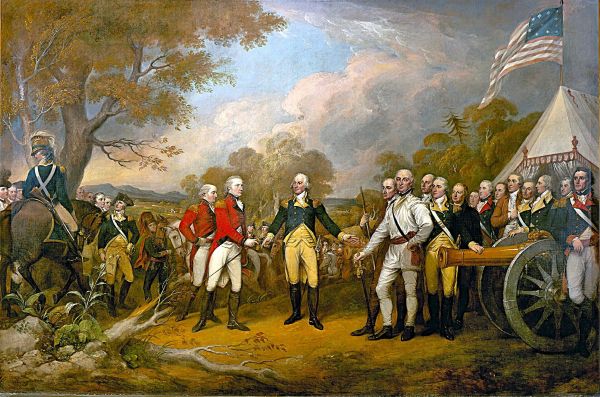
Saratoga was a monthlong campaign with two battles: Freeman’s Farm and Bemis Heights, where Fraser galloped onto the scene, impressing Morgan as much as Arnold.
After receiving his general’s order, Morgan reportedly turned to Murphy and said, “That gallant officer is Gen. Fraser. I admire him, but it is necessary that he should die.
“Do your duty.”
Hold on Target
In his book about the history of sniping, Plaster wrote that Murphy was “the best of the best.”
Plaster could not be reached for comment, but in a 2018 interview with the author of this article, he explained how 18th century rifles didn’t have the advantages of modern “match ammunition” or high-power rifle scopes — only open iron sights.
Plaster said he toured the Saratoga battlefield and used a modern laser rangefinder to estimate that Murphy’s shot at Fraser was about 330 yards. That shot, with open sights, required immense skill, Plaster said in 2018.
“Think of it this way,” he continued.
“Murphy pulls a trigger, but for a short time, he has to physically and mentally follow through. The rifle may have gone click, but it still has to go through a whoosh and a bang.”
That means the rifleman had to hold on target the whole time, or his shot would be off, Plaster said.
Complicating this science was the projectile, usually a lead ball — unlike modern bullets, which are pointy, making them much more aerodynamic and accurate.
“You’re shooting a bowling ball instead of a javelin,” Plaster said of Murphy’s chunk of lead. “It would only be worse if it was square.”
His One Shot
Murphy’s story was carried by word of mouth. Still, some historians now say written accounts of Saratoga make no mention of him until nearly 70 years after the battle.
So, they add, any of Morgan’s men could’ve killed Fraser, but with no mention of any one else, the Murphy story endures.
Whoever shot Fraser made history, Plaster said in 2018.
“His one shot brought France into the war,” he noted. “For the first time, a British field army was compelled to surrender to these American upstarts. That brought thousands of French troops with lots of artillery and sea power.
“For the first time, it was apparent that Americans could really win this war.”