

FINANCIAL DISTRICT — Elizabeth Ann Seton’s family was loyal to the British during the American Revolution, so it might be surprising to learn that the future saint enjoyed connections to two of the Founding Fathers.
As a young woman in New York City, St. Elizabeth Ann Seton (who was born Elizabeth Ann Bayley) hobnobbed in the same upper-class social circles as Alexander Hamilton, the first U.S. treasury secretary, and his wife, Elizabeth Schuyler Hamilton.
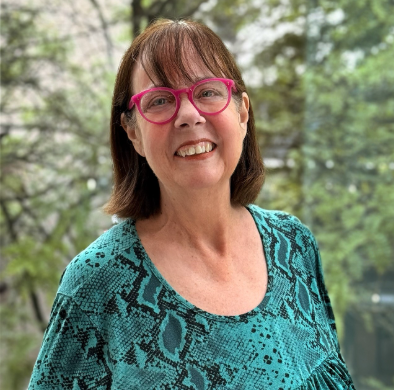
“At this point in her life, Elizabeth Seton was a typical New Yorker of her class. She liked to dance, socialize, and go to the theater,” said Catherine O’Donnell, a history professor at Arizona State University and author of the book, “Elizabeth Seton: American Saint.”
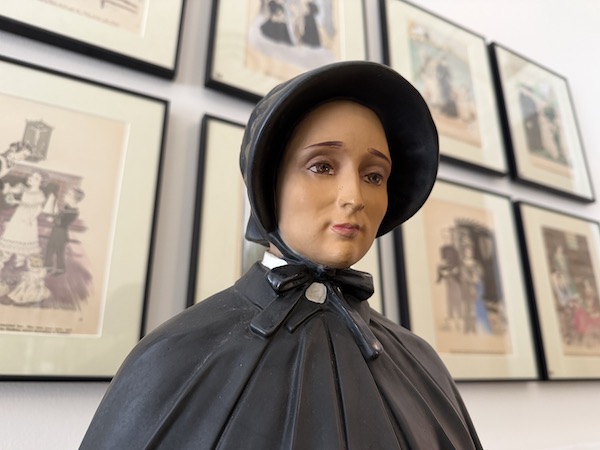
Born in 1774 — two years before the signing of the Declaration of Independence — St. Elizabeth Ann Seton was the first saint born in what would become the United States of America.
RELATED: St. Elizabeth Seton Shrine’s a Haven for Expectant Mothers
Her father, Richard Bayley, was a friend of John Jay, who was the first chief justice of the Supreme Court and later served as governor of New York.
St. Elizabeth Ann Seton and Elizabeth Schuyler Hamilton both belonged to a charitable organization called the Society for the Relief of Poor Widows with Small Children, which provided food, clothing, and financial assistance for families who had fallen on difficult times.
Elizabeth and her husband, William Seton Jr., whom she married in 1794, lived on the same block as the Hamiltons in what is now the Financial District of Lower Manhattan.
While there is no record of neighborly encounters between the couples, it’s a good bet that they were acquainted, said Sister Betty Ann McNeil, a member of the Daughters of Charity and the author of several books about St. Elizabeth Ann Seton.
“Certainly, anyone living on the same street at that time would know one another,” Sister Betty said.
When Alexander Hamilton was forming the Bank of New York in 1784, he appointed William Seton Sr., St. Elizabeth Ann Seton’s future father-in-law, to the position of clerk. William Sr. then secured a job at the bank for his son, also William, who later married Elizabeth.
Elizabeth Seton’s connection to John Jay came courtesy of her father, Richard Bayley, a doctor who specialized in researching the origins of diseases. He was appointed by Jay — then the governor of New York — to serve as health officer for the Port of New York in 1796.
The prominent positions William Sr. and Bayley held in the post-Revolutionary War years were in sharp contrast to their roles before and during the war.
“The crucial thing to know about her birth family and her future husband’s birth family is that they were loyalists during the revolution, so they chose the wrong side,” O’Donnell explained. “Her father was actually, for a time, a physician with the British Army.”
After the war, “New York was really in shambles,” O’Donnell said, adding that much of the city had been burned to the ground. “It was very much hard times for everyone, and particularly hard times if you had been a loyalist. There was mistrust there.”
However, William Sr. and Bayley may have changed their opinions during the war, Sister Betty said. “New York people were treated pretty badly when the British occupied the city. They were under martial law. They were subject to quartering, which meant that the British could stay in their houses. So, their opinions may have changed,” she explained.
After the war, both William Sr. and Bayley “had to build back their reputations in a new nation,” O’Donnell said.
Bayley became a prominent physician and was affiliated with Columbia College (now Columbia University), which was known as King’s College before the war.
William Sr. formed a friendship with Hamilton, who tapped him to serve as clerk for the Bank of New York.
And because of their prominence and positions in society, their children were able to travel in the best social circles.
St. Elizabeth Ann Seton enjoyed connections to historical figures because of her station in life, O’Donnell said.
“This is the world she grew up in,” O’Donnell added. “She was part of the wealthy, socially well-placed world of New York Society.”