
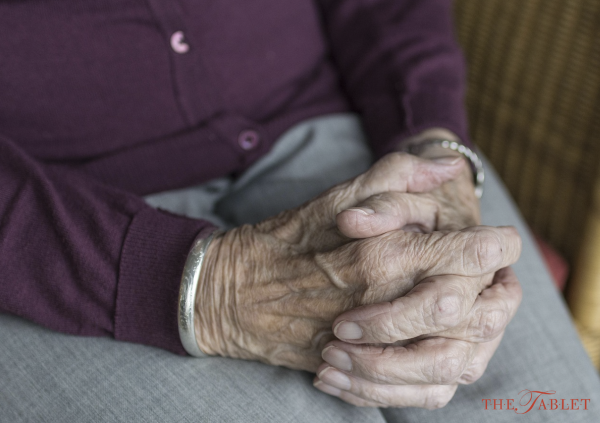
PROSPECT HEIGHTS — Headlines heaped tragedy upon tragedy in mid-September with multiple news reports of a Holocaust survivor’s violent death in a Brooklyn nursing home. Nina Kravtsov, 89, was found unresponsive and covered in blood at the Seagate Rehabilitation and Nursing Center in Coney Island.
Judging by historical timelines, she was about 5 years old when Nazi Germany invaded her Ukrainian homeland in 1941.
But her life ended abruptly on Sept. 14 when, according to investigators, she was bludgeoned with a metal footrest from a wheelchair. Police arrested her roommate, Galina Smirnova, 95, on a charge of second-degree murder. The reports stated Smirnova has dementia.
Michael Brevda, a nursing home litigation lawyer not involved in the case, commented that violence is among several threats to the health and safety of residents.
“We see this stuff occur in nursing homes very frequently,” Brevda told The Tablet on Sept. 24. “Whether it’s violent-resident attacks, or bed sores, or patient falls — all of these injuries stem from the same toxic root, which is nursing home understaffing.”
Brevda is the managing partner at Senior Justice Law Firm in Boca Raton, Florida, which handles cases nationwide.
He began his career 15 years ago at a firm in West Palm Beach. He was then assigned to defend nursing homes. Later, he chose to specialize in suing them for various conditions, ranging from neglected health conditions to insufficient supervision.
Brevda said that someone’s advanced age or declining physical condition doesn’t mean they’re incapable of violence.
He said his firm currently has 10 cases involving sexual assault, including five with alleged perpetrators being staff members and five suspects being fellow residents.
Brevda asserted that even if a case of violence is the perpetrator’s first known incident of aggressive behavior, staff must still be ready to intervene. He said an attack like the one that killed Kravtsov should be rapidly detected.
“This was something that went on for minutes, maybe even closer to an hour,” Brevda said.
“And this had to have been loud. I mean, God forbid, but can you imagine hearing a human being beating another with a piece of metal?
“If you have enough staff, you hear these things, you intervene, and you de-escalate.”
Brevda said private equity groups are “gobbling up” nursing homes because they’re profitable.
The industry is growing as baby boomers live longer than their parents. But, he added, some of these new companies boost profits by cutting staff.
Attempts to reach the facility’s parent company for comment were unsuccessful.
Mark Parkinson, CEO of an industry lobbying group, blamed smaller nursing home staffs on a nationwide shortage of nurses and other health care professionals.
Parkinson is president and CEO of the American Health Care Association and National Center for Assisted Living. He noted that the federal government’s growing staffing standards exacerbate the problem.
“We’re not against more staffing,” Parkinson said last year. “Believe me, every nursing home in the country is out there right now hustling and advertising to get more staff. But what we are against is an impossible policy that, when it is enforced, will cause hundreds and possibly thousands of nursing homes to close.”
When it comes to elder care, the Catholic Church emphasizes honoring, respecting, and actively caring for the elderly, rooted in the commandment to “Honor your father and your mother,” according to the Catholic Health Association (CHA) of the United States.
“This duty extends beyond families to society and includes welcoming, helping, and valuing the wisdom and experience of older individuals,” the CHA says on its website.
“The Church advocates for the spiritual and physical well-being of the elderly, promoting person-centered, holistic care,
whether in the home or professional settings, while also opposing practices like euthanasia and assisted suicide,” the association adds.