
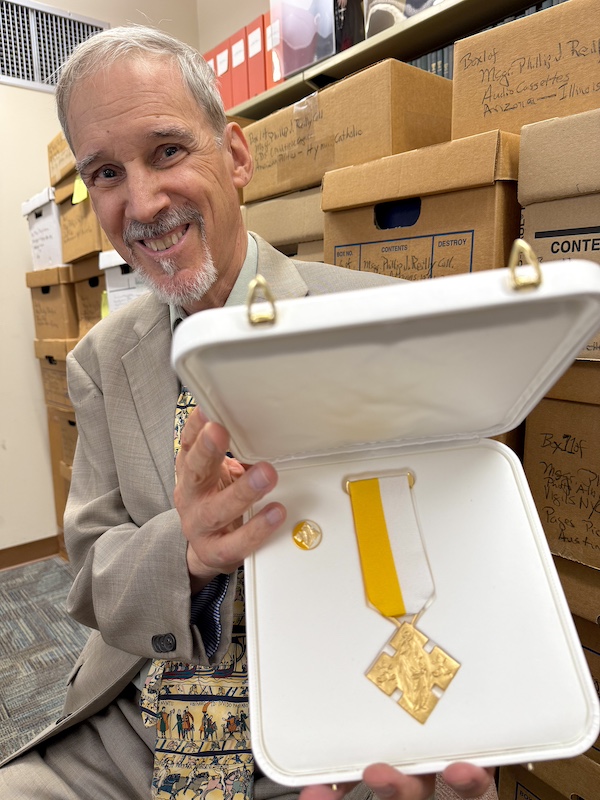
WINDSOR TERRACE — The Diocese of Brooklyn’s archives are so vast that it takes three locations to hold them.
They can be found in the basement of the diocese offices at 310 Prospect Park West in Windsor Terrace. A massive cache is also located at the diocese’s Office of Patrimony warehouse in Bushwick. And still more are stored at the Immaculate Conception Center in Douglaston.
The human thread connecting these assets is the longest-serving archivist for the diocese, Joseph Coen, who will retire on Aug. 29.
Coen said he is ready for a slower pace, but make no mistake, he will miss the responsibility of being the custodian for historical records for the diocese. For 32 years, the work has fueled his passion for history and the faith.
“I have a very high vision of what the archives are,” Coen said.
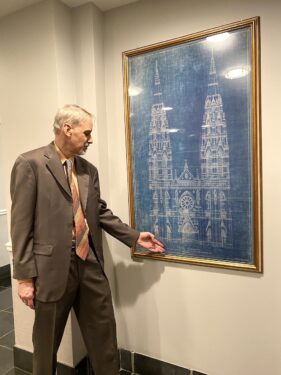
The rows of metal shelves, laden with white or brown boxes, may be a monotonous eyesore for some people, but not to Coen.
RELATED: Diocesan Designer: The Remarkable Unsung Legacy of Church Architect Patrick Keely
To him, these boxes of documents, records, photos, and artifacts are slices of history that inform chapters to the greatest story ever told — a concept impressed upon him in a comment he read from Pope Paul VI.
“He talked about how archives are the memory store of the Church,” Coen said. “And that in the pages of these documents, we see the story of Christ walking through time — our time.”
Thus, he added, these archives are the best source of how Christ worked through the hands of God’s people in Brooklyn and Queens for the past 172 years.
Coen is a son of the diocese, born in 1957 to a family that belonged to Our Lady of Lourdes Parish in Queens Village.
He considered the priesthood and attended Cathedral Preparatory High School and Seminary in Elmhurst and Cathedral College of the Immaculate Conception in Douglaston. But his plans changed upon meeting Anne, the girl who became his wife in 1986.
With a family to feed, he studied library science at St. John’s University. There, a professor, Dr. Greg Hunter, taught how to maintain archives, which inspired Coen to consider that career field.
One of his first jobs was working at the city of New York’s archives on Canal Street near City Hall in Lower Manhattan, where he got to handle documents dating back to when the Dutch colonized Manhattan as New Amsterdam. Others were from the 20th century, including some that showed the influences of controversial urban planner Robert Moses.
“I was hooked,” Coen said. “This was great stuff. I mean, this was history, baby!”
RELATED: Brooklyn’s ‘Harshest Slave Code’ Rivaled the South, Researchers Say
The first archivist for the diocese was Father Harry Culkin, formerly of the University of Notre Dame. He worked from 1976 — when the archives were officially created — until his retirement in 1989.
For over three years, two members of the chancery — Auxiliary Bishop Raymond Chappetto and Msgr. Kevin Noone — temporarily managed the archives. They conducted a search for a permanent archivist and created a hiring committee that, luckily for Coen, included his former professor, Dr. Hunter.
Coen got the job in 1993, and since then, his office has worked to collect, preserve, and publicly share pieces of this vast collection.
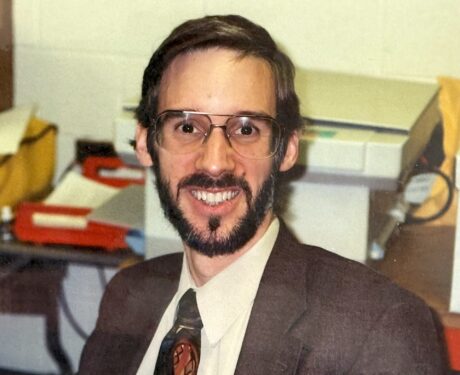
Bishop Chappetto recently said he has closely followed Coen’s career with the diocese.
“Joe and I have known each other all these years, and he has always been so gracious and helpful,” Bishop Chappetto said. “He was always so good about what he did, and he did a lot — a marvelous job.”
Under Coen’s leadership, the archives grew from 8,000 to 10,000 pieces. For example, the archives absorbed records from approximately 140 closed Catholic elementary schools and 26 high schools. It also holds records from closed parishes, hospitals, and orphanages.
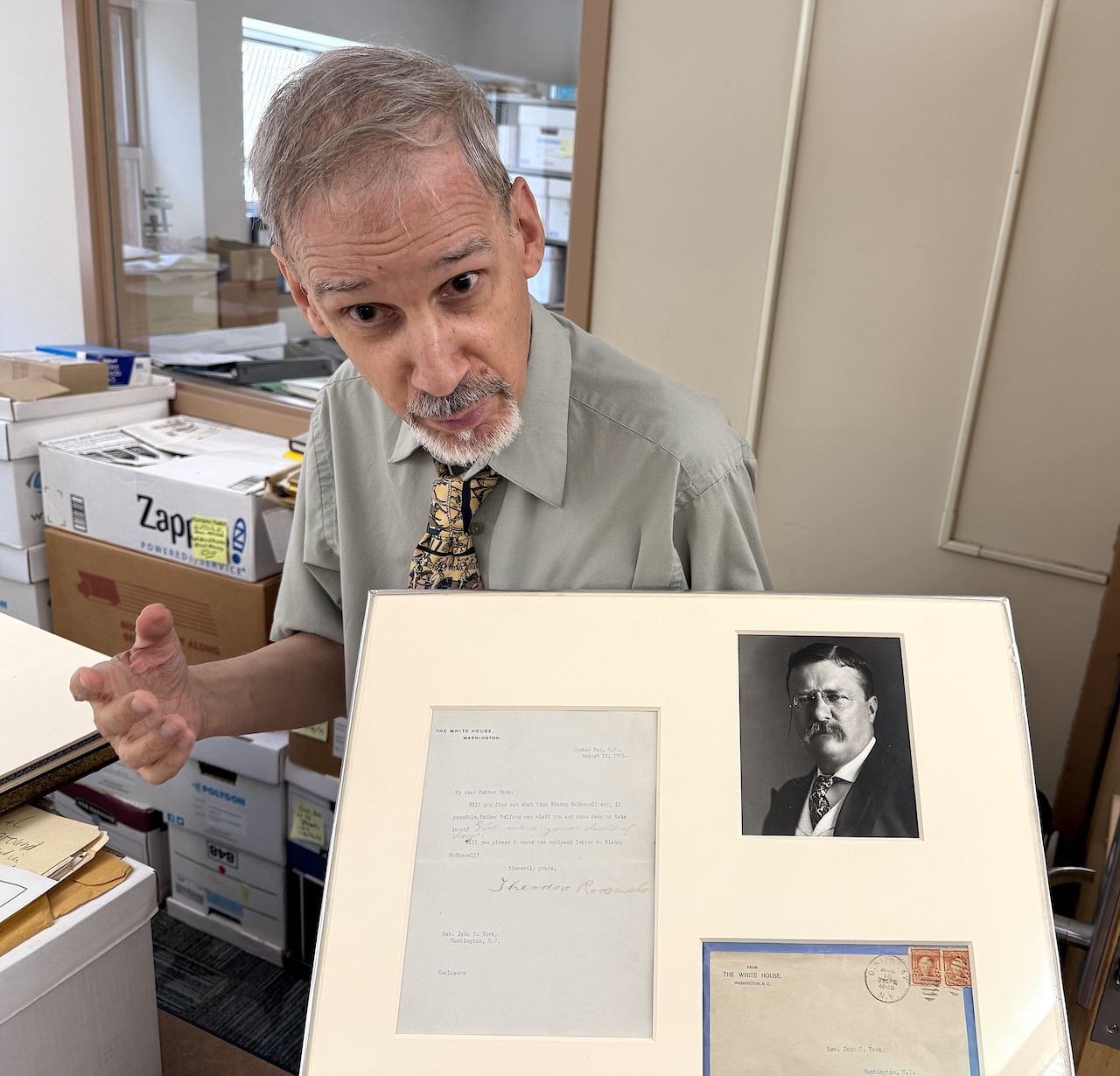
One of Coen’s favorites is from the 1850s — a ledger of marital dispensations kept by the first prelate of the diocese, Bishop John Loughlin.
The archives, whose end users are often diocesan or parish staff and genealogy researchers, also hold Bishop Loughlin’s passport from 1871, which contains no photo, but detailed descriptions of his facial features.
Many of the items are donated, like someone’s school report card from the 1950s.
“Maybe it’s not as significant as the passport of Bishop Loughlin, but it tells us a little story,” Coen said. “Like what report cards looked like, or what kind of things were reported to parents back then. That could be an interesting vignette.
“So, they’re all here. The biggest problem is letting people know what we have.”
That challenge will fall to Coen’s successor.
After the diocese interviewed candidates, they made an offer to one of them, but the person chose to decline, according to Coen. Thus, the search continues.
Coen, meanwhile, said he won’t be idle in his retirement. His hobbies include writing poetry and painting. He also plans to accelerate his role as the volunteer archivist for the Valley Stream Historical Society.
“Right now, it’s like the cobbler’s children having no shoes,” Coen quipped. “I haven’t had any time to do the archiving for the society. So, I can spend a little bit of time in the morning doing that and then go do other good things in the afternoon.
“I got tons of stuff going on.”
Congratulations to Joe on his service & achievements, & thanks for his faith-filled example in all he does.
Great article acknowledging & celebrating Joe’s love & dedication to his work. Congratulations Joe on his retirementt!
A great article about a great man. He will be much missed. His knowledge of diocesan history is vast. Who will find those valuable family records for us? I hope he has a great retirement.