
The ability of Catholic and other faith-based groups to “meet migrants’ basic human needs” at the U.S.-Mexico border is a religious liberty issue and must be defended, U.S. bishops said in recent statements.
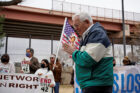
The ability of Catholic and other faith-based groups to “meet migrants’ basic human needs” at the U.S.-Mexico border is a religious liberty issue and must be defended, U.S. bishops said in recent statements.

Former President Donald Trump on Feb. 23 responded to the Alabama Supreme Court’s in vitro fertilization ruling in a statement saying he supports the “availability of IVF” and calling on the state’s Legislature to “act quickly to find an immediate solution” to preserve access to fertility treatment in the state.
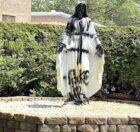
The New York Catholic Churches that have recently been vandalized are not alone. Across the country in the past two months, statues of Mary have been attacked in Washington and Nebraska. In Philadelphia, stained glass windows were broken at one church and outdoor Nativity scene statues were toppled and broken at another.
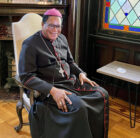
According to Archbishop Thomas Wenski of Miami, Haitian Bishop Pierre-André Dumas of Anse-à-Veau and Miragoâne, who was injured in a Feb. 18 explosion, will soon arrive in the archdiocese to receive additional treatment and recover.
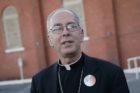
From the perspective of the local bishop, the recent effort by the Texas Attorney General to close a Catholic migrant shelter in El Paso shows the impossible situation such organizations are in, balancing federal and state responses with their own mission to serve.

Louisiana, which has not executed a death row inmate since 2010, primarily because the state has not been able to obtain the lethal injection drugs needed, is looking to resume executions by using electrocution and nitrogen gas.
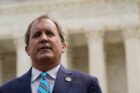
A Catholic migrant shelter in El Paso has defended its decades-long track record of serving migrants and called an attempt by Texas Attorney General Ken Paxton to shut down its ability to operate in the state “illegal, immoral and anti-faith.”

A ruling by the Alabama Supreme Court said that frozen embryos can be considered children under state law and as a result someone who destroys them could be held liable for wrongful death.
A ruling by the Alabama Supreme Court said that frozen embryos can be considered children under state law and as a result someone who destroys them could be held liable for wrongful death.
A Catholic couple from Indiana is asking the U.S. Supreme Court to intervene after the state removed their child from their home when they didn’t accept his transgender identity.