
Catholic Extension has given $25,000 in emergency funding to a facility in the Diocese of El Paso, Texas, and is urging donors around the country to provide aid to meet the needs of migrants being released from detention daily.

Catholic Extension has given $25,000 in emergency funding to a facility in the Diocese of El Paso, Texas, and is urging donors around the country to provide aid to meet the needs of migrants being released from detention daily.

Cardinal Blase Cupich is firing back against claims that he sought to advance an alternative proposal for bishop accountability ahead of last week’s meeting in Baltimore, in place of the plan put forth by the United States Conference of Catholic Bishops (USCCB).

Catholic Extension has given $25,000 in emergency funding to a facility in the Diocese of El Paso, Texas, and is urging donors around the country to provide aid to meet the needs of migrants being released from detention daily.
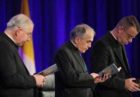
Now that the dust has settled on the U.S. bishops’ fall meeting in Baltimore, Md. – which was keenly anticipated in the run-up, and which turned out to be massively anti-climactic in the aftermath – it’s time to take preliminary stock of where things stand in the bishops’ efforts to respond to the clerical sexual abuse crisis.
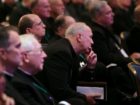
On what was expected to be a climatic close to the U.S. bishops’ gathering on Wednesday, the much-watched meeting ended without any immediate action on the Church’s response to clerical sexual abuse.
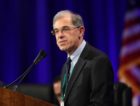
The U.S. bishops overwhelmingly approved a statement against racism Nov. 14 that declares “racist acts are sinful because they violate justice.”
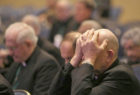
In what was expected to be a dramatic show of the United States Conference of Catholic Bishops (USCCB) fight against clerical sex abuse, Cardinal Daniel DiNardo, USCCB president, announced that the Holy See had requested a delay on such measures until after a Vatican summit on the scandal next February.

A Vatican request that the U.S. bishops postpone voting on several proposals to address abuse was a disappointment but they “quickly took a deep breath” and realized they could still have a productive discussion about the measures, said New York Cardinal Timothy M. Dolan.

As the U.S. Bishops’ Conference met for the second day of their fall general assembly, the case of former Cardinal Theodore McCarrick emerged as a unifying concern, in a conference otherwise fragmented in its response to the clerical sexual abuse crisis.
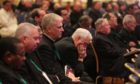
As the United States Conference of Catholic Bishops (USCCB) attempted to salvage its agenda following Monday’s news that the Vatican had requested a postponement of a vote on new measures of bishop accountability, Tuesday’s meeting began with a critical assessment of the current state of transparency and reform.