
When Bishop Mark Seitz of El Paso got the news that the federal government will soon terminate Title 42, a controversial border policy, he said he began “thanking God.”
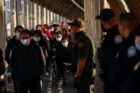
When Bishop Mark Seitz of El Paso got the news that the federal government will soon terminate Title 42, a controversial border policy, he said he began “thanking God.”
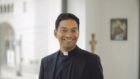
Pope Francis has appointed Father Earl K. Fernandes, a former staff member of the apostolic nunciature in Washington and currently a Cincinnati pastor, to head the Diocese of Columbus, Ohio.
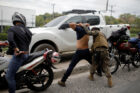
Human rights groups in Washington sounded the alarm after the Salvadoran government began mass arrests and suspended personal freedoms following a record-breaking spree of homicides by gangs in late March.
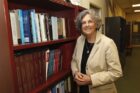
One of the nation’s foremost champions for the cause of female deacons considers the Vatican’s new apostolic constitution — which in part opens top Vatican leadership roles to any baptized layperson, including women — an important step for Pope Francis’s vision, but not necessarily one that affects the future of women in the diaconate.
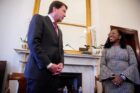
Under gray skies March 30, a group of faith leaders assembled on the Supreme Court’s steps to show their support for Judge Ketanji Brown Jackson’s nomination to the Supreme Court and urge the Senate to quickly vote to confirm her.
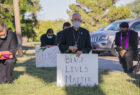
The Black Lives Matter movement is coming up to its 10th anniversary next year, so it’s hardly in its beginning stages.

The Archdiocese of Seattle and its St. James Cathedral will sell and redevelop four properties in the city’s First Hill neighborhood as part of a project that aims to create affordable housing and steer the neighborhood towards carbon neutrality.

A little creativity with Lego pieces by John and Holly Ostermeier’s six children has yielded a re-creation of the family’s parish church, St. Pius X in Appleton, right down to the altar, candle bank, piano and priest celebrating Mass.

Sister Norma Pimentel, whose work with asylum-seekers has been recognized by Pope Francis, Time magazine and others, will receive the Pacem in Terris Peace and Freedom Award April 21 in Davenport.

This tax season, Americans have an unexpected figure to thank for one of their most-used deductions. She wasn’t an accountant, a lawyer or even a politician, but an actual saint.