
At the beginning of February I began working in the diocesan Chancery building as the new director of the Propagation of the Faith (Missions Office) for our diocese.
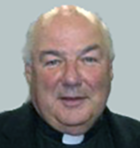
At the beginning of February I began working in the diocesan Chancery building as the new director of the Propagation of the Faith (Missions Office) for our diocese.
Despite Pope Francis’ lecture on the subject at Synod-2015, and notwithstanding the passages on it in Synod-2018’s final report, there is little agreement in 21st-century Catholicism on what “synodality” means. In practical terms, perhaps synodality ought to mean something roughly analogous to what our British cousins mean by “horses for courses.” There, the phrase is a homely caution against one-size-fits-all remedies to problems.
FIRST CIRCULATED underground in communist Czechoslovakia in October 1978, Vaclav Havel’s brilliant dissection of totalitarianism, “The Power of the Powerless,” retains its salience four decades later. It should be required reading for politicians given to describing the Knights of Columbus as an “extremist” organization because of the Knights’ pro-life convictions and activism.
WRITING RECENTLY on women seeking the presidency and the “likability” factor in our politics, Peggy Noonan made a tart observation: “There are a lot of male candidates with likability problems. Some, such as Andrew Cuomo, a three-term governor of a large state, are so unlikable they aren’t even mentioned as contenders.”

FROM THE 1920s through the 1960s more than 300,000 African-Americans across the country chose to enter into communion with the Roman Catholic Church. Their choices to become Catholic set them apart from most African-American Christians who were members of Baptist, Methodist, Pentecostal and Holiness traditions.
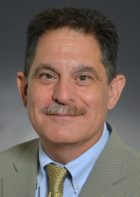
by Michael Rizzo
THE START OF the spring semester at St. John’s University, Jamaica, brought with it new classes, students returning to campus and for journalism majors, a day related to their area of study that is often overlooked.
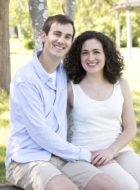
It’s hard to believe that on Jan. 27 we will celebrate one year of being engaged. Both of us can remember every detail of that day: John recalls an atypically warm day preceded by a sleepless night of anticipation and excitement. Nicole mostly lived in ignorance and recalls nearly foiling the plot – first by slicing her left hand while cutting meat and then by going into work on a Saturday.
The morality of tyrannicide is not much discussed in today’s kinder, gentler Catholic Church. Yet that difficult subject once engaged some of Catholicism’s finest minds, including Thomas Aquinas and Francisco Suárez, and it was passionately debated during the Second World War by German officers – many of them devout Christians – who were pondering the assassination of Adolf Hitler.
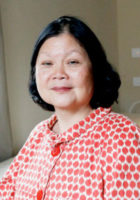
During the New Year, many of us adopt new resolutions to improve ourselves. I suggest that we first take a step back to connect with mindsets that drive us to act. Mindsets are basic beliefs we hold about attributes such as our temperaments or capacity for change and learning.
The slogan “Nothing about us without us” was used by Solidarity in the 1980s in Poland, borrowing a royal motto from the Polish-Lithuanian Commonwealth in the mid-second millennium. Then, it was expressed in Latin: Nihil de nobis sine nobis.