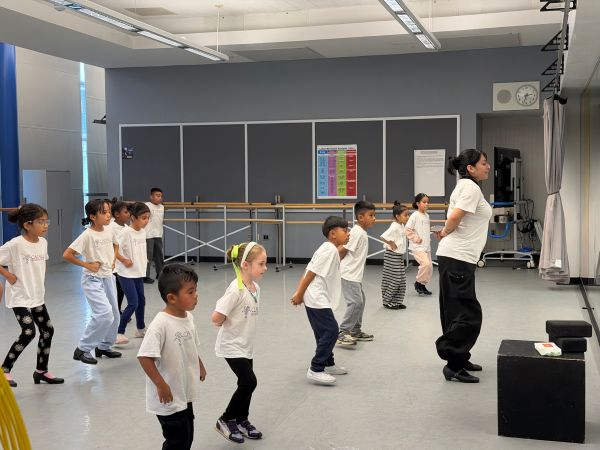

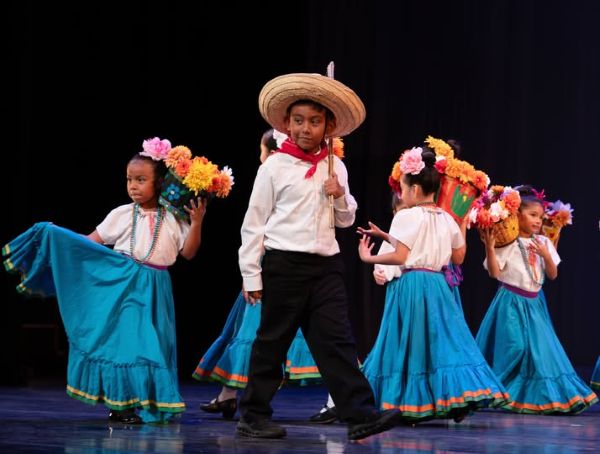
ASTORIA — With each step, stomp, and turn, young dancers at Calpulli Mexican Dance Company’s community classes are learning more than choreography — they’re carrying pieces of Mexican culture into a new generation.
On Sunday afternoons, children as young as 5 learn Mexican folkloric dances alongside teenagers and adults at Frank Sinatra School of the Arts in Astoria, where Calpulli has made the lessons accessible regardless of a family’s ability to pay.
The nonprofit dance company launched its community program 20 years ago after families attending its performances began asking how they and their children could get involved, said Juan Castaño, Calpulli’s executive director and one of its founders.
Initially, Calpulli charged about $10 per class. But Castaño said organizers watched some families — particularly those with multiple children — walk away because they could not afford the fee. The program eventually became donation–based.
“We believe that if somebody wants to dance, they should be able to do that without a financial concern,” Castaño said. “There’s enough support in the world that we can make a child’s wish to dance possible.”
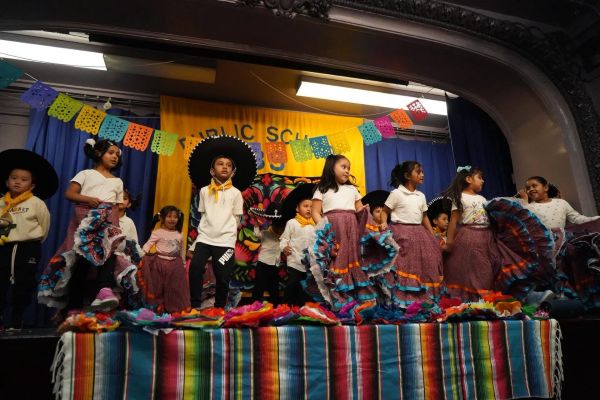
Calpulli has relied on fundraising and outside support to keep the program accessible. Last year, Castaño said, it received an award from Catholic Charities of New York to support its educational and community resources.
The program now draws participants from across the five boroughs and beyond, including families who are not Mexican or Hispanic. This fall, students are learning dances from regions across Mexico under the theme “Dancing from North to South,” before coming together for a public performance on Dec. 6 at LaGuardia Performing Arts Center in Long Island City.
View this post on Instagram
For some of Calpulli’s young dancers, Mexican cultural traditions are also intertwined with their Catholic faith.
RELATED: Local Artists Embrace Culture, Tradition at Brooklyn’s Our Lady of Guadalupe Feast
Sisters Katherine and Joselyne Castro-Rios, who travel from East New York to attend the Sunday classes in Astoria, have each found their own connections between faith and dance.
Katherine, 16, said faith remains part of how she approaches dancing. Before coming to class, she said she prays that God will keep her safe and asks him to help her through the movements.
“I pray with Him to help me manage the dance moves and to keep going,” Katherine said.
Her younger sister Joselyne, 11, was first introduced to traditional Mexican dance through her parish, St. Michael-St. Malachy. She recalled dancing at the church for the feast of Our Lady of Guadalupe before later continuing Mexican folkloric dance with Calpulli.
“Even though I was not born in Mexico, I can still have some piece of it by dancing,” Joselyne said.
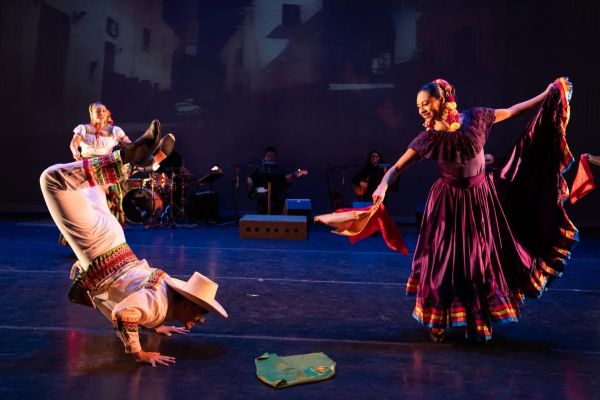
Among the dancers who will be performing in December is 5-year-old Norah Rosales, whose family is Mexican, Salvadoran, and Irish. Her father, Chris Rosales, brings her to the class from the Bronx so she can grow up participating in traditions he only watched as a child.
“I never took classes or did the dancing, but it was something that I wanted my kids to do,” Rosales said. “I think it’s important that she gets to celebrate both cultures that she’s been blessed with. Dancing is a great way to celebrate and keep that connection strong.“
“My favorite dance is the iguana,” Norah said, referring to “La Iguana,” a traditional Mexican folk dance that originated in Guerrero, a coastal state in southern Mexico, which is featured in Calpulli’s repertoire. “My favorite part [of coming to class] is seeing my teacher.”
RELATED: Fordham University’s Latin Dance Group Sparks Inclusivity, Culture
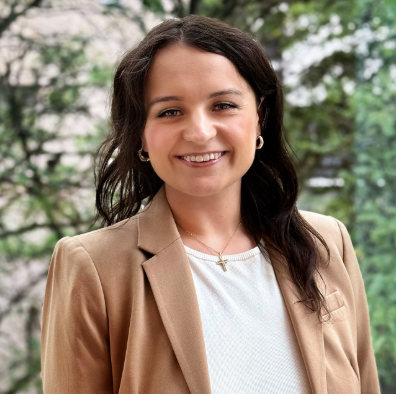
Norah’s instructor, Yisel Xique, knows firsthand what it means to learn those traditions at a young age. The Queens native began dancing with Calpulli when she was 12 and, years later, returned to the community program as a teaching artist and professional dancer with the company.
Xique said she didn’t have much exposure to Mexican traditions growing up, something she now hopes to provide for the children she teaches.
“I’m kind of happy that this is creating a sort of a community and a space for students,” Xique said. “Even if you’re not Mexican, you can come in and dance and spread awareness that every culture should be celebrated.”