

Catholic bishops from two continents on Feb. 3 and 4 advocated for enhanced solidarity to build “robust lifesaving and life-affirming U.S. assistance” for the growing Catholic faith in strife-ridden Africa.
The message came amid the Trump administration’s recent foreign aid cutbacks, which are expected to slash billions of dollars in funding once destined for the African continent to support disease prevention and other health initiatives. Meanwhile, Christians on the African continent — including thousands of Catholics — face violent religious persecution from governments or extremist groups.
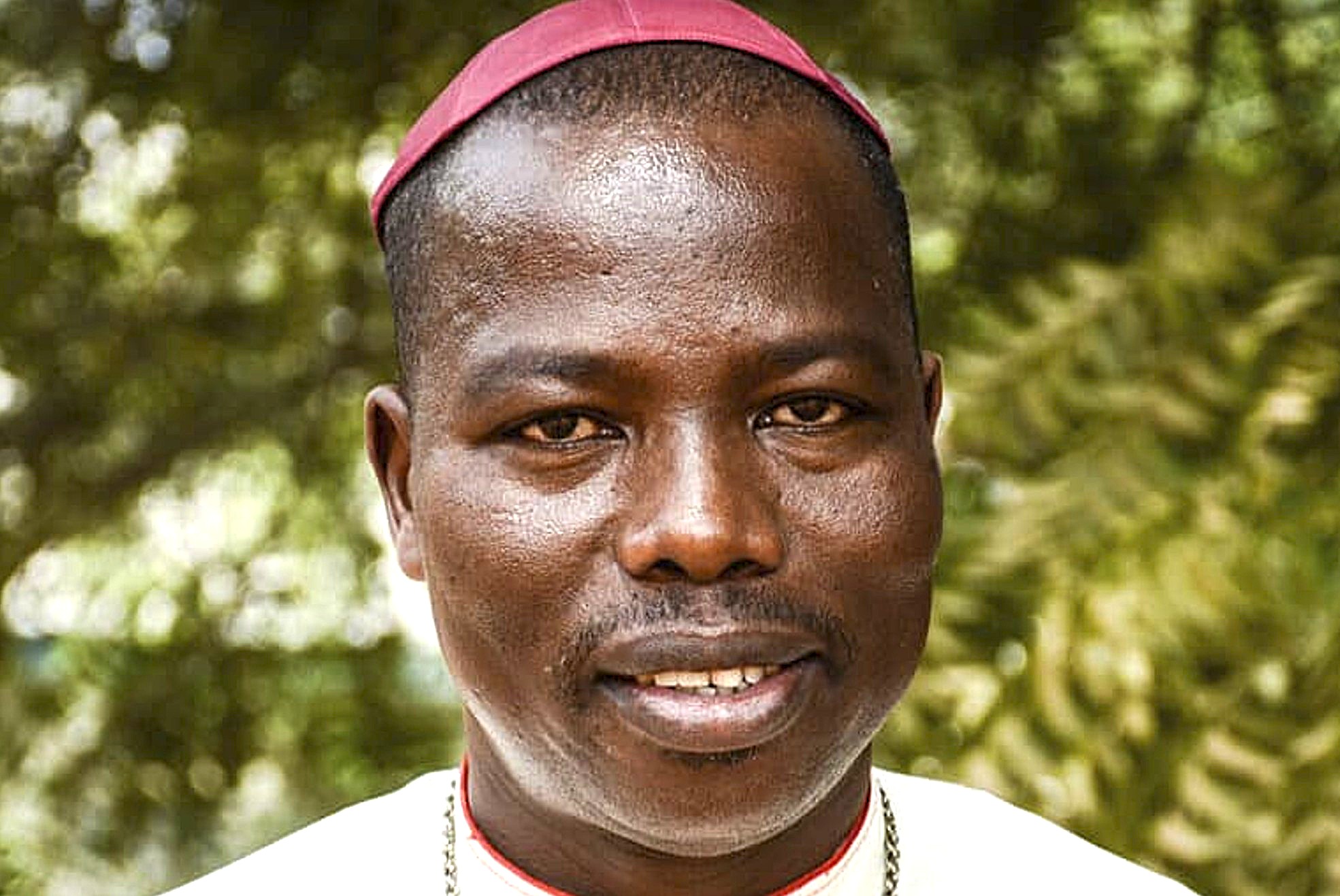
Leading the calls for solidarity were Bishop A. Elias Zaidan of the St. Louis-based Maronite Eparchy of Our Lady of Lebanon of Los Angeles and of Yola, Nigeria. In an interview with The Tablet on Feb. 3, Bishop Mamza further explained the partnership.
“We are here to be united in the spirit of one Church and one baptism,” he said, “in order to see the areas which we can collaborate and continue to work together.”
To that end, the two bishops, also on Feb. 3, issued a joint statement from the offices of the U.S. Conference of Catholic Bishops in Washington, D.C.
Titled “Brothers and Sisters in Hope,” the letter also included “guiding themes” rooted in Catholic social teaching to help bolster cooperation between Christians on both continents.
“We assert,” the bishops wrote, “that international assistance is an important means of promoting human dignity, protecting human life, and pursuing the international common good, helping both Africans and Americans to live in security and peace.”
Bishop Zaidan is chair of the USCCB’s Committee on International Justice and Peace.
RELATED: Pope Leo XIV Sets His Sights on Possible Trip to Africa
Bishop Mamza, vice-chair of the Symposium of Episcopal Conferences of Africa and Madagascar (SECAM), which is USCCB’s counterpart on that continent. Bishop Mamza also leads SECAM’s Justice, Peace and Development Commission.
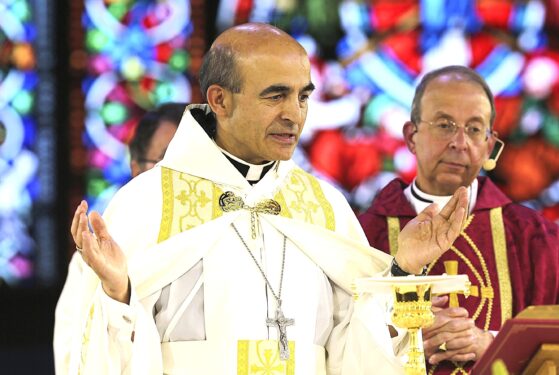
In conjunction with their letter, the two bishops concelebrated a Mass for Solidarity with the Bishops and Faithful of Africa on Feb. 4 at the Basilica of the National Shrine of the Immaculate Conception in Washington, D.C.
Bishop Mamza was the homilist. He said the Church in Africa and the U.S. “are two lungs of the same body, breathing the same spirit.”
“What strengthens one strengthens the whole,” he added. “What wounds one wounds all.”
The severity of such wounds has made constant headlines in recent years on both continents, especially regarding religious persecution in Africa.
In his homily, Bishop Mamza noted his first-hand experiences delivering humanitarian aid.
“Part of my diocese is one of the main areas in northeast Nigeria that was overrun by the Boko Haram insurgency between 2014 and 2017,” he said.
Consequently, his diocese cared for internally displaced persons (IDP), “who ran for their lives to Yola, the state capital, looking for shelter.”
Last September, Bishop Zaidan issued a statement that detailed how millions of people were displaced by religious and ethnic persecution and other calamities.
“In 2025,” he wrote, “cycles of deadly violence and resulting humanitarian crises continue to claim thousands of innocent lives in Sudan, South Sudan, Somalia, Ethiopia, the Democratic Republic of the Congo, Nigeria, and throughout the Sahel region.”
“We remember, in particular, the hundreds of Christian civilians massacred in recent weeks and months in Nigeria’s Middle Belt and northern regions as well as in eastern Congo.”
The violence continues in 2026, according to the humanitarian aid group, Open Doors International, with Nigeria as the epicenter. Other attacks were reported recently in Sudan, Burkina Faso, and the Democratic Republic of Congo.
President Donald Trump took notice and even ordered airstrikes on Christmas night against militants believed to be affiliated with the Islamic State (ISIS) in northwestern Nigeria. He also ordered the State Department reinstate Nigeria as a “Country of Particular Concern” where violations of religious liberty are allowed to fester.
Members of the Nigerian diaspora in the U.S., including the Diocese of Brooklyn, praised the airstrikes and the renewed CPC designation.
However, the Trump administration was sharply criticized by Catholic leaders and groups a year ago when it began sweeping cost-cutting measures. A particular target of his administration was foreign aid through the U.S. Agency for International Development (USAID).
Since then, Secretary of State Marco Rubio has insisted that every dollar spent abroad would only be approved if it made the U.S. safer, stronger, or more prosperous.
Bishop Mamza told The Tablet that he would have more conversations with his U.S. counterparts to develop new initiatives to help displaced people in Africa. Meanwhile, U.S. Catholics continue to help those people.
An example is the USCCB’s Solidarity Fund for the Church in Africa (SFCA). In 2024, it awarded $2.6 million in grants to 96 priority ministries, focusing on evangelization, like equipping lay missionaries with bicycles in the Central African Republic to reach remote families.
SFCA also funded youth training to enhance peacebuilding amid extremism in Togo and programs aimed at fortifying marriages in Kenya, inspired by Pope Francis’ apostolic exhortation, “Amoris laetitia.”
“When African bishops speak courageously about war, poverty, corruption, or threats to human dignity, their voices echo in American dioceses,” Bishop Mamza said.
“When American bishops defend the sanctity of life,” he continued, “(or) advocate for migrants, or confront the culture of individualism, their witness strengthens the Church in Nigeria, Ghana, Kenya, Congo, and beyond.
“We are, in truth, co-workers in the vineyard of the Lord.”