
by Cruz-Teresa Rosero
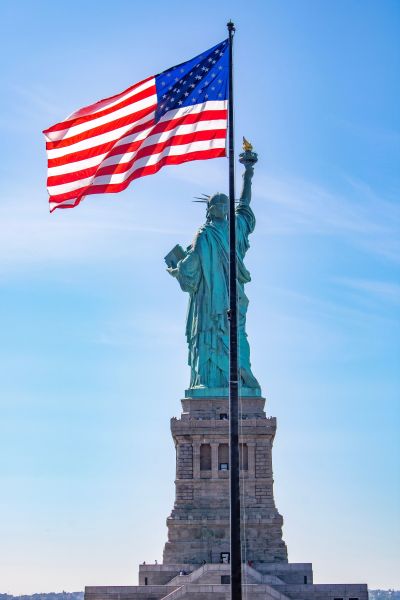
I celebrated and toasted the 200th anniversary of America’s independence in 1976 with friends and family who, just a few years earlier, had arrived with hearts brimming with joy in this land of promises and hopes.
We attended the Grand Naval Parade of 50 warships from 32 countries in New York Harbor. With every 21-gun salute, our hearts vibrated with joy and gratitude while our bodies leaped and swayed from side to side.
Today, 50 years later, and no longer carried by the passion of youth, I vibrate again with the cannon fire and the many celebrations, with my spirit just as young and my mind just as clear.
Today, I celebrate with gratitude the dreams that came true, and I mourn the nightmares lived in this northern land to which my husband and I planned to come for just two years.
People had told us that in this land you could save money and go back home with enough to start a business or buy a house. At the end of those two years, with no savings and three children, we renewed our resolve to stay two more years. And so, the years went by, the children grew up, and the grandchildren arrived.
Along the way, frustration and bitterness began to keep us company. We left everything behind to chase a dream, and that dream kept moving further away.
God stepped into my path and showed me the way through the church in the town where we lived. I longed for the nights of the charismatic prayer group and the Sunday Mass, where I gathered new strength to press on.
RELATED: ‘Pilgrims of Hope’ Seek Compassion
Today, 56 years later, I can say that I still do not have the material riches I came looking for, but I am filled with spiritual possessions. The Lord healed my inner bitterness, healed the wounds of our home, and filled me with His peace.
I have not forgotten the struggles and fears of the immigrant who has just arrived in search of the American dream.
Within my own family, I suffered the pain of the deportation of my granddaughter’s father when she was only 6 years old. “Where is Daddy?” she would ask, day after day. Her pain left marks on her, on all of us, and on the young father who returned to his homeland with a small yellow bag and the clothes on his back after 10 years of having built a life here. That experience marked me deeply.
My church, my connection to God in prayer, and my community of brothers and sisters helped me through the journey of accompaniment and healing.
Just as when I lost my mother during the COVID-19 pandemic and could not be there, God has led me to identify more and more with my immigrant brothers and sisters. He has led me to find meaning in my suffering and has empowered me to accompany with love and mercy those who today endure the same.
Moreover, I can affirm that we will always live with the immigrant’s syndrome.
Like the Jews exiled in Babylon, in moments of nostalgia, we identify with Psalm 137: “By the rivers of Babylon we sat and wept when we remembered Zion. There on the poplars we hung our harps, for there our captors asked us for songs. How can we sing the songs of the Lord while in a foreign land?”
The syndrome of longing for one’s homeland is nothing new in history. What is new are the settings, the eras, and the faces. The search for a place to settle and build a better life is deeply human.
There are those who, for political reasons, have been exiled, banished, or in some way compelled to leave the land that witnessed their birth (permanently or for an indefinite time), and there are those who, driven by hunger, poverty, or a lack of opportunity, freely choose to “go away for a while,” with every intention of returning someday.
And while we build a life in this land, a question resonates in our hearts: Where are we from? The perceptions others hold of us, rather than clarifying that question, only deepen the confusion. When we are here, people identify us by our country of origin, but when we return home, they identify us as “the ones who left.”
One thing is clear: we are immigrants. Immigrants who contribute to this land of the United States and to the land that saw us born. At a certain moment of identity crisis, I made the words of the Argentinean singer-songwriter Facundo Cabral my own: “I am not from here, nor am I from there.”
Some time later, the Lord gave me this poem, which affirms the calling he has given us in this land to which he has brought us: later, the Lord gave me this poem, which affirms the calling He has given us in this land to which He has brought us:
- Somos de aquí, y somos de allá We are from here, and we are from there
nacimos aquí, pero vivimos allá we were born here, but we live over there
el Señor Jesús nos llamó the Lord Jesus called us
a servirlo aquí y a servirlo allá to serve Him here and to serve Him there
- La tierra del Norte nos acogió The land of the North welcomed us
a USA el Espíritu nos llevó the Spirit led us to the USA
Latinoamérica vive allí Latin America lives here
y el Norte de fiesta está and the North is in celebration
- Somos una tierra nueva We are a new land
que vive en ti y que vive en mí living in you and living in me
somos testigos del Señor aquí we are witnesses of the Lord here
somos testigos del Señor allá we are witnesses of the Lord there
- Un legado de fe y amor A legacy of faith and love
se esparce aquí y allá spreads here and there
una morada eterna nos espera an eternal dwelling awaits us
con Cristo en la eternidad with Christ in eternity
We are all pilgrims on this Earth. Nostalgia will always find us, because as St. Augustine said, “You have made us for Yourself, O Lord, and our heart is restless until it rests in You.”
Amid this pilgrimage, we have learned to praise and sing to the Lord with immense gratitude in a foreign land, because we know that He accompanies us wherever we go.
With a grateful heart, let us sing the anthem of this land: “God Bless America”, and with the Psalmist, let us proclaim verse 3 of Psalm 126: “The Lord has done great things for us, and we are filled with joy!”
To your health, United States, land of immigrants!
Cruz-Teresa Rosero is a member of St. Nicholas of Tolentine Parish in Jamaica and a contributor to Nuestra Voz.