
JAMAICA — Xavier Martinez isn’t shy about admitting that artificial intelligence can make schoolwork a little too easy. The 11th grader at Bedford-Stuyvesant New Beginnings Charter School said he uses ChatGPT to help with essays and assignments.
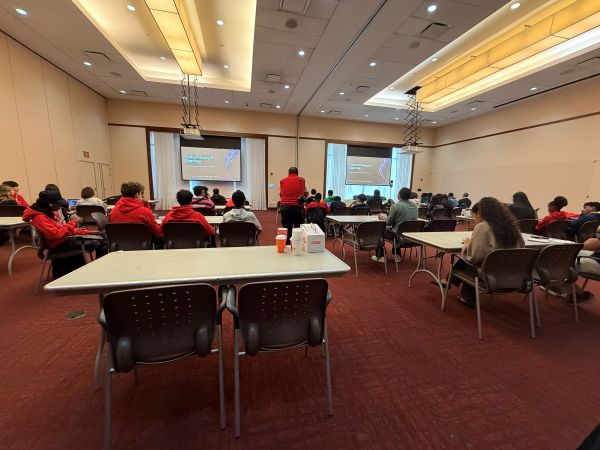
However, the line between using artificial intelligence as a tool and allowing it to replace a student’s own work isn’t always clear. That distinction was at the center of an AI College Day event at St. John’s University, where college freshmen became the teachers, showing visiting high school students how to use AI ethically.
“I would like to learn more about how they’re using it and see if I can learn from it and use it more effectively in my school,” Xavier said.
Tenth grader Adalin Dominguez approached the event with a similar objective.
“I hope to see what we’re able to use AI for good instead of just to use it for bad,” Adalin said, adding that she wanted to understand “how it could help us learn instead of taking away from our learning.”
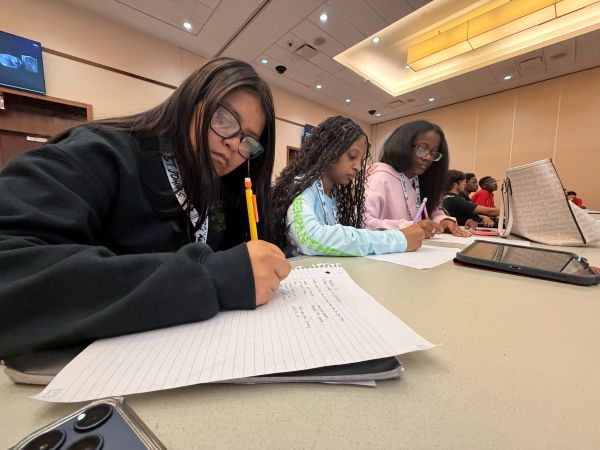
St. John‘s University freshmen enrolled in adjunct professor Omar Lopez’s AI-focused section of First Year Seminar 1000 spent the semester developing presentations on subjects ranging from identifying AI bias and fact-checking its output to protecting personal information and preparing for the job market.
Freshman Benjamin Shakov’s group focused on resumes, including how applicants can use AI to improve their applications as employers increasingly use the technology to screen them.
To Shakov, ethical AI use means doing more than simply taking what it produces and turning it in. Students also discussed disclosing when they used AI and editing its output rather than relying on “raw, unedited content.”
“How to add a human level to it,” Shakov said, was a key part of what students learned.
That emphasis on preserving the human element amid rapidly developing technology echoes concerns Pope Leo XIV raised in “Magnifica humanitas,” his first encyclical letter published in May 2026.
Addressing the rise of artificial intelligence, the pope stressed that technological progress should remain centered on the human person and warned against allowing AI to diminish human dignity or replace what is uniquely human.
For Lopez, teaching students to navigate that changing landscape means treating AI neither as something to fear nor as a substitute for their own abilities.
“AI is a tool,” Lopez said. “Just like when the internet first came out, a lot of people were like, ‘Oh, I don’t need to learn that.’ And then they found themselves on the other side, not realizing what they’re missing out.”
Now in its third semester, the program has proven successful enough that St. John’s plans to expand it in the spring, inviting students from multiple Catholic, public, and private high schools to campus for a larger conference.