

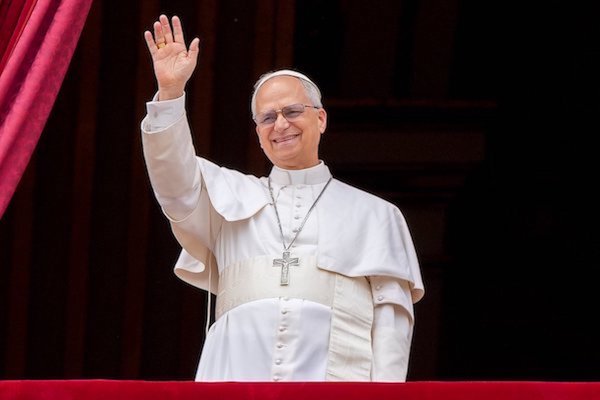
On the eve of the nation’s historic 250th birthday, the first American pope will be awarded the Liberty Medal by The National Constitution Center.
The center, a Philadelphia-based, non-profit institution dedicated to promoting the Constitution, will award the medal on July 3 to honor Pope Leo XIV for his “lifelong commitment to religious liberty and freedom of expression,” said Vince Stango, the center’s interim president and CEO.
“These are the values that are part of the First Amendment of the Constitution,” he said.
The presentation of the award was deliberately timed to take place the day before the U.S. celebrates the 250th anniversary of its founding on July 4, Stango explained.
“We wanted to connect that anniversary to this year’s Liberty Medal,” he said. “And our decision was to really focus on Pope Leo’s lifelong commitment to religious liberty.”
RELATED: Local Sister Says Cameroon Feels ‘Fortunate’ for Pope’s Africa Trip
The Holy Father will not be present to accept the medal in person but will deliver remarks from the Vatican via a live telecast to an audience gathered on Independence Mall in Philadelphia, according to the center.
The Chicago-born pontiff has a connection to Philadelphia. He is a graduate of Villanova University, the Catholic university located in the city’s suburbs.
Pope Leo is only the second religious leader — the Dalai Lama was the first in 2015 — to win the Liberty Medal in the award’s 38-year history.
According to the National Constitution Center, the Liberty Medal was established in 1988 to recognize individuals who work to secure liberty for people worldwide.
Previous winners have included: documentary filmmaker Ken Burns, former presidents George H.W. Bush and Bill Clinton, Ukrainian President Volodymyr Zelenskyy, Supreme Court Justice Ruth Bader Ginsburg, former president George W. Bush and his wife Laura Bush, boxer Muhammad Ali, and rock star Bono.
Stango called the pope, “a natural choice,” for the medal.
While Pope Leo’s history-making selection as the first American pope created a great deal of excitement, it was his work before his elevation to the papacy that caught the eye of the Liberty Medal committee, Stango said.
“We’re really honoring his lifelong work before he was elected to the papacy. He has been a consistent voice for religious freedom, interfaith dialogue, and for the dignity of all people over the years,” Stang explained. “So, we wanted to honor that body of work, not just for being the first American pope.”
However, he added, as the first American pope, the Holy Father “has a really distinct perspective that was shaped by the American tradition of pluralism, religious liberty, and democratic self-government.”
Pope Leo is a worthy recipient of the Liberty Medal. He, from the very beginning of his papacy, with strong intent and courage has spoken out in support of the poor and immigrants and against injustice and violence especially unjust war.